Best Mini Guitars for Kids: Fun, Safe, and Easy-to-Play Starter Instruments
Finding a kid-friendly guitar or ukulele that is sized for small hands and promotes early musical exploration can be challenging. This guide highlights five top mini guitars and ukuleles designed for young players, focusing on safety, durability, and approachable playability. Each option offers child-friendly materials, lightweight design, and features that support basic notes, rhythm, and creativity. Below, you’ll find concise product highlights, practical considerations, and a buying guide to help you choose the right instrument for your child’s age and interest level.
| Product | Brand | Key Features |
|---|---|---|
| YEZI Kids Toy Classical Ukulele | YEZI | ABS plastic, four carbon nylon strings, finger-safe coating, lightweight, portable |
| Raimy 17in Kids Ukulele | Raimy | ABS plastic body, stainless steel strings, finger-safe coating, portable size |
| Woozettn 17 Inch Classical Guitar | Woozettn | Plastic body, four nylon strings, finger protection coating, child-friendly size |
| Liberty Imports 23″ Acoustic Guitar | Liberty Imports | 6 steel strings, realistic look and feel, beginner-friendly, real guitar sounds |
| Best Choice 30in Kids Acoustic Guitar | Best Choice Products | All-in-one kit, beginner-friendly, tuner, strap, case, lessons option |
YEZI Kids Toy Classical Ukulele Guitar
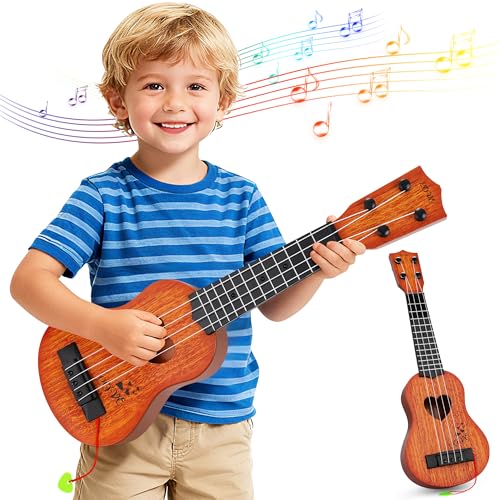
YEZI offers a compact ukulele designed for beginners. The instrument uses ABS plastic with coated surfaces to protect little fingers and reduce the risk of cuts. It features four carbon nylon strings that are less prone to breakage and a light frame ideal for small hands. Its small, portable form helps children practice rhythm and basic strumming patterns, supporting early auditory and creative development.
Raimy 17in Kids Ukulele Guitar

This Raimy mini guitar stands at about 17 inches tall and uses four stainless steel strings for authentic tone. The surface coating helps prevent finger injuries, and the compact dimensions make it easy for kids to handle. The instrument supports basic notes and rhythm learning, fostering hand-eye coordination and developing early musical rhythm skills in a safe, portable package.
Woozettn 17 Inch Classical Guitar

This 17-inch toy guitar uses four carbon nylon strings and a plastic body with a coated surface to reduce finger discomfort. The lightweight build and beginner-friendly proportions help children practice basic notes and rhythm while enjoying realistic guitar sounds. It supports exploratory play and can serve as an engaging first instrument for aspiring musicians.
Liberty Imports 23″ Acoustic Guitar

This 23-inch acoustic guitar offers a more authentic guitar experience with six stainless steel strings that mimic real instrument tension and tone. The adjustable strings and durable construction help kids learn tone, rhythm, and hand-eye coordination. Realistic sounds can motivate ongoing practice and musical exploration in younger players.
Best Choice 30in Kids Acoustic Guitar

This all-in-one beginner kit is designed for kids who want a fuller guitar experience. It includes a carrying case, extra strings, a strap, a tuner, a picks set, and access to lessons, making it a self-contained starter package. Built from durable materials with child-friendly shaping, it supports progressive learning from basic chords to more complex playing as the child grows.
Buying Guide: Key Purchase Considerations And How To Compare
Age appropriateness, size, and weight are the primary considerations when selecting a kid-friendly guitar. For younger children (ages 2-6), smaller instruments like 17-inch ukuleles or 23-inch acoustic guitars are typically easier to handle and encourage consistent practice. For beginners ready for a bigger feel, 30-inch models with beginner kits provide a more authentic experience and may include additional learning resources.
Material quality and playability matter for safety and motivation. Instruments made from durable, child-safe plastics or light woods with finger-protective coatings reduce injury risk and increase the likelihood that kids will continue practicing. Strings should be appropriately tensioned: carbon nylon or stainless steel strings offer good playability without excessive finger strain when used with beginner-proper setup.
Durability and design features influence long-term use. A protective coating to prevent finger injuries, rounded edges, and lighter weight make all-day practice feasible. For budding musicians, a listening-to-sound feature or realistic tones can boost engagement. Kits that include accessories—such as straps, cases, tuners, and extra strings—provide a smoother transition from practice to performance.
Learning support should be considered. Some products link to beginner lessons or online resources, which can help parents structure practice time and measure progress. If your child expresses interest in continuing beyond basic chords or rhythms, you might prefer a model that offers a bridge to more advanced playing while still accommodating early exploration.
Budget and space are practical constraints. Ukuleles generally cost less and take up less space, making them ideal for apartments or travel. Full-size kids’ guitars with bundled accessories can offer a more complete learning ecosystem, but require more storage and perhaps a longer-term commitment as the child grows.
Safety and supervision: supervise small children during play to ensure proper handling and to prevent rough handling that could damage instruments. Choose instruments with non-toxic finishes, smooth edges, and reliable construction to support a positive, injury-free musical experience.