Best Science Kits for Preschoolers That Spark Curiosity
Discover engaging, age-appropriate science kits designed to inspire preschoolers and early learners. This guide highlights hands-on options that build foundational skills in observation, prediction, and basic experimentation while keeping safety and simplicity in mind. Each kit features clear activities and kid-friendly tools to support curious minds as they explore the basic concepts of physics, chemistry, and the scientific method.
| Product | Brand | Age Range | Key Focus |
|---|---|---|---|
| Magnet Movers | Learning Resources | Ages 5+ | Magnets, early physics, critical thinking |
| Primary Science Deluxe Lab Set | Learning Resources | Ages 3+ | Hands-on science, lab gear, observation |
| Fizzy Volcano | Learning Resources | Ages 4+ | Eruption reactions, observation, experimentation |
| Primary Science Lab Activity Set | Learning Resources | Ages 3+ | Beginner science tools, real-life lab activities |
| My First Science Kit | Doctor Jupiter | Ages 4-8 | 50+ experiments, foundational STEM |
Magnet Movers: Early Physics With Magnets

Designed for curious minds, Magnet Movers introduces basic physics concepts through magnetism. The 39-piece set includes a magnetic wand, assorted magnetic accessories, and an activity guide, making it ideal for children aged five and older. The kit emphasizes hands-on exploration, helping kids observe magnetic attraction and repulsion while developing fine motor skills and logical thinking as they test different configurations and predict outcomes.
Primary Science Deluxe Lab Set
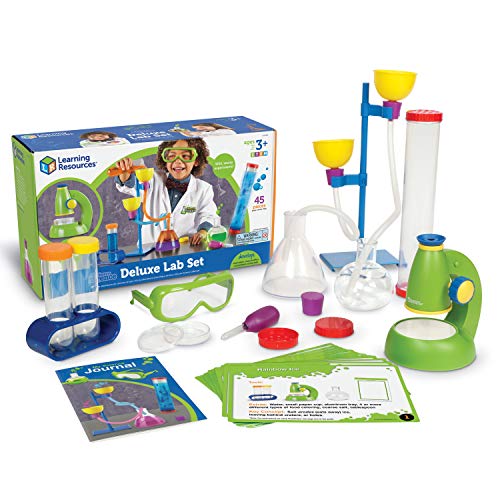
This Preschool Science Kit supports early hands-on exploration with engaging activities and a written activity card set. It emphasizes problem solving, fine motor development, following step-by-step directions, and making predictions. The included journal helps kids record observations, reinforcing scientific thinking from an early age while integrating math concepts through measurement and sequencing.
Junior Chemistry Starter Kit

Geared toward early learners, this chemistry-oriented kit provides a doorway to exploring basic reactions using household-safe materials like baking soda and vinegar. It includes 50 hands-on experiments with step-by-step illustrated instructions. Young scientists can practice following directions, observing changes, and drawing conclusions about cause and effect, all within a safe, accessible framework.
Fizzing Volcano and More

This 13-piece kit brings fizz and foam into learning with clear, colorful guides for ten experiments. Children build observation and measurement skills while engaging with age-appropriate lab tools like a beaker and test tubes. The guided activities support critical thinking as kids predict outcomes and compare results across multiple experiments, all in a kid-friendly format.
Primary Science Lab Activity Set
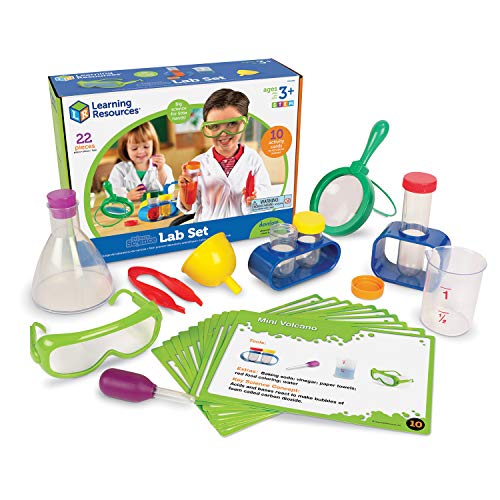
This activity set focuses on beginner-friendly lab experiences, featuring visually appealing tools and easy-to-follow exercises. Kids learn the names of science instruments, practice basic scientific methods, and engage in pretend-play scenarios that illustrate real-life laboratory activities. The kit supports early vocabulary development and a practical understanding of scientific processes.
My First Science Kit From Doctor Jupiter

With over 50 experiments, this kit offers a broad introduction to STEM for young explorers. Activities emphasize inquiry, observation, and problem-solving while presenting fun, screen-free science experiences. The kit includes kid-friendly experiments that cover a range of topics, from chemical reactions to basic physics, designed to engage both boys and girls in discovery and creative thinking.
Buying Guide
- Age appropriateness: Choose kits that match the child’s developmental stage and safety needs. Look for clear instructions and simple tools suited for small hands.
- Hands-on focus: Prioritize kits that emphasize active exploration, prediction, observation, and recording results to foster scientific thinking.
- Variety of concepts: A mix of physics (magnets), chemistry (reactions), and general science activities helps build a broad foundation.
- Safety considerations: Opt for kits with non-toxic materials, child-safe tools, and supervision guidance for preschool use.
- Skill progression: Select kits that begin with basic concepts and gradually introduce more complex activities to support growing curiosity.
- Component quality: Durable containers and clearly labeled parts ease use and storage, reducing frustration during learning sessions.
- Instruction clarity: Illustrated guides or step-by-step cards help young learners follow along independently or with minimal adult assistance.
- Engagement value: Include a mix of experiments that produce visible results (fizz, color change, visible outcomes) to maintain enthusiasm.
- Learning environment: Consider kits that come with kid-friendly safety gear and scalable activities suitable for home or classroom use.