Best Activity Tables for Babies: Engaging Learning Centers for Toddlers
Choosing the right activity table helps babies develop fine motor skills, early language, and sensory exploration. This guide highlights five popular options, covering bilingual activities, musical learning, and durable wooden designs. Each entry includes key features to help American caregivers pick a table that grows with a child—from tummy time to toddler play. The selections emphasize safety, ease of use, and developmental benefits across early childhood.
| Product | Brand |
|---|---|
| VTech Magic Star Learning Table (Frustration Free Packaging), Yellow | VTech |
| Dahuniu Baby Toy- Engaging Baby Activity Center | Dahuniu |
| LeapFrog Little Office Learning Center (Frustration Free Packaging), Green | LeapFrog |
| Skip Hop Baby Activity Center: Interactive Play Center | Skip Hop |
| Fisher-Price Baby to Toddler Toy 3-in-1 Hit Wonder Activity Center | Fisher-Price |
The five selections below are organized to help caregivers compare features such as language options, sound and light activities, portability, and growth potential. Each section provides a concise overview, then highlights how the product supports early learning milestones, safe play, and long-term value.
VTech Magic Star Learning Table Yellow
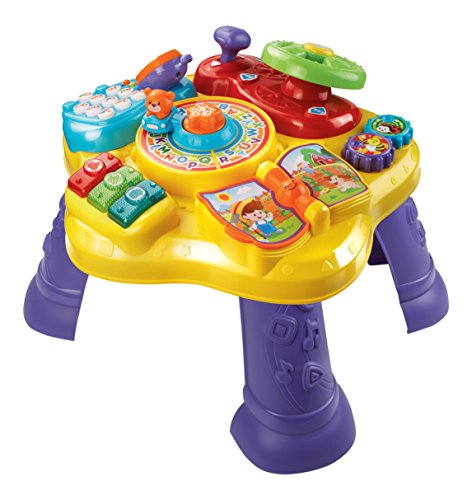
Featuring six bilingual activities in English and Spanish, this vibrant table invites babies to explore vocal cues, colors, and cause-and-effect. A steering wheel turns to move a bear around the table, while a flipbook page plays nursery rhymes. Turning gears strengthens fine motor skills, and light-up music buttons introduce basic concepts like color and sound. Designed for early curiosity, the play panel supports pretend play and language development, with a compact, sturdy footprint suited for bright playrooms and living spaces.
Key benefits include bilingual exposure, which supports dual-language households or bilingual households seeking early vocabulary from a young age. The toy’s engaging visuals, sound feedback, and manipulatives fit well with play-based learning, encouraging sustained attention and fine motor practice in short, frequent sessions for toddlers and younger infants.
Dahuniu Baby Activity Center

Designed for 6 to 18 months, this activity center combines colorful lights, classic music, and a suite of learning stimuli. Its multi-instrumental activities, gear features, and toy keys support early numeracy, shapes, and color recognition, while encouraging exploration of sounds and motor coordination. The option to use the table with or without legs adds versatility for floor play or elevated play on a table. Two-level volume control accommodates different environments, ensuring comfortable listening during quiet play or louder sessions.
The product emphasizes safe construction with durable materials suitable for busy babies. By offering a range of play modes—from music and instrument play to sensory gear interactions—this center supports sensory integration, hand-eye coordination, and early cognitive associations in a developmentally appropriate manner.
LeapFrog Little Office Learning Center Green
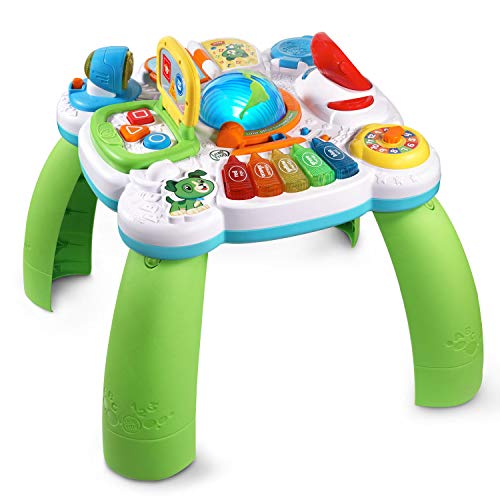
This first desk for little ones includes a laptop, phone, globe, and 27 electronic touch points for imitational play. In Explore, Learn, and Music modes, children hear first words, greetings, and music from around the world, supporting early language development and cultural awareness. The laptop encourages screen-free engagement, while the interactive buttons reveal animals on the screen, blending pretend play with object recognition. The design aims to foster early literacy skills, basic math concepts through play, and social language through role-play.
Key learning outcomes focus on vocabulary expansion, animal recognition, and simple interactive sequences that promote memory and cognitive flexibility. This table supports structured pretend play as well as spontaneous exploration, making it a versatile choice for households seeking a language-rich, interactive learning environment.
Skip Hop Activity Center: Explore & More
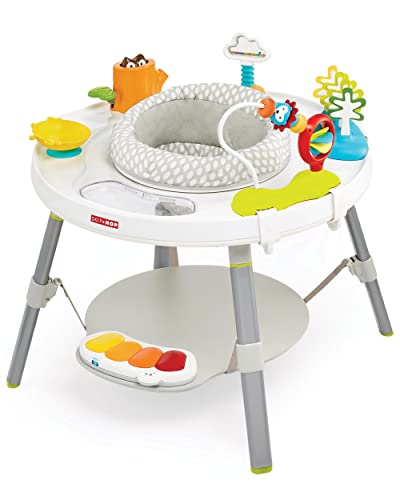
Skip Hop’s three-stage Grow-with-Me design tracks a child from infant to toddler, supporting sit, swivel, bounce, and play, then cruising and interactive learning. With 25+ developmental activities, the center includes a light-up piano, music modes, a peek-a-boo owl, and repositionable toys to align with a child’s growth. The product’s weight and age range (4 months and up) offer a long window of use while enabling parents to reposition toys for various development focuses, such as motor skills, auditory processing, and cause-and-effect learning.
Developmentally, this center emphasizes multi-sensory engagement through music, visuals, and physical interaction. Its sturdy, stable base helps reduce tipping, making it a practical option for busy households seeking a durable play station that remains engaging as the child grows in height and mobility.
Fisher-Price Hit Wonder Activity Center

This 3-in-1 center transitions from baby to toddler play with a seat that spins 360 degrees for exploring, a bead bar insert, and a cruise-around table mode. The activity lineup includes lights, sounds piano, microphone teether, jingle maraca, tambourine with mirror, and more. Toddlers enjoy a multi-sensory musical experience with a variety of textures and actions that reinforce rhythm, fine motor control, and coordination. The design supports extended engagement through multiple play configurations, making it a versatile option for families seeking long-term entertainment and developmental value.
With a focus on growing with the child, this Fisher-Price model emphasizes safe materials, intuitive play, and a broad array of activities designed to stimulate curiosity and motor skills in short, repeatable play sessions.
Buying Guide: Key Purchase Considerations
- Age and growth trajectory: Look for multiphase activity centers that transition with your child from infancy to toddlerhood. A product that supports sitting, standing, and cruising can maximize value.
- Motor and cognitive development: Select tables with a mix of fine motor activities (gears, buttons, beads) and cognitive tasks (shapes, colors, counting, sounds) to support hand-eye coordination and early math concepts.
- Language and social play: Bilingual features or devices with interactive storytelling, greetings, and role-play can boost language acquisition and social interaction.
- Safety and build quality: Prioritize sturdy bases, rounded edges, non-toxic materials, and a weight-bearing capacity appropriate for your child’s development stage.
- Portability and setup: Consider whether legs are detachable or if the unit is suitable for floor play as well as table play. Weight and size impact storage and travel use.
- Durability and cleaning: Durable plastics and seals that resist fingerprints and easy-to-clean surfaces help caregivers manage daily use and spills.
- Noise and sensory balance: If a product includes music or lights, evaluate volume control and the pace of activity to avoid overstimulation in small spaces.
When selecting an activity table, assess your home layout, space constraints, and the child’s current development stage. Cross-reference features with family goals—language exposure, early STEM concepts, and safe, interactive play—to choose a table that supports consistent, enriching play sessions.