Best Math Toys for Kids to Boost Early Numeracy and STEM Fun
Discover engaging, hands-on math toys that support counting, number sense, and problem-solving for children ages 3 to 12. This guide highlights five well-rounded options that mix traditional manipulatives with interactive learning to strengthen math confidence and fine motor skills. Each pick emphasizes age-appropriate challenges, durability, and classroom or homeschooling versatility.
| Product | Brand | Key Focus | Ideal For |
|---|---|---|---|
| Learning Resources MathLink Cubes | Learning Resources | Counting, addition, subtraction, patterns | Kindergarten to 2nd grade, homeschool or classroom |
| Educational Insights Math Whiz | Educational Insights | Hands-on practice with drill, challenge, and calculator modes | 6+ years, elementary to middle school practice |
| Preschool Learning Toys for Toddlers MOTREE | MOTREE | Counting, number blocks, fine motor and cause-and-effect | Ages 2-5, early learners |
| Learning Resources Pixel Art Challenge | Learning Resources | Pattern blocks, spatial reasoning, hands-on building | 5+ years |
| Melissa & Doug Abacus | Melissa & Doug | Counting with 100 beads, classic manual counting | 3-5+ years |
Learning Resources MathLink Cubes
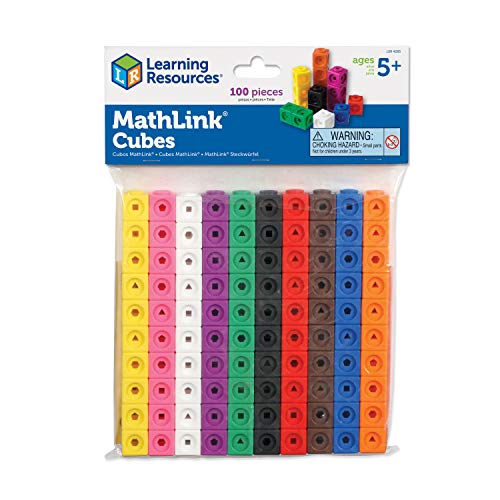
MathLink Cubes come in a set of 100 brightly colored cubes that snap together and separate easily. They support one-to-one correspondence, counting to 100, skip counting, and basic operations like addition and subtraction, plus graphing essentials. The cubes also aid color and shape identification, patterning, and fine motor skills. Teachers and homeschoolers can use them for everything from free play to structured math stations, with activities aligned to early math standards. Cubes are designed to promote school readiness and hands-on number sense through varied patterning and grouping tasks.
Educational Insights Math Whiz

Math Whiz is an electronic math game that covers addition, subtraction, division, and multiplication in a handheld format. It offers three modes of play—Drill, Challenge, and Calculator—along with eight levels of difficulty to grow with the child. This tool converts repetitive practice into an engaging experience, promoting quick recall and procedural fluency. It’s suitable for independent study, classroom centers, and travel learning, making it a versatile option for diverse math skill levels.
MOTREE Preschool Counting Blocks

This Montessori-inspired set includes a wooden finger board, 13 colorful number blocks, 8 flash cards, and a holder. It targets early math concepts like counting, basic addition and subtraction within 10, and visual number sense. The manipulatives support fine motor development through hands-on interaction and encourage cause-and-effect learning. It is well suited for preschool classrooms, homeschooling environments, and parents seeking durable, compact math learning tools for young children.
Learning Resources Pixel Art Challenge

Pixel Art Challenge combines math with pattern blocks and building activities to boost critical thinking and spatial reasoning. The kit includes 10 double-sided challenge cards with escalating difficulty, encouraging kids to plan, place, and problem-solve as they create patterns and designs. It supports hands-on STEM exploration and can be used in small groups or individual practice. The tactile, screen-free format makes it a practical option for classrooms and home learning.
Melissa & Doug Abacus

The Melissa & Doug Abacus is a classic wooden counting toy featuring 100 beads on five wires. Made from solid hardwood, it offers durable construction and a traditional counting experience. The abacus supports early math skills, including counting, one-to-one correspondence, and basic arithmetic. It also connects with extension activities that promote logical thinking and patterning, making it a reliable, long-lasting addition to any early math toolkit.
Buying Guide
Key purchase considerations when selecting math toys for kids:
- Age and skill alignment: Choose toys that match the child’s current ability while offering scalable challenges to avoid frustration or boredom.
- Hands-on vs. digital balance: A mix of manipulatives and interactive electronic tools supports varied learning styles and keeps engagement high.
- Durability and material: Durable, non-toxic materials are important for frequent handling by young children.
- Portability and storage: Compact sets with organized storage help with clean-up and on-the-go learning.
- Curriculum alignment: Look for activities that reinforce common core or state standards, including counting, patterns, and basic operations.
- Versatility: Toys that support multiple math concepts (counting, addition/subtraction, patterning, spatial reasoning) provide greater long-term value.
- Group play considerations: Some items work well for classroom centers, while others are ideal for individual practice or homeschooling.
Comparison snapshot to aid decision-making:
- Best for foundational counting and patterning: MathLink Cubes and Abacus provide tactile, scalable counting experiences with clear progression.
- Best for interactive practice: Math Whiz offers varied modes and difficulty, suitable for ongoing skill development.
- Best for Montessori-inspired exploration: MOTREE blocks emphasize hands-on, sensory math learning with cause-and-effect.
- Best for spatial reasoning and creativity: Pixel Art Challenge combines pattern building with problem solving in a visually engaging format.