Best Science Toys for Boys: Top 5 STEM Kits for Curious Kids
Explore engaging science toys that spark curiosity and build foundational STEM skills. The following 5 kits offer hands-on experiments, interactive learning, and exciting demonstrations that appeal to boys ages 4–12 and beyond. Each choice emphasizes safe, educational play while introducing concepts in science, technology, engineering, and math.
Summary Table of Chosen Products
| Product | Brand | Highlights |
|---|---|---|
| Doctor Jupiter My First Science Kit | Doctor Jupiter | 100+ experiments; screen-free; early STEM |
| National Geographic Magic Chemistry Set | Blue Marble | 10 magic tricks; kid-friendly guide |
| Snap Circuits Jr. SC-100 | Snap Circuits | 100+ projects; colorful instruction book |
| Thames & Kosmos Mega Cyborg Hand | Thames & Kosmos | Hydraulic, pneumatic hand; no motors |
| Klutz Lego Gear Bots | Klutz | 8 kinetic builds; LEGO Technic elements |
Doctor Jupiter 100+ Experiments Kit

The Doctor Jupiter kit offers more than 100 experiments designed to cultivate early scientific thinking. It emphasizes active exploration, encouraging kids to ask questions, observe outcomes, and develop problem-solving skills. The kit supports STEM learning in a playful way, with activities that cover basic physics, chemistry, and observation techniques. It is positioned as a great birthday or holiday gift, providing many screen-free opportunities for discovery and hands-on learning that fit into family STEM time.
Features highlight ongoing discovery: a wide range of experiments keeps children engaged across multiple sessions, and the kit invites kids to explore Water Fireworks and Walking Water among other experiments. It is suitable for teaching foundational scientific concepts and nurturing curiosity in 4–8 year olds and beyond with guided challenges and open-ended exploration.
National Geographic Magic Chemistry Set
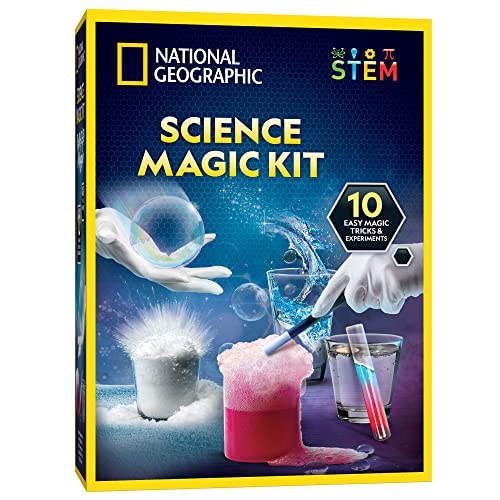
National Geographic Magic Chemistry Set blends science with magic tricks to captivate young learners. The 10 science experiments are designed to wow kids while teaching core concepts like chemical reactions, color changes, and buoyancy. The included wand and gloves add a performative element that makes science feel like magic, encouraging children to present their experiments confidently. The illustrated, kid-friendly guide explains the science behind each trick and provides insights into techniques used by real scientists.
This kit is ideal for children who enjoy hands-on activities and show an interest in chemistry and physics. The magic-theme approach helps sustain engagement, while the step-by-step instructions support independent or guided learning. It also serves well as an interactive demonstration gift for friends and family, promoting discussion about scientific principles.
Snap Circuits Jr. SC-100 Electronics Kit

Snap Circuits Jr. SC-100 introduces electrical engineering concepts through safe, modular construction. With over 100 possible projects, kids can build a variety of electronic devices using color-coded, snap-together parts. The kit emphasizes practical skills such as circuit recognition, problem-solving, and sequencing while delivering immediate, tangible results like a working sound alarm or a spinning propeller. It is well suited for ages 8 and up, offering a scalable learning path from simple to more complex projects as confidence grows.
The included project manual uses vibrant visuals to guide experimentation, ensuring young builders can follow along with minimal adult supervision. The simplicity of the snap-together system makes it easy to reuse and expand with additional kits, supporting ongoing STEM engagement beyond initial play sessions.
Thames & Kosmos Mega Cyborg Hand

Megacyborg Hand is a hands-on pneumatic kit that lets kids build a large, wearable mechanical hand controlled by their own hand movements. No motors or batteries are required—air pressure and water power the hydraulic pistons, enabling finger joints to open and close with adjustable angles for precision movement. This kit blends engineering concepts with tactile, interactive play, helping children understand hydraulics, leverage, and force transmission while providing a dramatic, screen-free play experience.
The project supports iterative design and testing, inviting learners to modify finger angles and grip strength. Its size and mechanical focus make it a standout option for kids who enjoy robotics, anatomy-inspired play, and big, visible results from their experiments. The DIY feel promotes curiosity about how everyday machines convert energy into motion.
Klutz Lego Gear Bots

Klutz Lego Gear Bots combines LEGO Technic elements with papercraft to create eight kinetic, gear-driven creatures. The kit teaches axial movement, cams, and cranks within a compact, readable 64-page guide. Children learn by building and iterating, gaining practical insights into mechanical engineering and simple machines while following clear steps. The hands-on activities promote spatial reasoning, problem-solving, and perseverance as projects evolve from concept to motion.
Designed as a giftable STEM activity, Gear Bots integrates creativity with core engineering principles. The combination of LEGO pieces and hand-crafted builds encourages experimentation and collaboration, making it suitable for individual play or group projects in classroom or home settings.
Buying Guide: Key Purchase Considerations and Comparisons
When selecting science toys for boys, consider age appropriateness, educational depth, safety, and the balance between guided instruction and open-ended exploration. The following perspectives help compare options across diverse learning styles and interests:
- Age range and developmental fit: Look for kits clearly labeled for the child’s age to ensure appropriate complexity and safety. Kits like Snap Circuits and Cyborg Hand cater to a broad age range, while others emphasize early STEM concepts for younger children.
- Hands-on versus guided learning: Some kits provide highly structured experiments (e.g., the magic chemistry set), while others encourage open-ended exploration and iteration (e.g., Doctor Jupiter and Mega Cyborg Hand). A mix within a family’s collection supports diverse curiosity.
- Safety and simplicity: Check for non-toxic materials, large parts, and straightforward assembly. Pneumatic systems in the Cyborg Hand introduce engineering concepts without motors, reducing complexity and risk for younger builders.
- Educational breadth: Kits that cover multiple disciplines (chemistry, physics, electronics) provide a broader science foundation. For example, Doctor Jupiter offers 100+ experiments spanning several STEM areas, while National Geographic kits blend science with presentation skills.
- Implementability and expansion: Some products are designed to be extended with additional sets or complementary kits (e.g., Snap Circuits with other kits, or Doctor Jupiter with other science kits), providing ongoing value.
- Engagement factors: Magic tricks and visually dramatic experiments can boost engagement and motivation, especially for younger learners who respond to performative demonstrations.
In sum, a well-rounded set of science toys balances structured learning with opportunities for imaginative experimentation. For a household focused on early STEM foundations, including a Doctor Jupiter or National Geographic Magic Chemistry Set alongside more engineering-oriented kits like Snap Circuits or Cyborg Hand can create a comprehensive, enjoyable science playground for boys across multiple age groups.