Best Coding Robots for Elementary Students: Screen-Free STEM Toys That Teach
This article highlights five engaging coding robots designed for elementary learners. Each option blends hands-on play with fundamental programming concepts, offering screen-free and screen-based experiences to fit classroom or homeschool settings. The selections emphasize critical thinking, problem solving, and creativity, with varying modes of interaction to accommodate diverse learning styles.
| Product | Brand | Core Benefit |
|---|---|---|
| Learning Resources Cooper The STEM Robot | Learning Resources | Screen-free coding with 40 coding cards and multi-mode learning |
| Learning Resources Code & Go Robot Mouse | Learning Resources | Easy push-button coding with lights and sounds for young learners |
| Sphero Indi | Sphero | Hybrid screen-based and screenless introduction to CS concepts |
| Learning Resources Botley The Coding Robot Activity Set | Learning Resources | Comprehensive screen-free coding with remote programmer |
| Ozobot Evo Classroom Kit | Ozobot | Dual coding modes and extensive lesson library for classroom use |
The following sections delve into each product’s strengths, how they support core STEM and coding skills, and practical considerations for selecting the best fit for a classroom, library, or home learning environment.
Learning Resources Cooper The STEM Robot

Cooper The STEM Robot provides screen-free coding with accessible command buttons and 40 coding cards. Its multi-mode design includes line tracking, optical sensing, obstacle avoidance, and robot-to-robot communication, encouraging critical thinking and collaborative exploration. A USB-C charging cable adds convenience, making it ready for ongoing classroom sessions without frequent battery changes. This option supports foundational programming concepts through tangible, hands-on activities, suitable for early elementary learners.
Learning Resources Code & Go Robot Mouse
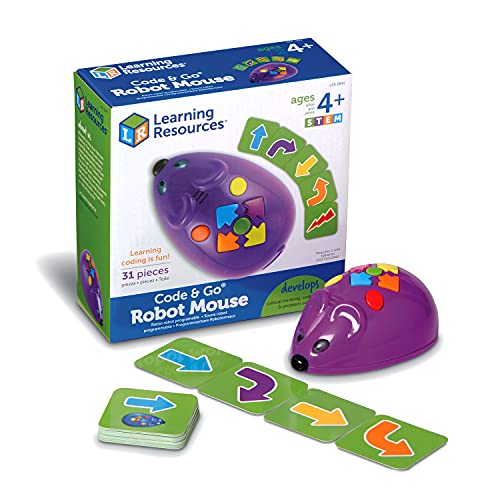
Code & Go Robot Mouse introduces young learners to coding with a simple, easy-to-use programmable mouse. Pictorial direction coding cards guide planning, and push-button controls execute the commands. The mouse lights up and produces sounds to reinforce feedback, supporting problem-solving and sequential thinking. Requires three AAA batteries (not included). Its approachable design makes it ideal for tabletop or floor play in classrooms or homes, building confidence in early coding concepts.
Sphero Indi Student Kit

Indi blends screenless learning with a transition to screen-ready activities through the Sphero Edu Jr app. Students start with color tiles to grasp CS basics before moving to drag-and-drop programming. The kit supports cross-curricular learning—reading, math patterns, and science—while reinforcing directionality, storytelling, and observation skills. Included Challenge Cards and standards-aligned lessons provide scaffolding, offering structure without restricting creativity in problem solving and exploratory play.
Teach Tech Mech 5 Mechanical Coding Robot
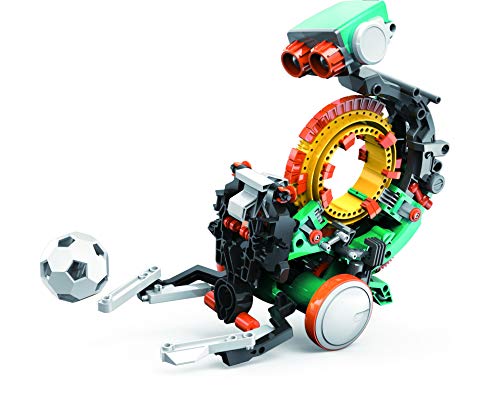
Mech-5 is a distinctive mechanical coding robot designed for early engineers. The robot supports mission-based learning that introduces mechanical engineering principles alongside coding basics. By snapping coding buttons onto a coding wheel, students can perform actions like throwing, lifting, kicking, and drawing, fostering hands-on experimentation and conceptual understanding of mechanical systems and programming logic. This kit emphasizes tactile learning and engineering creativity in a compact format.
STEM Science Kits for Kids 5-7 to 12

This multi-robot kit includes an obstacle-avoidance robot, a solar-powered car, a tank, a wind-powered car, and a glider. It is designed to engage elementary students in building and testing robots while solving physical problems. The variety fosters curiosity, engineering thinking, and teamwork, though batteries are not included. Packaging makes it suitable as a gifts-oriented STEM activity set for boys and girls aged 6-12, with a focus on hands-on experimentation and science fair-style projects.
Buying Guide: Key Purchase Considerations
- Learning style compatibility: Screen-free options emphasize hands-on manipulation and tactile feedback, while screen-based tools integrate digital programming concepts. Choose a mix that aligns with your curriculum goals and student preferences.
- Age and developmental level: For early elementary learners, simple push-button or color-code systems offer quick wins and confidence. As skills grow, systems with multi-step tasks or drag-and-drop programs provide progression.
- Ease of use and setup: Systems that come ready out of the box with minimal setup help educators start quickly. Remotes, charging solutions, and batteries should be considered for classroom reliability.
- Curriculum alignment: Look for kits with structured lessons, challenge cards, or lesson libraries that map to standards in science, technology, engineering, and math (STEM).
- Durability and safety: Classroom environments demand robust construction and child-safe components. Check for snap-tits, secure fastenings, and non-toxic materials.
- Expandability and collaboration: Some kits support multiple robots or pair programming, enabling group work and scalable challenges.
- Accessibility and inclusivity: Dual coding modes (screen-free and screen-based) cater to diverse learners, including learners with different attention spans or visual preferences.
- Cost of ownership: Consider not only the initial kit price but also compatible accessories, batteries, and charging needs over time.
Overall, selecting a mix of screen-free and digital coding robots can provide a well-rounded introduction to computational thinking. The highlighted options span introductory, middle, and advanced levels, offering varied modes of instruction, pacing, and content depth to support diverse classrooms and homeschool environments.