Best Busy Boards for Adults With Dementia and Alzheimer’s
Discover top-rated busy boards designed to calm, engage, and stimulate adults living with dementia or Alzheimer’s. These Montessori-inspired, tactile activities support relaxed focus, motor skills, and sensory engagement. Below, five highly relevant options are featured with their key attributes to help caregivers choose the best fit for their loved one.
| Product | Brand | Highlights |
|---|---|---|
| Dementia Activities for Seniors Set | Lontcs | Tactile, multi-activity board; folded 9.25 x 11.8 in, unfolds to 11.8 x 18.9 in; includes a double-sided photo album page |
| Fidget Busy Board for Adults with Dementia | Assistex | Relaxes with varied activities; 13 sensory items; portable and comforting |
| ZERIFAM Fidget Busy Board | ZERIFAM | Tactile sensory playground; supports anxiety relief; compact Montessori design |
| Dementia Activities for Seniors | ESEHGS | 12-in-1 tactile activities; engages memory and hand use; varied sensory刺激 |
| Fidget Boards for Adults with Dementia | TrenHivSto | Sturdy, engaging elements; reduces restlessness; focuses on relaxation |
The following sections present five selected products with concise descriptions based on their features, aimed at helping readers compare options quickly and make informed purchasing decisions.
Dementia Activities for Seniors Set
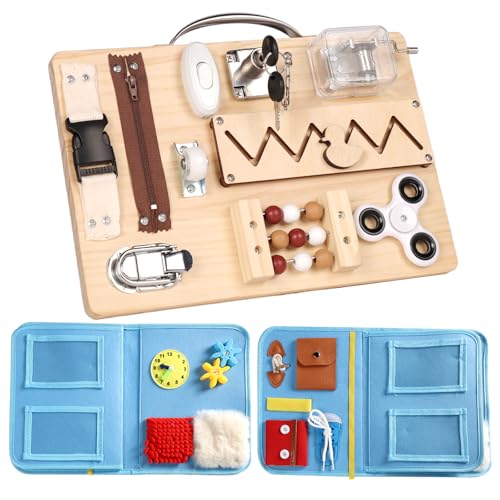
This Lontcs busy board emphasizes relaxation through a range of tactile experiences. It is designed for seniors coping with Alzheimer’s or dementia, offering a therapeutic outlet to practice motor skills while staying engaged. A Montessori-inspired wooden construction supports varied sensory exploration, making it suitable for memory loss, autism, ADHD, anxiety, and more. A notable feature is the double-sided photo album page included in the fidget blanket, helping the loved one connect with family during activities. The approximate unfolded size is 11.8 x 18.9 inches, with a folded form around 9.25 x 11.8 inches.
Fidget Blanket for Adults with Dementia

Assistex’s fidget blanket provides touch-sensory exercises to relieve anxiety and calm restless hands. The product includes 13 stimulating sensory items, a compact folded size of around 22 x 28 cm (unfolded about 45 x 28 cm) with convenient handles. It is designed to engage elderly users with memory loss, dementia, stroke, ADHD, anxiety, autism, and Alzheimer’s, offering a comforting, multisensory activity experience in a portable format.
Assistex Fidget Busy Board for Adults

Assistex offers a calming, sensory-rich board intended to relax seniors with Alzheimer’s or dementia. The board features tactile activities that help with motor skill practice and cognitive engagement. The design emphasizes anxiety relief, soothing sensations, and repetitive engagement to keep hands busy. The kit is described as a quick, comforting way to engage users with various sensory modalities—visual, tactile, and auditory—supporting a sense of calm and focus.
ZERIFAM Fidget Busy Board for Adults

ZERIFAM presents a tactile sensory board designed as a quick, comforting activity for seniors with memory loss. The board supports anxiety relief and includes a variety of fun sensory activities affecting tactile, visual, and auditory senses. Its Montessori-inspired wood construction provides a robust, kid-safe-feel adapted for adult use, aiming to reduce restlessness and promote calm engagement through structured play.
Dementia Activities for Seniors Fidget Busy Board

This ESEHGS board emphasizes relaxation and cognitive engagement through a 12-in-1 set of activities. It combines real-life tactile stimuli to evoke memories, improve cognitive abilities, and keep hands busy for adults with dementia and other needs. The varied activities are designed to reduce boredom and support ongoing mental stimulation, offering an accessible entry point into structured sensory play for seniors.
Fidget Boards for Adults with Dementia

TrenHivSto’s fidget board is noted for high-quality construction and a variety of sensory elements designed to maximize engagement and reduce anxiety. The board is described as durable and satisfying for users who enjoy tactile stimulation, providing ongoing mental exercise and a sense of comfort. The product emphasizes reliability and long-term use for daily activities with dementia patients.
Buying Guide
- Purpose and user needs: Choose boards with a mix of tactile, visual, and auditory elements to match the individual’s preferences, memory stage, and motor skills.
- Size and portability: Folded dimensions affect handling and transport. Consider unfolded sizes for home use and compact designs for travel or caregiver visits.
- Durability and materials: Look for sturdy, wood-based construction that can withstand frequent manipulation and resist wear from elderly users.
- Safety considerations: Ensure there are no small parts that could detach, and verify the product is smooth with rounded edges to prevent injuries.
- Caregiver suitability: Some boards include a guide or structured activities to support caregivers in facilitating sessions and maintaining engagement over time.
- Sensory balance: A good board provides diverse stimuli (touch, sight, sound) without overwhelming the user; consider a mix of simple and complex tasks.
- Maintenance: Consider ease of cleaning and whether any components are removable for separate washing or sanitizing.
- Cost vs longevity: Higher-quality boards may offer longer-term value through durability and richer sensory experiences.
- Personalization potential: Boards that allow adding family photos or familiar items can enhance emotional connection and engagement.
This article presents objective product information and does not endorse any single option. Readers should evaluate individual needs, consult caregivers, and consider trial use where possible to determine the best fit for daily routines and cognitive support.