Best Counting Toys for 2 Year Olds: Fun Learning Tools for Early Math
Parents and caregivers look for toys that combine play with learning, helping 2-year-olds explore numbers, colors, and sorting skills. The following picks focus on counting, matching, and basic math concepts through interactive, sturdy toys. Each product supports fine motor development and early arithmetic in engaging ways, with safe materials and age-appropriate challenges. Whether at home or on the go, these toys encourage curious minds to explore numbers through hands-on play.
| Product | Brand | Key Benefit |
|---|---|---|
| Learning Toy for Toddlers 1 2 3 Years Old | Play-Act | Counting, matching, sorting with a farm train |
| VTech Chomp and Count Dino, Green | VTech | Color, food, and counting through interactive play |
| GeroCrew Wooden Montessori Toys | GeroCrew | Peg-puzzle style number matching and stacking |
| Learning Resources Snap-n-Learn Matching Dinos | Learning Resources | Two-piece dinos for color, species, and shape matching |
| Melissa & Doug Counting Caterpillar | Melissa & Doug | Colorful numbered segments for early counting |
These selections emphasize safe construction, intuitive play, and opportunities to practice counting, sorting, and basic math concepts. Each item is suitable for toddlers and supports foundational numeracy skills that build confidence for preschool math activities.
Learning Toy for Toddlers: Counting, Sorting & Farm Train

This Montessori-inspired toy combines counting with color sorting and pretend-play farming. It includes 10 numbered barns and four wagon carriages pulled by a locomotive, offering multiple counting challenges as kids load, unload, and sort the pieces. A detachable roof on the open train encourages interactive storytelling as children place farm figures inside. The design supports early math concepts through hands-on play and fosters color recognition and sequencing.
VTech Chomp and Count Dino
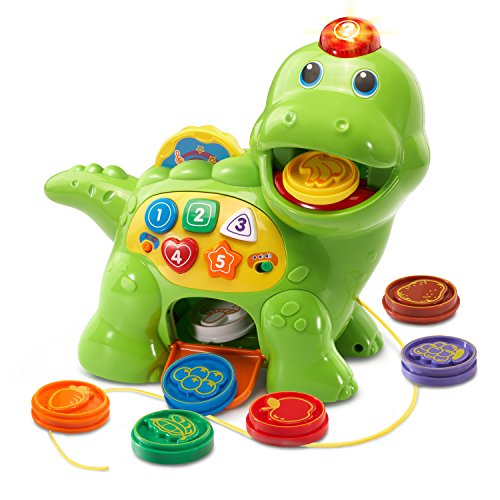
The Chomp and Count Dino introduces colors, foods, shapes, and counting through interactive play. As children feed the dinosaur different colored pieces, it responds with sounds and phrases, reinforcing early math concepts. The toy also features a larger learning center with more than 130 songs, melodies, and sounds. Kids can answer Dino’s questions by selecting the correct food pieces, providing immediate feedback and a playful way to practice counting and categorization.
GeroCrew Wooden Montessori Toys: Number Puzzles & Sorting

GeroCrew’s wooden Montessori set focuses on number matching and shape stacking. Children match puzzle pegs to corresponding slots, supporting independent play and self-guided learning. The puzzle design encourages problem solving and number recognition, fostering a foundational math mindset while reducing screen time. The durable wooden construction makes it suitable for daily use in homes and classrooms alike.
Learning Resources Snap-n-Learn Matching Dinos

This set includes 18 pieces with nine two-piece dinos that snap together, offering multiple ways to match by color, species, or the backs’ shapes. The dynamic combinations promote early counting, color recognition, and classification skills. The two-piece dinosaur design supports fine motor development, hand-eye coordination, and the ability to visualize patterns—key components of early math readiness.
MOTREE Math Manipulatives For Preschool

Educational blocks and number manipulatives help children visualize counting and simple addition or subtraction within 10. The kit includes a wooden finger board, number blocks, flash cards, and a holder, offering a tactile route to understanding quantities and basic arithmetic. It aligns with Montessori-inspired approaches that emphasize concrete learning through manipulatives and kinesthetic activity.
Melissa & Doug Counting Caterpillar

This classic wooden toy features 10 numbered segments, each with a printed dot pattern to support counting practice. The color variety and bright design make it appealing for young learners. The Caterpillar promotes counting, color recognition, and fine motor skills while encouraging imaginative play and early mathematics exploration.
ABCaptain Counting Dinosaurs

ABCaptain’s dinosaur counting game includes 2 tweezers and 6 rainbow cups for sorting and counting activities. It supports preschool to early elementary education, helping children count, sort, and match while developing fine motor skills. The dinosaurs can be used to discuss colors, patterns, and simple math operations, making it a versatile tool for early numeracy.
Buying Guide: Key Purchase Considerations
- Age-appropriateness: Look for toys labeled for ages 2-4 that emphasize counting, sorting, and basic math concepts without small parts that pose choking hazards.
- Durability and materials: Wooden or high-quality plastics are preferred for daily use by toddlers. Check for smooth edges and non-toxic finishes.
- Learning goals: Choose toys with clear counting opportunities (numbers, counting beads, or sorting tasks) and opportunities for multiple play modes (free play, guided counting, or matching challenges).
- Motor skills development: Toys with stacking, sorting, or peg-puzzle elements support fine motor development and hand-eye coordination.
- Adaptability: Select toys that scale with a child’s growing abilities—starting with color recognition and simple counts, then advancing to basic addition and patterns.
- Engagement and reusability: Look for bright visuals, interactive feedback, and components that can be rearranged to sustain interest over time.
- Safety considerations: Avoid toys with small detachable parts for toddlers under 3, and ensure components are securely made and easy to clean.
- Parental involvement: Choose options that encourage guided play, allowing adults to introduce counting concepts while maintaining child-led discovery.
When selecting counting toys for 2-year-olds, prioritize items that blend numbers with practical play concepts like sorting, color matching, and sequencing. The listed options provide varied approaches—from train-based counting to dinosaur-themed sorting—so caregivers can tailor selections to a child’s interests while supporting early numeracy development.