Best Science Toys for 4 Year Olds: Hands-on Learning That Sparks Curiosity
Science toys for preschoolers blend curiosity with early critical thinking, offering safe, engaging ways to explore the natural world. This guide highlights five top picks that align with developmental milestones for four-year-olds, emphasizing hands-on exploration, simple experiments, and screen-free fun. Each product supports foundational STEM concepts while keeping activities approachable and enjoyable for young learners and their caregivers.
| Product | Brand | Age Range | Key Benefit |
|---|---|---|---|
| Doctor Jupiter My First Science Kit for Kids Ages 4-5-6-7-8 | Doctor Jupiter | 4-8 | 100+ experiments and open-ended discovery |
| National Geographic Kids Junior Chemistry Set | Blue Marble | 4-6 | Hands-on chemistry with everyday items |
| Educational Insights GeoSafari Jr. Talking Kids Microscope | Educational Insights | 3+ | Interactive exploration with engaging narration |
| Dan&Darci Root Viewer Kit | Dan&Darci | 4-8 | Transparent planter reveals underground root growth |
| Dan&Darci Dig a Dozen Dino Egg Kit | Dan&Darci | 3-12 | Excavation fun and paleontology learning |
Doctor Jupiter My First Science Kit

The Doctor Jupiter My First Science Kit introduces four-year-olds to a world of experiments designed to foster inquiry and problem-solving. With 100+ activities, children can explore essential STEM ideas through guided and open-ended projects. This kit emphasizes hands-on learning and playful experimentation, helping kids build confidence while developing early scientific thinking.
Key features include a structured approach that promotes questioning, observation, and discovery. The kit’s age-appropriate challenges encourage persistence and curiosity, making it a strong choice for family science play, classrooms, or birthday gifts. Pairing with other Doctor Jupiter science or electricity kits can expand the range of topics and experiences.
National Geographic Kids Junior Chemistry Set

Designed for budding young scientists, this chemistry kit introduces basic experiments using common household items like baking soda and vinegar. It includes 50 hands-on activities accompanied by illustrated, step-by-step instructions to guide young learners through safe, simple experiments. The visuals help kids follow along independently or with minimal caregiver support, reinforcing understanding through demonstration and practice.
Early chemistry concepts are explored through approachable setups, helping children notice reactions, predict outcomes, and connect everyday phenomena to scientific ideas. The kit’s user-friendly format makes it suitable for at-home exploration, after-school programs, or interactive science time with family.
Educational Insights GeoSafari Jr. Talking Microscope

The GeoSafari Jr. Talking Kids Microscope invites preschoolers to observe nature up close with kid-friendly magnification and engaging narration. Featuring Bindi Irwin’s voice, the device provides cues and information about animals and plants, enhancing listening skills and science vocabulary. It is a child-tested entry point into microscopy, designed for easy use by little hands and curious minds.
As a talking microscope, it offers a unique mix of visual detail and auditory learning, helping kids connect what they see with simple scientific explanations. This makes it a strong choice for curious minds who enjoy storytelling alongside exploration and supports early observational skills critical to scientific thinking.
Dan&Darci Root Viewer Kit

The Root Viewer Kit offers a transparent planter that reveals root growth, turning plant biology into an interactive observation session. The kit includes soil, seeds (Spring Onion and Cilantro), a viewing box with a lid, and easy-to-follow instructions. It’s an engaging way to introduce plant biology, growth cycles, and the science of roots to preschoolers.
Educational value comes from watching roots grow over time, enabling conversations about photosynthesis, germination, and stewardship of living things. The kit’s simple design supports caregiver-guided experiments, helping children connect classroom science with real-world gardening experiences.
Dan&Darci Dig a Dozen Dino Egg Kit
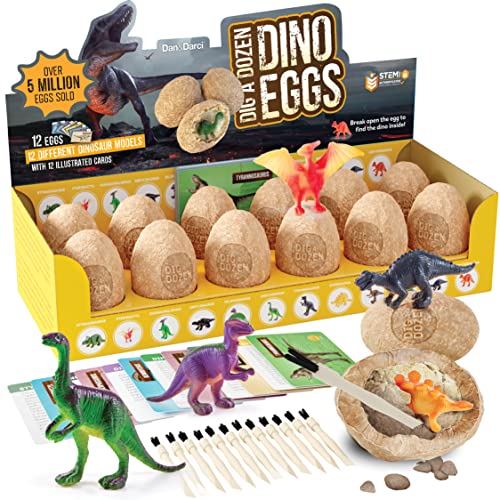
In this Dino Egg Kit, young explorers dig through 12 dinosaur eggs to uncover 12 unique figures, accompanied by learning cards describing each dinosaur’s history and traits. The dig kit includes chisels, brushes, and full-color learning cards, making it a captivating archaeology-themed activity that blends science, paleontology, and storytelling.
Educational value emerges through hands-on excavation, pattern recognition, and memory matching between the dinosaur cards and actual figures. This kit supports fine motor development, observational skills, and curiosity about prehistoric life, all while providing an entertaining, screen-free activity.
Buying Guide
When choosing science toys for four-year-olds, consider these purchase factors to maximize learning and enjoyment:
- Safety and age appropriateness: Look for non-toxic materials, large pieces, and clear age guidance. Ensure parts are not choking hazards for younger siblings.
- Hands-on vs. guided play: Balance sets that offer open-ended discovery with those that provide structured, illustrated instructions. A mix helps sustain interest and build confidence.
- Concept breadth: Select kits that cover multiple STEM themes (biology, chemistry, physics, engineering) or focus on a foundational concept repeatedly to reinforce understanding.
- Ease of use: Choose items with simple setup, intuitive instructions, and kid-friendly tools (tweezers, brushes, magnifiers) to promote independence.
- Caregiver involvement: Some kits benefit from ongoing caregiver support, while others empower kids to explore with minimal supervision. Decide what level of participation works best for your family.
- Reusability and durability: Prefer reusable components or kits that can be reassembled into different experiments to extend value and reduce waste.
- Educational value vs. entertainment: Aim for a balance where fun activities also build observation skills, critical thinking, and vocabulary related to science.
For varied learning preferences, consider mixing a chemistry-focused set with a biology-oriented exploration, and pair them with a child-friendly microscope or growth observation kit. Tracking progress with a simple notebook or photo journal can reinforce learning outcomes without the need for screens.