Best Interactive Toys for 3 Year Olds That Spark Learning and Fun
Kids at age three learn best through play that combines imagination with hands-on tasks. This guide highlights engaging, educational toys that promote fine motor skills, language development, and problem solving. Each pick here is designed for preschoolers, offering safe materials, colorful designs, and interactive features that hold a child’s attention while encouraging exploration.
Summary Of Chosen Products
| Product | Brand | Key Features | Amazon Link |
|---|---|---|---|
| LeapFrog 2-in-1 LeapTop Touch, Green | LeapFrog | 2-in-1 laptop for preschoolers; keyboard A-Z, 1-10; role-play emailing Scout; name spelling | Available on Amazon |
| Airbition Talking Flash Cards for Toddlers | Airbition | 224 words; sounds; Montessori style; autism-friendly features | Available on Amazon |
| HopeRock Whack A Frog Toy | HopeRock | 5 modes, 45 levels, light-up frogs; spray function; two-player mode | Available on Amazon |
| Magnetic Wooden Fishing Game Toy | NASHRIO | Alphabet letters and numbers; wooden; eco-friendly finishes | Available on Amazon |
| VTech Drill and Learn Toolbox | VTech | Electronic fix-it tray; drill, tools; sounds and songs | Available on Amazon |
LeapFrog 2-in-1 LeapTop Touch, Green

The LeapTop Touch combines a keyboard-style learning laptop with a transforming tablet, catering to preschoolers who enjoy role-playing and screen-based activities. The device offers an A-Z keyboard and 1-10 numbers, enabling early literacy and counting practice. In tablet mode, kids can explore interactive lessons and games that reinforce spelling and number recognition. Parents can personalize experiences to help children spell their own name. The dual-mode design supports varied play styles while encouraging sustained engagement and early tech literacy.
Airbition Talking Flash Cards for Toddlers

Airbition’s talking flash cards present 224 illustrated words across categories such as animals, vehicles, foods, and fruits. The device supports vocabulary expansion and cognitive development through audio cues and pronunciation in a standard American accent. It is positioned as a useful tool for speech therapy and autism support, with a simple on/off switch, a repeat function, adjustable volume, and a user-friendly card reader. The integration of sound and image helps toddlers associate words with images, enhancing memory and language acquisition during play.
HopeRock Whack A Frog Game

This interactive toy offers five modes and 45 escalating levels, designed to develop motor coordination and timing. Kids tap light-up frogs to score points, with a two-player option that encourages collaboration with a caregiver. An upgraded spray feature adds sensory stimulation and variety, with non-dazzling lights and soft glow transitions. The game emphasizes physical activity and reaction speed, making it a robust option for early math and rhythm skills within a playful framework.
Magnetic Wooden Fishing Game Toy
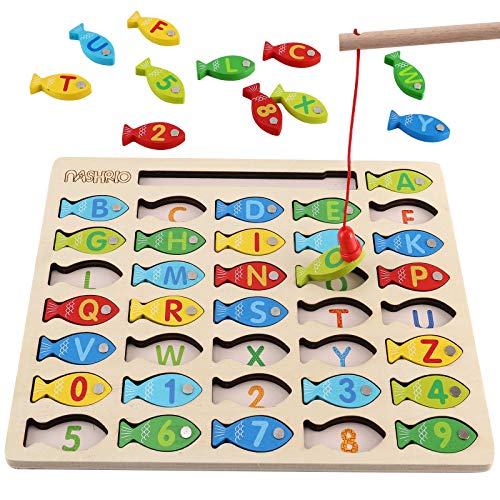
Designed for ages 3 and up, this wooden fishing game blends letters and numbers into an interactive puzzle. Children use a magnetic pole to catch fish pieces, fostering color recognition, letter familiarity, and number sense. Made with polished wood and non-toxic water-based paints, the toy supports safe, tactile play. It’s ideal for solo play or cooperative sessions, encouraging early math and literacy skills while improving hand-eye coordination and fine motor control.
VTech Drill and Learn Toolbox
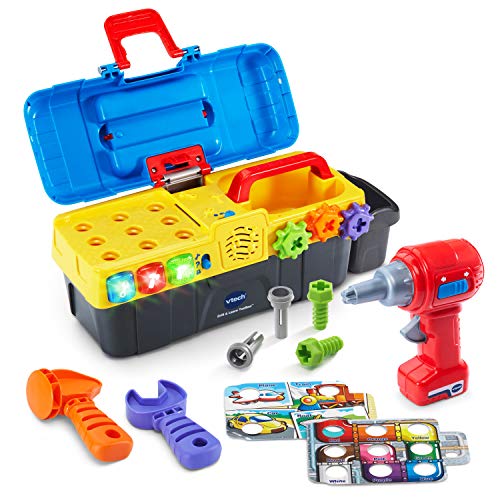
The VTech Drill and Learn Toolbox presents a role-play workshop with an electronic fix-it tray, a working drill, hammer, wrench, nails, and screws. The drill spins to simulate screw driving, while gears on the tray provide tactile feedback and movement. Light-up buttons trigger songs and educational content about tools, their uses, and sounds. This toolbox fosters practical problem solving, fine motor development, and early STEM concepts in an approachable, interactive package.
Buying Guide
Key purchase considerations for interactive toys for 3-year-olds include safety, age appropriateness, and durability. Look for non-toxic materials, rounded edges, and sturdy construction to withstand active play. Consider the child’s interests—language, fine motor skills, imaginative play, or early math—and choose toys that offer a mix of hands-on engagement and cognitive challenges.
Play style variety supports development: screen-based learning (e.g., LeapTop Touch) can boost literacy and familiarity with technology, while physical toys (e.g., fishing games and tools) strengthen motor skills, coordination, and problem-solving. Multi-user options encourage cooperative play and social interaction, which are valuable at this stage.
Durability and maintenance matter for longevity. Wooden toys and well-made plastics typically endure frequent handling. Check for simple battery use or none at all to reduce maintenance. Consider adaptivity: adjustable difficulty or multiple modes helps toys grow with a child’s developing abilities.
Price is a consideration, but value often comes from lasting educational benefits and safety. Compare features such as sound, lights, and text prompts, and assess whether a toy’s activities align with your child’s interests. Finally, verify Amazon listings for updated availability, warranties, and safety disclosures relevant to younger children.