Best RC Jets for Beginners: Top Ready-to-Fly Planes for New Flyers
For newcomers to remote-controlled aviation, choosing a jet that combines stability, easy controls, and durable build can make all the difference. The following hand-picked options are designed to help beginners gain confidence while enjoying the thrill of jet flight. Each model emphasizes beginner-friendly features like gyro stabilization, multiple takeoff modes, and robust foam construction. Read on to compare top picks, their standout features, and what to consider when buying your first RC jet.
| Product | Brand | Flight Time (approx.) | Takeoff Type | Key Benefit |
|---|---|---|---|---|
| TOIBUS F-22 Glider | TOIBUS | Up to 30 minutes total (2 batteries) | Ground & Hand Throw | Bright LEDs for night flights, strong auto balance |
| 4DRC Foam RC Plane | 4DRC | Up to 30 minutes | Ground & Hand Throw | Beginner-friendly gyroscope, durable foam |
| DEERC Future RC Plane | DEERC | Not specified (gives long play) | Ground & Hand Throw | 6-axis gyro, bright LED lights |
| DEERC F-16 Style X-62A | DEERC | Not specified | Two takeoff modes | Realistic fighter design, stable control |
| LEAMBE 4 Channel RC Plane | LEAMBE | Up to 15 minutes | Ground & Throw | Beginner-friendly flight control assistance |
TOIBUS RC Plane F-22 Glider for Beginners
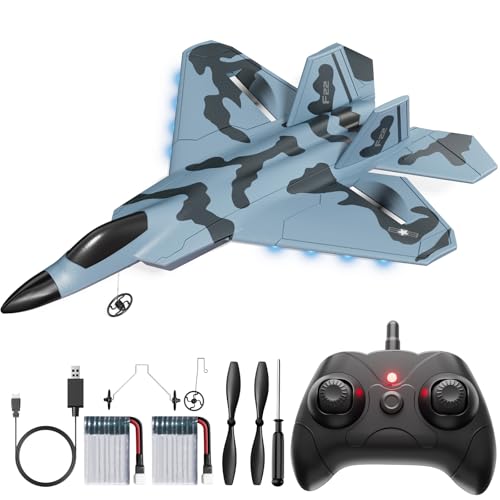
The TOIBUS F-22 Fighter-inspired RC plane is built from lightweight EPP foam, offering durability for new pilots. It includes bright LED lights for visibility during dusk or night flights and features two rechargeable batteries for extended flight time up to roughly 30 minutes. A six-gyro stabilization system helps keep the plane balanced, making it approachable for kids and beginners while enabling stable flight paths. Ground takeoff and hand-launch options add flexibility for various play environments.
4DRC Foam RC Jet Plane For Beginners and Adults

Inspired by classic jet fighters, the 4DRC foam RC plane emphasizes beginner accessibility with two takeoff modes—hand-throw and ground launch—and a flight range of up to 150 meters. The model ships with two batteries for extended sessions and uses foam construction with silicone head and carbon-fiber blades to endure minor crashes. A smart gyroscope helps automatically balance the fuselage, enabling stable flight for first-time pilots or family-friendly sessions.
DEERC Future RC Plane With LED Lights

The DEERC Future RC Plane combines ease of use with visually appealing LED lighting for night flights. It features a 6-axis gyro stabilization system to simplify handling and a robust EPP foam body that resists common beginner crashes. Two takeoff modes further adapt to different surfaces, making it practical for yards, parks, or open fields. Beginners can enjoy controlled ascents and straightforward navigation while learning the basics of aerobatic flight.
DEERC F-16 Style X-62A Vista RC Plane

Modelled after the F-16, the X-62A Vista delivers a fighter-jet aesthetic with practical control systems for beginners. It utilizes a 6-axis gyro for stabilization and a 4-channel layout to manage climbs, turns, and landings. The motor offers strong thrust to support smooth, stable takeoffs and confident performance as pilots build skills, making it a compelling option for aspiring jet enthusiasts.
LEAMBE 4 Channel RC Plane For Beginners

The LEAMBE RC Plane focuses on beginner-friendly control with a simple operation approach and two takeoff modes. It emphasizes stability through multi-level flight control assistance, allowing new pilots to learn gradually while mastering basic aerobatics. The aircraft provides a balance of endurance and performance, supporting up to 15 minutes of flight time per session with a solid scramble-ready design for outdoor use and easy landings.
Buying Guide: Key Purchase Considerations
When selecting an RC jet for beginners, consider these factors to ensure a smooth entry into the hobby:
- Stability and gyro systems: Look for planes with 6-axis or multi-axis gyros to help maintain level flight and reduce learning obstacles for beginners.
- Takeoff options: Models offering both hand-throw and ground takeoffs offer flexibility for different environments and skill levels.
- Durability: Foam construction and impact-resistant materials help survive inevitable beginner crashes, reducing replacement costs.
- Flight time and power: Longer flight times with extra batteries extend practice sessions. Check the total runtime and charging time to plan sessions effectively.
- Visibility: LED lighting improves night visibility and adds visual appeal, but ensure the aircraft remains safe to fly in low light conditions.
- Age appropriateness: Some models include integrated stabilization suitable for kids, while others target adult beginners with more advanced features.
- Takeoff range: A broader control range (up to 150–656 feet) provides freedom to practice in larger outdoor spaces and reduces signal drop risk.
- Maintenance and spare parts: Favor kits with accessible replacement parts and foam-friendly design to minimize downtime after crashes.
Comparative Perspectives
For newcomers, the ideal RC jet blends ease of control with engaging flight dynamics. Foam-bodied jets with gyroscopic stabilization tend to deliver the most forgiving experience, while aircraft with two takeoff methods offer adaptability as skills grow. Realistic fighter aesthetics can enhance engagement, but prime importance should be reliability, stable handling, and safe operation. The listed models cover a spectrum from bright entry-level aircraft to more advanced options suitable as skills evolve, helping beginners progress without overwhelming complexity.
Additional Tips For Beginners
- Practice in wide-open, unobstructed spaces away from people and pets.
- Begin with short, level climbs to build confidence before attempting turns or stunts.
- Inspect the plane after each session for loose parts or foam damage.
- Charge batteries fully but follow manufacturer guidelines to maximize battery life and safety.
- Join a local RC flying club or online community to share tips and receive guidance from experienced pilots.