Best RC Planes for Beginners: Easy Starts to Sky-High Fun
Beginners looking to get into remote-control aviation can choose models designed for stability, ease-of-use, and forgiving flight characteristics. This guide highlights five beginner-friendly RC planes that balance durability, simple controls, and engaging features to help new pilots build confidence while mastering basics like takeoffs, hovering, and gentle turns. Each option uses lightweight foam construction, gyro stabilization, and multiple flight modes to adapt as skills improve. Read on to compare top picks, see what makes them approachable, and discover key buying considerations before you take off.
| Product | Brand | Key Benefit |
|---|---|---|
| MATHSLICE RC Airplane | MATHSLICE | Lightweight, 2-channel operation with stable flight |
| TOIBUS RC Plane | TOIBUS | F-22 design, dual batteries for extended flights |
| dosumik Remote Control Airplane | dosumik | 6-axis gyro for stable hovering and easy control |
| 4DRC Foam RC Plane | 4DRC | Two batteries, beginner-friendly takeoff modes |
| VOLANTEXRC 4-Channel RC Plane | VOLANTEXRC | 3 flight-control levels for learners and progression |
MATHSLICE RC Airplane For Beginners

The MATHSLICE RC Airplane is a lightweight, 2-channel RC aircraft designed for new pilots. Built from EPP foam, it weighs about 35–38 grams and features a 2.4 GHz control link, helping reduce interference and deliver responsive control. With a listed flight time around 15–20 minutes and quick charging in roughly 40 minutes, this model supports short sessions that align with beginner practice. Its simple glide-and-fly profile makes it a solid entry point for learning core maneuvers such as stable hovering, gentle climbs, and controlled descents. A compact size supports both indoor and outdoor practice, depending on conditions.
Key specs and notes: light airframe, 3-axis-like stability in practice due to design, and included multiple batteries expand training opportunities. While it excels at calm, predictable flights, beginners should still start with low-wind sessions and use a safe, open area for testing basic takeoffs and landings. Overall, the MATHSLICE offers approachable handling for first-time RC pilots.
TOIBUS RC Plane With LED Lights
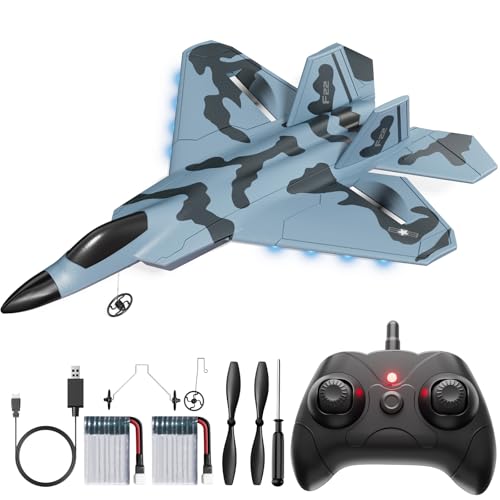
The TOIBUS F-22-inspired RC Plane is built for beginners who want a dash of realism and extended flight time. It uses lightweight EPP foam for durability and features bright LED lights for visibility during twilight or indoor evenings. The package includes two rechargeable batteries, enabling up to about 30 minutes of flight per session, depending on conditions and throttle usage. With a six-gyro stabilization system, the aircraft remains balanced and forgiving as new pilots practice ground takeoffs, slow climbs, and stable descents. Ground or hand launches are supported to accommodate various training preferences.
As a beginner-friendly option, this model emphasizes easy control and safety in flight while offering enough speed and maneuverability to maintain engagement. Prospective buyers should consider wind levels and space for a safe boundary to maximize hands-on practice with both batteries and the stability features at the core of the learning experience.
dosumik RC Plane: Stable Hovering And Fun Tricks
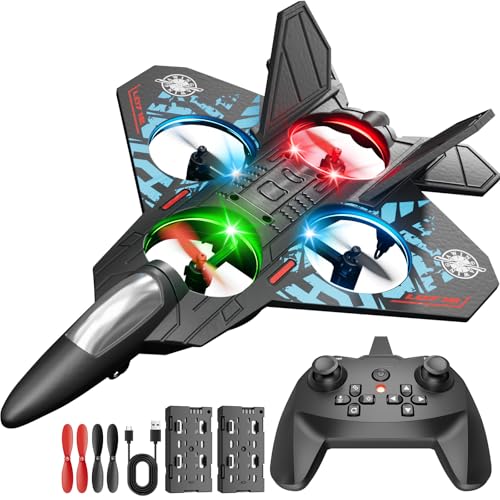
The dosumik model focuses on stable hovering and accessible aerial stunts through a 6-axis gyro stabilization system and a 2.4 GHz anti-interference remote. This combination helps new pilots feel confident as they learn to hover, yaw, and transition between directions. The control range extends to about 50 meters, making it suitable for larger indoor spaces or small outdoor areas. The aircraft is designed for beginners but offers enough responsiveness to keep training engaging, with one-button flips and a simple, intuitive control layout that reduces the learning curve for first-time flyers.
Key considerations include choosing a calm day or controlled indoor environment to minimize wind effects and optimizing battery management to maximize training sessions. The dosumik provides a balanced blend of stability and playful flight that supports progressive skill development.
LEAMBE 4 Channel Beginner RC Plane

The LEAMBE P51 Mustang-inspired RC plane is designed to be accessible for beginners while appealing to collectors or hobbyists. It offers three control modes—Beginner, Intermediate, and Experienced—so pilots can grow with the plane as their skills improve. The material is lightweight elastomer foam, and the design emphasizes easy control, reduced risk of damage, and simple propeller maintenance. A notable feature is the propeller saver technology, which helps protect the aircraft from damage during early learning phases when misjudgments are common. This model supports outdoor flight with forgiving handling and clear feedback through its simple control scheme.
For newcomers, the tri-mode configuration helps structure progression, while the durable foam construction provides resilience during inevitable bumps and crashes. When selecting this model, consider your typical training space and local wind conditions to optimize your practice sessions and skill growth.
4DRC Foam RC Plane With Dual Batteries

The 4DRC Foam RC Plane emphasizes beginner-friendly takeoffs with two separate takeoff modes: hand-throw and ground launch. This dual-launch approach helps new pilots find a comfortable starting method. The model ships with two batteries, offering up to approximately 30 minutes of flight time per session, which enables longer practice blocks. Made from impact-absorbent foam, the aircraft is designed to endure beginner crashes while simplifying part replacements. Its 3D-like flight features are kept approachable through a smart gyroscope that maintains stability and makes the plane easier to control for first-time pilots.
When using this plane, beginners should practice in open, unobstructed spaces, gradually exploring altitude, turns, and hover routines. Battery management is important to maximize training time and ensure safe landings as skills progress.
VOLANTEXRC 4-Channel P51D Mustang

The VOLANTEXRC 4-Channel P51D Mustang model is designed to ease beginners into more capable flight dynamics while staying within a forgiving foam airframe. It provides multi-mode control with a 6-axis gyro, making it easier to maintain stable flight even during headwinds or less-than-perfect launches. The Mustang design adds a classic look that many hobbyists enjoy, and the 4-channel setup allows for a richer set of maneuvers as you advance. This option suits learners who want a slightly more sophisticated experience without sacrificing ease of use.
Consider this model if you’d like a stable trainer that scales up with your skills, offering better performance as confidence grows. Ensure you practice in suitable outdoor conditions and monitor battery life to maintain training cadence and safety.
Buying Guide: Key Considerations For Beginners
- Flight stability and control: Look for planes with gyro stabilization, multiple flight modes (beginner, intermediate, expert), and a forgiving airframe (foam materials) to minimize crashes and build confidence early on.
- Power and endurance: Dual batteries or extended-run designs help maximize practice time. Check charging time versus flight time to plan sessions effectively.
- Durability: Foam construction and propeller protection features reduce damage during inevitable bumps. Propeller saver tech can extend the life of your model during initial learning.
- Launch method: Hand-launch and ground-launch options offer flexibility for different training environments. Ensure you can safely access an open space for takeoffs and landings.
- Size and space requirements: Smaller models are easier to manage indoors or on short outdoor fields, while larger options provide more realistic flight experiences outdoors.
- Edge cases: Consider wind tolerance, radio range, and the availability of spare parts or easy replacements to ensure a smooth learning curve.
- Future-proofing: If you anticipate progressing to acrobatics or more complex maneuvers, select a model with progressive modes and robust stabilizers that scale with your growing skillset.
For beginners, the emphasis should be on stability, predictable behavior, and a plan for gradual progression. Before purchasing, assess your local flying space, typical wind conditions, and your preferred learning pace. Start with a model that provides engaging but forgiving flight characteristics, then advance to planes with richer control options and longer flight times as confidence builds.