Best Push Toys for Baby: Top Walker and Activity Toys for Early Steps
Finding the right push toy for a baby can support confidence on first steps, encourage motor skills, and provide engaging activities for curious little learners. This guide highlights five top-rated push toys and walkers designed for infants ready to explore standing and walking. Each selection emphasizes safe construction, engaging sounds and activities, and age-appropriate challenges that grow with your child.
Summary of chosen products
| Product | Brand | Key Benefit |
|---|---|---|
| Laugh & Learn Smart Stages Puppy Walker | Fisher-Price | Two play modes with 75+ songs and early learning |
| Sit-to-Stand Learning Walker Blue | VTech | Removable activity tray and motor skill builders |
| Corn Popper Push-Along | Fisher-Price | Classic ball-popping action with walk-along fun |
| Sis Walker Sit-to-Stand | Fisher-Price | Music, lights and 75+ songs for growing learners |
| Montessori Wooden Baby Walker | Bautia | Natural wood design with multiple activity panels |
Laugh & Learn Smart Stages Puppy Walker

The Laugh & Learn Smart Stages Puppy Walker is a versatile option for infants who are just starting to stand and take short steps. It offers two modes: sit & play to engage early learners with stationary activities, and stand & walk to encourage mobility. The toy includes 75+ songs, sounds, and phrases across three Smart Stages, helping teach letters, shapes, colors, numbers, and even Spanish words. With seven hands-on activities—such as a light-up piano keys and a playful nose—the walker grows with a child’s development and curiosity. Its sturdy design and kid-friendly features support safe exploration during the crucial early stages of walking.
Key features include: three Smart Stages of content, a light-up piano, interactive activities, and age-appropriate language learning. The setup supports both independent play and caregiver-guided interaction, making it a flexible centerpiece for a baby’s first walking adventures.
Sit-to-Stand Learning Walker Blue
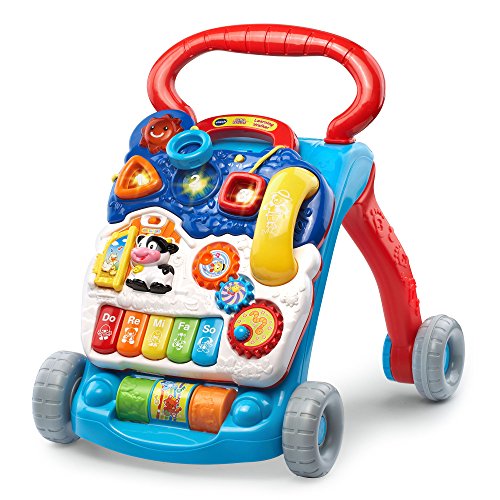
The VTech Sit-to-Stand Learning Walker Blue introduces an active play experience that adapts as a child grows. The detachable activity panel can be used during seated play and re-attached for standing exploration, providing flexibility across surfaces like carpet and hard floors. It includes five piano keys that produce musical notes and a pretend telephone handset to foster imaginative role-play. The walker also features multiple motor skill builders, including shape sorters, light-up buttons, and colorful rollers that encourage manipulation and coordination. This design aims to support both cognitive and gross motor development while keeping little hands engaged during supervision-friendly playtime.
Highlights include portability of the tray, a range of sounds and activities, and a focus on early music and pretend play as foundational development tools. This option is well-suited for households seeking a practical, interactive stepping-stone to independent walking.
Sit-to-Stand Learning Walker (Pink)
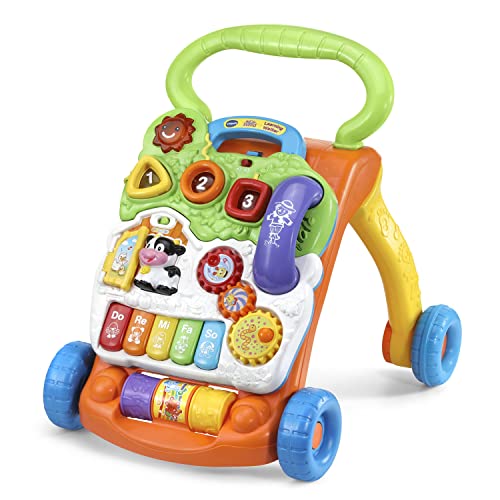
This pink Sit-to-Stand Learning Walker mirrors many of the features of its blue sibling with user-friendly setup and development-focused activities. The detachable tray provides portability for sit-down play, while the main unit includes five piano keys that trigger musical notes and a pretend telephone—encouraging creativity and role-play. The walker emphasizes motor development through three shape sorters, light-up buttons, and rotating wheels, supporting early balance and coordination. The design remains compact and approachable for younger walkers who are transitioning from crawling to standing and walking.
Compared to standard walkers, this option stands out for its musical exposure and interactive shapes that make early problem-solving enjoyable as walking skills begin to solidify.
Laugh & Learn Sis Walker
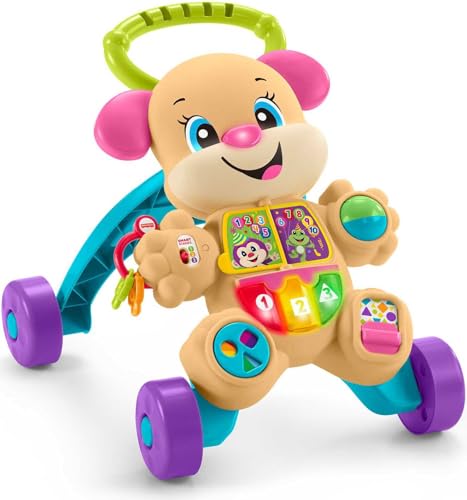
The Laugh & Learn Smart Stages Sis Walker offers an engaging, two-way experience—sitting and walking—to accommodate a growing child. Its three Smart Stages deliver 75+ songs, sounds, and phrases that teach essential skills such as the alphabet, shapes, colors, and numbers, along with Spanish words. The walker features seven hands-on activities, including a light-up piano, a nose, a roller, a spinner, and a flip page, encouraging tactile exploration and cognitive development. The design promotes independence while giving caregivers a reliable anchor for safe first steps and interactive learning during active play.
With its emphasis on steady cognitive and motor progression, this walker provides a balanced approach to early walking that combines music, lights, and manipulatives in one compact unit.
Montessori Wooden Baby Walker

The Bautia Wooden Baby Walker brings a natural wood aesthetic and a Montessori-style approach to early mobility. Crafted with smooth edges and a sturdy frame, this walker offers a safe environment for first steps. It includes a lively interactive panel, rolling letter wheel, xylophone, flip board, a tracking game, and additional toys to entertain and develop hand-eye coordination and cognitive skills. Rubber wheels ensure quiet operation on various floor surfaces, preserving the home environment while supporting balance and gait development. This option appeals to parents seeking a natural material focus alongside engaging activities for cognitive growth during early walking.
Buying Guide: Key Purchase Considerations
When selecting a push toy or walker for a baby, consider the following factors to match your child’s needs and your home environment:
- Age and developmental stage: Look for toys labeled for infants around 6 months and up, with growth features that accommodate sit-and-play and stand-and-walk modes.
- Safety and build quality: Prioritize sturdy frames, wide bases for stability, non-toxic materials, and soft edges. Check for small parts that could pose choking hazards and ensure dependable brakes or secure wheels.
- Learning content vs. pure play: Decide whether you want music, language exposure, numbers, and shapes, or a simpler, movement-focused walker. Some models blend both for broader development.
- Surface compatibility: Consider whether your home has carpet, hardwood, or tiled floors. Some walkers offer removable trays or two-wheel vs. four-wheel designs to adapt to different surfaces.
- Portability and storage: If space is limited, choose compact designs or walkers with fold-away features or detachable panels for easier storage.
- Durability and longevity: Walkers that offer multiple stages (sit, stand, walk) can remain useful as a child grows from early steps to more coordinated movement.
- Maintenance: Check for washable covers or easy-to-clean materials, especially for toys with cloth parts or intricate moving pieces.
- Noise and stimulation balance: While music and lights are appealing, opt for models with adjustable or muted settings to avoid overstimulation during quiet play times.
Comparative considerations across the five options show a blend of bright, activity-rich walkers and more natural, wooden designs. For parents prioritizing musical learning and language exposure, Fisher-Price models offer extensive content and multiple play modes. If a minimalist, Montessori-inspired approach is preferred, the Bautia wooden walker emphasizes tangible exploration with a natural aesthetic. Detachability and tray versatility matter for caregivers who want to shift from seated exploration to hands-on walking without switching toys entirely. In homes where space and versatility are critical, look for options that combine safety, portability, and long-term usefulness as a child transitions from sitter to walker.