Best Science Kits for 15 Year Olds: Engaging Projects That Build Real Skills
Finding age-appropriate science kits for teens can unlock deeper curiosity and practical STEM skills. This article highlights five high-quality kits that suit a 15-year-old’s growing interest in chemistry, earth science, and robotics. Each option blends hands-on experimentation with clear guides to foster critical thinking, problem solving, and scientific literacy. Use the quick reference table below to compare core focus areas and standout features before diving into detailed product sections.
| Product | Focus | Why It Stands Out |
|---|---|---|
| National Geographic Amazing Chemistry Set | Chemistry Experiments | 100+ experiments, crystal growing, colorful reactions, bonus 85 experiments |
| National Geographic Earth Science Kit | Earth Science & Geology | Volcano, crystal growing, fossil digging, rock collection |
| National Geographic Gross Science Kit | Biology & Chemistry (Gross Experiments) | 45 gross experiments, engaging biology-themed activities, kid-friendly guide |
| National Geographic Mega Science Lab | Earth Science, Chemistry & Magic STEM | Three kits in one, 75 experiments, real rock/mineral specimens |
| ELEGOO UNO R3 Smart Robot Car Kit | Robotics & Coding | Complete Arduino-based robot car, multiple modules, easy assembly |
National Geographic Amazing Chemistry Set

The Amazing Chemistry Set offers a broad chemistry experience with over 100 experiments, enabling a teen to explore bubbling, color-changing solutions, glowing test tubes, and crystal growth. The kit includes necessary materials for 15 standout experiments, such as growing a crystal tree and changing liquid colors by breath. A bonus guide adds 85 additional experiments that use common household items, expanding opportunities for independent exploration and extended project work. Clear, teen-appropriate instructions help users follow steps safely and achieve reliable results.
National Geographic Earth Science Kit

This mass-market Earth science kit is designed to satisfy curious teens with multiple activities, including building erupting volcanoes, dueling water tornadoes, and crystal growth. The kit emphasizes collaborative learning, making it ideal for family or classroom sharing. A comprehensive Learning Guide explains the science behind each activity, helping older teens connect hands-on experiments to core Earth science concepts—tectonics, geology, and hydrology—while encouraging deeper inquiry and discussion.
National Geographic Gross Science Kit

Gross science can be incredibly engaging for teens, and this kit centers on approachable biology and chemistry investigations with a humorous twist. It includes 15 gross experiments plus a 30-experiment bonus booklet using household items. The kid-friendly guide combines step-by-step instructions with explanations of the science at work, making complex ideas more tangible. The thematic focus helps reinforce scientific thinking while keeping the experience light-hearted and memorable.
National Geographic Mega Science Lab
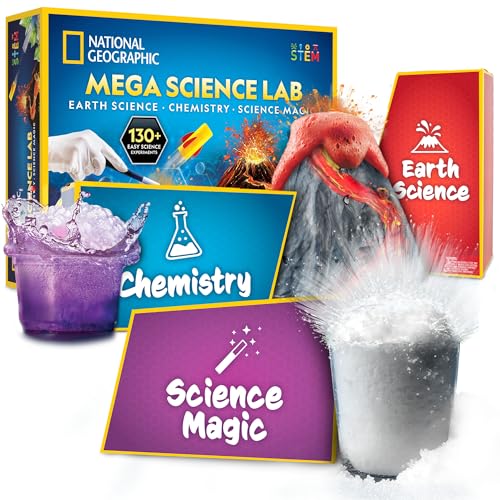
This three-in-one kit combines Earth science, chemistry, and magic-inspired STEM activities. It includes 75 experiments plus a bonus guide with 30 extra ideas, plus real rock, mineral, and crystal specimens for building a physical collection. Teens can erupt volcanoes, create glow-in-the-dark crystals, and explore chemical reactions, all while developing lab skills, observation techniques, and data recording habits essential for more advanced science work.
ELEGOO UNO R3 Smart Robot Car Kit

The ELEGOO kit brings robotics and coding to teens in a hands-on way. It features a smart robot car with 24 module parts, including obstacle avoidance and line-tracing modules, and can be controlled by Android or iOS devices. Assembling and programming the bot introduces fundamental electronics, sensors, and software concepts, while the included modules offer scalable experimentation—from basic control to more complex autonomous behaviors. It’s a strong choice for teens pursuing STEM-intensive paths or hobbyist robotics clubs.
Buying Guide: Key Purchase Considerations and Comparisons
When selecting a science kit for a 15-year-old, consider the teen’s interests, your goals for skill development, and the learning approach the kit emphasizes. The following factors help compare options and maximize value:
- Curriculum alignment: Look for kits that clearly connect activities to core science concepts such as chemistry, geology, or robotics. Detailed explanations and Learning Guides help solidify understanding beyond step-by-step instructions.
- Hands-on complexity: Teens benefit from progressively challenging projects. Kits like the National Geographic Mega Science Lab and Chemistry sets provide a broad range of activities, while the ELEGOO robot kit emphasizes coding and systems thinking.
- Safety and materials: Teen-focused kits should include clear safety guidelines and high-quality, reusable components. Confirm that any required tools (gloves, goggles) are included or readily available.
- Collaboration vs. solo work: Some kits promote group experimentation, which supports communication and collaborative problem solving. Others are designed for independent exploration, offering more autonomy.
- Longevity and expandability: Consider whether the kit offers additional experiments or compatible accessories. Bonus guides or expansion kits extend learning opportunities and keep motivation high over time.
- Skill progression: For robotics and coding kits, assess whether foundational concepts are introduced before moving to advanced configurations. A clear progression helps sustain interest and reduce frustration.
Comparatively, chemistry-focused kits deliver immediate, visual results that reinforce the scientific method, while earth science and geology sets encourage field-like curiosity and data collection. Robotics and coding kits cultivate computational thinking alongside hardware skills, preparing teens for more advanced STEM education. Choosing a mix that balances theory, practice, and real-world applications can offer a well-rounded, engaging learning experience for a 15-year-old.