Best Telescopes for Night Sky Viewing: Top Picks for 2026
Exploring the night sky requires the right equipment. This guide highlights five top picks that cater to different needs—from portable tracking mounts for Milky Way photography to compact night vision monoculars for stargazing on the go. Each option offers unique features, so readers can compare performance, portability, and value.
| Product | Brand | Key Use | Highlights |
|---|---|---|---|
| Sky-Watcher Star Adventurer 2i Pro Pack | Sky-Watcher | Astro-photography & time-lapse | Wi-Fi control, portable, modular design |
| Night Vision Monocular (YUANZIMOO) | YUANZIMOO | 2nd-to-none zero-light viewing | 850nm IR, long battery life, 984ft viewing |
| 12×60 HD Monocular | RIROMA | Birding & distant viewing | 12x magnification, FMC lenses, wide FOV |
| The Night Sky 40°-50° (Large) | David Chandler Company | Astronomy reference | Used book in good condition |
| The Night Sky 30°-40° (Large; North Latitude) | David Chandler Company | Astronomy reference | Used book in good condition |
The selections below are organized to help readers compare practical night-sky tools, from photography-centered trackers to compact viewing devices. Features listed reflect product descriptions and real-world considerations for beginners and seasoned observers.
Sky-Watcher Star Adventurer 2i Pro Pack
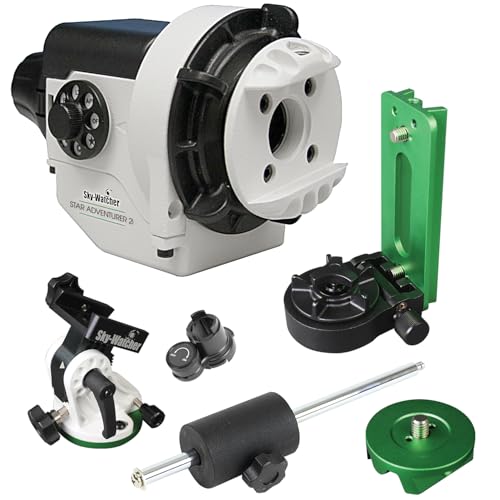
The Sky-Watcher Star Adventurer 2i Pro Pack is a compact, motorized equatorial mount designed for portable night-sky photography. It supports long-exposure captures of the Milky Way, eclipses, and other deep-sky objects. The modular design accommodates existing tripods, enabling wide-field astrophotography or telephoto use. A key upgrade is Wi-Fi connectivity, allowing smartphone control via Sky-Watcher’s SAM Console app for convenient framing and timing on the trail or in the field. This makes it suitable for enthusiasts seeking flexible, travel-friendly astrophotography gear.
Night Vision Monocular (YUANZIMOO)

This night vision monocular supports 100% darkness viewing with an 850nm infrared illuminator and a 1.3MP FHD sensor. It includes multiple IR levels for adapting to varying night conditions, and a rechargeable 2000 mAh battery to reduce the need for frequent replacements. An auto-shutoff feature helps conserve power, while the included SD card and reader enable easy data transfer. With up to 984 feet of viewing range and 8x digital zoom, it provides a practical option for observing distant or faint sky details in low light.
12×60 HD Monocular (RIROMA)

The RIROMA 12×60 monocular combines high magnification with a broad, bright field of view. The 12x zoom is paired with a 60mm objective, delivering clear details for distant subjects such as wildlife or celestial scenes at lower light. Fully multi-coated lenses and a large BAK-4 prism enhance light transmission and color fidelity. The unit’s scratch-resistant, water-resistant body makes it suitable for outdoor field use in varied weather conditions, including humid environments, whether you’re hiking or camping under night skies.
The Night Sky 40°-50° (Large)

This large field guide from the David Chandler Company is a reference resource for locating constellations, planets, and deep-sky objects in broad sky segments. While it is a book rather than a device, it complements practical observing gear by helping skygazers plan sessions, identify targets, and understand celestial coordinates. The cover indicates its condition as used; for readers seeking affordable educational material, it provides a solid baseline for night-sky navigation and star-hopping techniques.
The Night Sky 30°-40° (Large; North Latitude)

This additional star finder offers guidance for observing under northern latitudes, focusing on mid-range celestial targets and practical star-hopping strategies. The low-occlusion layout helps readers quickly translate sky geometry into actionable observing plans, making it a suitable companion for beginners assembling a home observatory or portable kit for night-sky sessions.
Buying Guide
Key purchase considerations for best telescope and night-sky gear include purpose, portability, and budget. Here are multiple angles to compare:
- Purpose and scope: Choose a tool that matches your primary goal—photography with tracking mounts, handheld night vision, or educational sky navigation with star charts. For Milky Way photography, a motorized, Wi-Fi-enabled mount like the Star Adventurer 2i can be ideal.
- Portability and setup: Field-ready gear should balance weight, stability, and ease of use. A compact night-sky tracker or a high-magnification monocular with a sturdy tripod is often more practical for travel compared with bulky setups.
- Light conditions and viewing distance: Night vision devices excel in complete darkness and long-range viewing, while monoculars with larger objective lenses perform better during dawn or dusk and for wide-field observations.
- Power and endurance: Rechargeable batteries and auto-shutoff features extend session time. Consider battery life compatible with your typical observing window and power sources (power bank, car charger, or outlet).
- Durability and weather resistance: Outdoor observing demands weather-resistant housings and seals, especially in humid or rainy environments. Look for materials and coatings designed to withstand field use.
- Educational value: Reference books and star guides complement devices by aiding target identification, sky planning, and understanding celestial coordinates for richer, structured sessions.
- Budget and value: Weigh the cost against features like integration with existing tripods, smartphone control, and the potential for long-exposure astrophotography versus simple observation.
For a balanced setup, readers may pair a portable tracking mount with a compact night-vision device for versatile night-sky experiences. Beginners might start with educational guides to build familiarity, then expand to photographic tools as confidence grows. Always consider local stargazing conditions, including light pollution, weather patterns, and typical night-sky visibility when selecting gear.