Best Gross Motor Toys for Infants to Boost Crawling and Movement
Finding the right toys to encourage gross motor development in infants is essential for boosting crawling, cruising, and overall physical confidence. This guide highlights engaging options that promote large-muscle activities like reaching, rolling, pulling, pushing, and chasing. Each pick combines safe materials with stimulating textures, colors, and sounds to capture a baby’s attention while supporting development from around 6 months onward.
Summary of Selected Products
| Product | ||
|---|---|---|
| Fisher-Price Rollin’ Tractor Push-Along Vehicle | Fisher-Price | Encourages crawling, pulling, and coordinated movement |
| Skip Hop Follow-Me Bee Tummy Time Toy | Skip Hop | Three-stage crawling progression with tracking motion |
| Infantino Jungle Peek & Roll | Infantino | Inflatable rolling activity with bouncing balls and friendly characters |
| Bright Starts Oball Easy Grasp Classic Ball | Bright Starts | Easy-to-grip ball that encourages throwing, rolling, and reaching |
| Fisher-Price Red Chatter Telephone | Fisher-Price | Pull-along and sit-at interactions that promote mobility and motor play |
Fisher-Price Rollin’ Tractor Push-Along Vehicle

The Rollin’ Tractor combines bright colors and motion-driven play to stimulate motor exploration. As babies push or pull the vehicle, the roller spins and the rattle beads inside respond, providing auditory and tactile feedback. This encourages babies to move between positions—crawling after the rolling toy and then reaching to engage with the sounds. With durable construction and engaging visuals, the toy supports early gross motor skills while fostering curiosity about cause and effect. The product includes a squeaking hay bale and colorful beads, creating multisensory engagement that can sustain interest during active play sessions.
Skip Hop Follow-Me Bee Tummy Time Crawl Toy
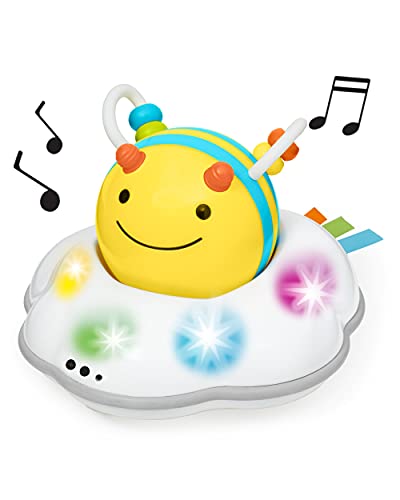
The Follow-Me Bee is designed to grow with a baby. In Stage 1, the bee rattle remains steady while teaching tummy-time exploration. Stage 2 adds a cloud companion that moves in a controlled circular pattern to encourage light chasing and crawling. In Stage 3, the cloud’s movement becomes more randomized, inviting critical motor planning and continued movement. The toy emphasizes tracking, reaching, and mobility while incorporating teething-friendly textures. Its three-stage approach helps caregivers support gross motor development as infants transition from tummy time to crawls and early cruising.
Infantino Jungle Peek & Roll

This inflatable activity toy brings together rolling action, bounce, and visual stimulation. Babies can push, crawl after, or roll the toy as it bounces inside, hearing jingles and watching plush animals move around. The large, soft inflatable design reduces the risk of injury and supports safe exploration as infants practice pushing and chasing motions. The toy’s size and soft edges make it ideal for early crawlers and new walkers, promoting balance, core strength, and gross motor persistence in short, repetitive play sessions.
Bright Starts Oball Easy Grasp Classic Ball

The Oball is a forgiving, flexible toy ball designed to fit tiny hands. With 32 finger holes, babies can easily grip, roll, throw, and chase the ball, supporting fundamental motor skills while building confidence in grasp-and-release activities. The soft, pliable design makes it safe for teething and soothing gums, yet sturdy enough to withstand active exploration. This toy can be used during floor play and in early standing sessions, promoting joint coordination as infants master throwing and rolling actions.
Fisher-Price Red Chatter Telephone

The Red Chatter Telephone merges classic design with movement-friendly play. This pull-along and sit-at activity toy supports early mobility by encouraging babies to move toward the toy, push it, or walk with it as a toddler. The rotary dial adds interactive sound elements that engage auditory processing while promoting gross motor development through coordinated arm and leg movements. It’s suitable for infants transitioning from floor play to assisted walking, aligning with developmental milestones and encouraging independent exploration.
Adena Montessori Object Permanence Box

While primarily a cognitive development toy, the Object Permanence Box can support gross motor play when used in structured activities that involve reaching, squeezing, and lifting. The box includes three balls in different textures, offering tactile variety to encourage hand-eye coordination and fine motor skills. By guiding infants to retrieve items and interact with the tray, caregivers can integrate short, movement-rich sessions that foster spatial awareness and early problem-solving while promoting gentle arm and upper-body movements.
Buying Guide: How To Choose Gross Motor Toys For Infants
When selecting gross motor toys for infants, consider a mix of features that promote movement, safety, and age-appropriate challenge. A well-rounded set should incorporate push-pull actions, crawling encouragement, balance challenges, and multisensory feedback. Here are core considerations and options for comparing products.
- Age appropriateness: Look for toys labeled for early walkers and crawlers (roughly 6-18 months). Toys should progress with your child’s abilities to avoid frustration or disinterest.
- Encouragement of crawling and cruising: Favor toys that entice babies to move toward them, chase after rolling objects, or push/pull during play.
- Safety and materials: Prioritize sturdy construction, non-toxic materials, rounded edges, and BPA-free components. Buttons and pieces should be securely attached to prevent choking hazards.
- Sensory variety: Choose items with bright colors, textures, and sounds to stimulate vision, touch, and hearing—factors that support overall motor planning.
- Durability and cleaning: Infants explore extensively; washable surfaces and durable plastic or wood offer longevity and easier cleaning.
- Portability and setup: Some toys are travel-friendly or serve as floor-only activities, while others work well on carpets, wood floors, or playmats.
- Maintenance of interest: Toys that offer evolving play modes (e.g., multiple stages of crawling or rolling patterns) tend to sustain engagement longer as gross motor skills advance.
In practice, a well-balanced selection for a baby’s first year includes a mix of push-along vehicles, rolling toys, grip-friendly balls, and soft, safe inflatables. Each of the highlighted products integrates several of these elements, providing opportunities to practice crawling, reaching, balance, and coordination in short, repeatable sessions that fit into daily routines.
Additional considerations include caregiver involvement, such as placing a toy just out of reach to encourage crawling, or using a toy’s movement to prompt walking practice. For infants who are starting to cruise, choose larger toys that remain stable and do not tip easily. Always supervise play, rotate toys to maintain novelty, and gradually increase difficulty as motor skills improve.
Overall, selecting gross motor toys for infants involves balancing safety, stimulus variety, and progression. The options listed above provide varied pathways to promote movement-based exploration while supporting cognitive and sensory development. By combining these toys with everyday active opportunities—like floor play, tummy time, and guided cruising—parents can help their infants build confidence and foundational motor skills that support healthy growth and development.