Best Practice Tennis Balls for Kids: Slow-Flight Training Options
Finding the right tennis balls helps kids learn fundamentals faster and play with confidence. The following selections emphasize low compression, controlled bounce, and durable materials designed for beginners and younger players. Each option is suitable for short courts or practice sessions, and many come in convenient multi-packs for families and coaching programs.
| Product | Brand | Key Benefit | Pack Size |
|---|---|---|---|
| MRYCZ FYRHD 12 Pack | MRYCZ FYRHD | 50% low compression, durable | 12 balls |
| GAMMA Quick Kids 36 | GAMMA | 75% slower speed, high visibility | 12 balls |
| INSUM Kids Tennis Balls Stage-3 | INSUM | 75% lower compression, stage-3 standard | 6 balls |
| Penn QST 60 | Penn | 50% slower bounce, beginner-friendly | 12 balls |
| Hanaive 24 Pack | Hanaive | 75% low compression, bulk value | 24 balls |
The table above highlights options that are particularly well-suited for kids just starting to learn tennis. All selections emphasize reduced speed, controllable bounce, and kid-friendly design to keep practice engaging and productive.
MRYCZ FYRHD 12 Pack Tennis Balls
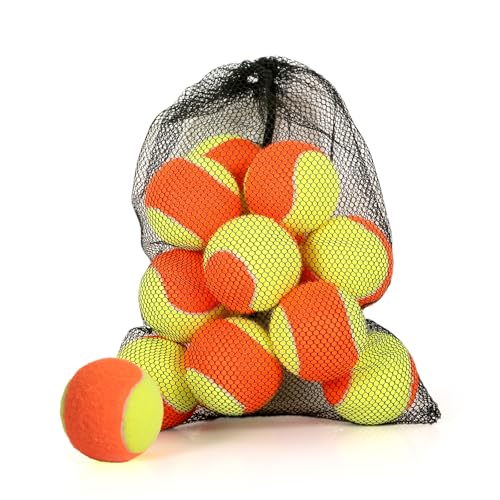
The MRYCZ FYRHD set offers 50% low compression balls with a standard diameter of 2.58 inches and a bounce height up to 3.28 feet. Designed for beginners, these balls reduce shock and promote controlled rallies. The package includes 12 balls and a reusable mesh bag with a drawstring closure for easy transport and storage. Built from natural rubber and durable felt, they maintain a consistent feel during practice.
GAMMA Quick Kids 36 Training Balls

GAMMA Quick Kids balls are designed for younger players learning fundamentals. They feature 75% slower speed due to a lightweight outer layer, making rallies easier and practice sessions more productive. The two-tone yellow and red felt enhances visibility on indoor and outdoor courts. These are suited for guiding beginners through topspin, slice, and basic shot selection while maintaining easy tracking during drills.
INSUM Kids Tennis Balls Stage-3

INSUM Stage-3 red tennis balls are 75% pressureless with a two-tone red and yellow felt design that increases visibility and helps young players learn ball control. The larger, two-tone design aids tracking and stance development, while the reduced compression makes bounces more predictable on practice sessions. These are compliant with USTA/ITF Stage 3 standards, making them a good choice for formal youth programs as well as home practice.
Penn QST 60 Tennis Balls

Penn QST 60 balls are designed for young beginners, particularly ages 9-10 learning on 60-foot courts. They feature a reduced-speed design that slows bounce and flight, enabling longer rallies and better ball tracking. The two-tone, red-and-yellow surface helps players identify spin and trajectory, supporting the development of timing and coordination on smaller courts or during training drills.
Hanaive 24 Pack Tennis Balls

Hanaive offers a bulk option with 24 balls designed for 75% low compression. These stage-3 red balls fly slower, ideal for young players, and are suitable for short courts or machine training. The larger quantity supports practice consistency, replacements, and group sessions, ensuring balls are readily available for frequent drills and drills-based progression.
Buying Guide
- Compression and bounce: For kids, look for low- or reduced-compression balls (often Stage-3 or similar). They travel slower and bounce lower, improving control and reducing frustration during the learning phase.
- Age and court size: Younger or newer players benefit from 60-foot court compatibility and foam or felt balls designed for small courts. Match the ball’s speed to your child’s age and skill.
- Durability and material: Durable felt and natural rubber construction extend playing time and reduce early replacement. Machines and practice drills benefit from tougher shells, especially for outdoor use.
- Visibility: Two-tone or bright colors aid tracking and ball recognition, supporting quicker adaptation to spin, depth, and flight paths.
- Portability: Mesh bags and multi-packs help families transport balls to lessons and matches. Reusable bags improve organization and reduce litter on courts.
- Standardization vs. flexibility: Some programs follow USTA/ITF standards (Stage 3) to align home practice with official competition criteria. Consider crossover benefits for future progression.
- Price vs. value: Bulk packs offer lower per-ball costs but ensure you’ll actually use the quantity. Choose a mix of practice-focused balls and a few premium training options if needed.
- Brand and availability: Reputable brands with consistent performance often provide more predictable bounce. Availability across retailers helps with replacements and continuity in training.