Best Fine Motor Skills Toys for 6 Month Olds
Families seeking engaging, development-focused toys for six-month-olds have many options that build hand strength, coordination, and early problem-solving. The following selections emphasize Montessori-inspired design, sensory textures, and safe materials to support early fine motor development. Each product below is paired with practical play activities and reflective considerations to help caregivers choose the best fit for their child.
| Product | Brand | Key Benefit |
|---|---|---|
| Wooden Montessori 3-in-1 Fine Motor Toy | EARLY EXPLORER TOYS | Three lids and slots for grip, hand-eye coordination, and open-ended discovery |
| My First 16 PCS Fruit & Veg Plush Toys | hahaland | Textured, crinkly components for tactile exploration and color sorting |
| Spike The Fine Motor Hedgehog | Learning Resources | Stacking and sorting that grow with the child from 18 months up |
| Baby Tissue Box Toy | hahaland | Multiple textures and sounds to reinforce pulling, squeezing, and exploration |
| 5-in-1 Montessori Baby Toys Set | Chillife | Diverse activities (pull string, stacking rings, shape sorter) for varied fine motor practice |
Wooden Montessori 3-in-1 Fine Motor Toy

The three lids offer different finger-grip challenges: geometric, round coin, and flat stick lids. This screen-free toy emphasizes hands-on problem solving, hand-eye coordination, and independent play. Designed to foster autonomy without overstimulation, it aligns with Montessori-inspired development for early learners.
My First Fruit & Veg Color Sorting Play Food

Sixteen plush fruits and vegetables come with crinkly textures and rattles to stimulate tactile and auditory senses. The set encourages sorting by color and shape, as well as independent exploration, supporting early fine motor skills through pulling, squeezing, and manipulating small pieces.
Spike The Fine Motor Hedgehog
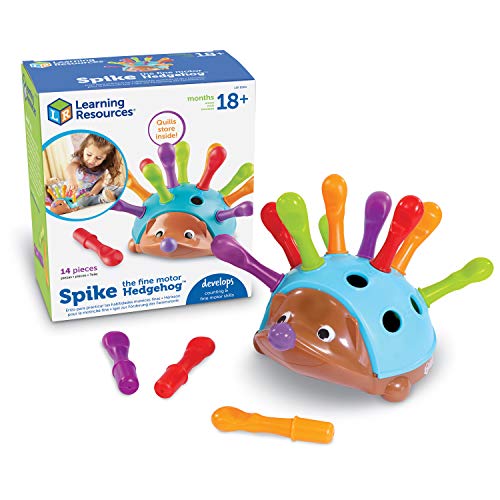
Colorful quills and back-loading pieces build hand strength and finger dexterity. Suitable for toddlers, it evolves with the child, introducing color recognition, counting, and pattern identification as a preschooler-friendly extension. Textured components provide engaging tactile feedback during play.
Baby Tissue Box Toy with Textures

This multi-texture set includes a tissue box with tails, assorted tissues, crinkle elements, and silk scarves. It promotes fine motor skills through pulling and squeezing, while the silk scarves add a surprising element that enhances hand-eye coordination and sensory curiosity.
5-in-1 Montessori Baby Toys Set

This set consolidates multiple activities: pull strings, stacking rings, shape sorter cube, suction cup spinner, and a teething teether. The variety supports different grasp types and motor skills, with bright colors and durable materials designed for daily use by babies from 6 to 18 months.
Buying Guide
Key considerations when selecting fine motor toys for a 6-month-old include safety, age appropriateness, material quality, and the potential for skill progression. Look for toys that emphasize grasping, reaching, and exploring with minimal assembly. Materials should be BPA-free and free of choking hazards; surfaces should be smooth with rounded edges. Consider a mix of toys that encourage hand strengthening, visual tracking, and cause-and-effect learning.
Comparative angles include Montessori-inspired open-ended toys versus multi-sensory plush sets. Montessori options often emphasize control and repetition to build deliberate movements, while sensory-rich plush toys introduce textures and sounds that promote curiosity and early cognitive mapping. Durability and ease of cleaning are practical factors for items that can be chewed or pulled.
Practical integration ideas: rotate between at-home play and travel-friendly pieces to maintain interest. Pair activities that require different motor actions—pulling, grasping, stacking—to build a broad core of fine motor abilities. When in doubt, prioritize safety features like snag-free seams and non-toxic finishes, and ensure that any growing toy aligns with the child’s current developmental stage and supervision requirements.