Best Science Tools for Elementary Students: A Practical Guide to Hands-on Learning
Finding engaging, safe, and educational science tools for young learners can spark a lifelong curiosity. This guide highlights five beginner-friendly kits and tools that align with elementary science curricula, emphasizing hands-on experiments, visual learning, and clear instructions. Each pick supports foundational skills in observation, measurement, and critical thinking—essentials for budding scientists.
Summary of chosen products
| Product | Brand | Focus | Why It Helps Elementary Learners |
|---|---|---|---|
| National Geographic Junior Chemistry Set | Blue Marble | Hands-on chemistry for ages 4+ | 50 experiments encourage exploration with household items; illustrated instructions foster independent learning. |
| The Everything Kids’ Science Experiments Book | Simon & Schuster | Broad science experiments and activities | Structured challenges that promote inquiry and scientific thinking. |
| Science Posters for Classroom | Momo & Nashi | Visual science concepts poster set | Supports memory and classroom decor with concise visuals and key terms. |
| The Pocket Scientist – Small Metal Science Ruler | Genius Lab Gear | Portable measurement toolkit | Encourages precise drawing, measurement, and data recording on the go. |
| EUDAX School Physics Labs | EUDAX | Introductory electricity and magnetism | Hands-on circuit and magnetism activities with a color manual and multiple components. |
National Geographic Junior Chemistry Set

A complete starter chemistry kit designed for young scientists. The Blue Marble set is tailored for children ages 4 and up and includes 50 hands-on experiments alongside 20+ lab tools. The materials emphasize safe, kitchen-table chemistry using common items like baking soda and vinegar. Clear, illustrated instructions guide each experiment, helping children build method, observation, and basic scientific reasoning without adult-heavy supervision.
The Everything Kids’ Science Experiments Book
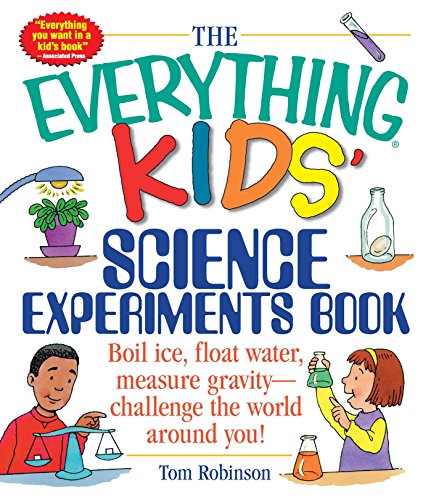
This book provides a broad range of experiments that cover core topics such as physics, chemistry, biology, and earth science. It’s designed to engage elementary students with approachable challenges, encouraging curiosity and independent problem-solving. While not a single-kit package, the structured activities help teachers and parents scaffold learning effectively, reinforcing scientific vocabulary and inquiry.
Science Posters for Classroom

A 12-piece poster set designed for classroom walls in elementary and middle school settings. Topics range from the scientific method and matter to the solar system and the animal kingdom. Large fonts and bold visuals support quick comprehension and classroom reference, aiding students as they learn new concepts and prepare for quizzes or science fairs.
The Pocket Scientist – Small Metal Science Ruler

This compact steel multitool combines a ruler, protractor, and compass into a single pocket-friendly device. It’s ideal for elementary learners who are practicing measurement, drawing accurate diagrams, and recording data during simple experiments. The durable design supports frequent handling in school or at home science stations.
The Pocket Scientist High School Edition

While pitched at older students, this edition offers a robust geometry-focused toolkit with essential equations, constants, and unit conversions. It supports more advanced projects and science fair work, helping motivated elementary learners who are ready for extended practice and quick-reference data as they grow.
EUDAX School Physics Labs
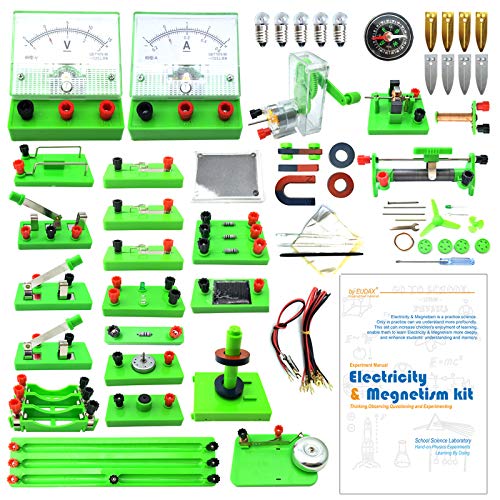
This kit introduces electricity and magnetism concepts through hands-on experiments and a color-inclusive manual. It includes a wide range of components (56 electricity items and 21 magnetism items), offering structured activities ideal for science exploration in middle-to-late elementary grades. Batteries are required, and the kit comes with a storage bag for organization and reuse.
Buying Guide: Key Purchase Considerations
- Safety and age appropriateness: Look for kits clearly labeled for elementary ages, with non-toxic materials and simple, illustrated instructions that foster independent exploration.
- Hands-on learning value: Choose kits with multiple experiments or activities to maximize engagement and practice with observation, hypothesis, and data recording.
- Instruction quality: Visual guides and step-by-step directions help young learners follow protocols and achieve reliable results, reinforcing scientific thinking.
- Curriculum alignment: Consider resources that cover core topics such as matter, basic chemistry, electricity, and the scientific method to support classroom learning or homeschool plans.
- Portability and storage: Compact tools like the pocket ruler can accompany students between home and school, while larger kits should include organized containers for easy cleanup.
- Depictions of concepts: Visual posters and illustrated manuals enhance memory retention and give quick references during lessons or science centers.
- Supplemental learning: Combining a hands-on kit with a reference book or poster set provides both experimentation and conceptual reinforcement.
- Long-term value: Durable tools and reusable components offer ongoing learning opportunities, making them suitable for repeated use across grade levels.
Overall, selecting a balanced mix of experiments, measurement tools, and visual supports helps elementary students build confidence as they explore science concepts. The items highlighted here cover beginner chemistry, general science activities, essential measurement skills, and foundational physics concepts in an age-appropriate way.