Best Talking Toys for 5 Year Olds: Engaging Learning Toys for Curious Kids
Choosing the right talking toy for a five-year-old blends entertainment with early learning. The following selections emphasize language development, vocabulary expansion, and hands-on exploration—critical skills at this age. Each product below is featured for its interactive elements, durability, and ability to spark curiosity. Use this guide to compare options that fit different interests, from science-friendly play to storytelling and music learning.
Summary table of selected products:
| Product | Brand | Key Feature | Amazon Link (for reference) |
|---|---|---|---|
| Educational Insights GeoSafari Jr. Talking Kids Microscope | Educational Insights | Real-looking microscope with Bindi Irwin voice for animal and plant learning | https://www.amazon.com/dp/B072QH418H?tag=toysscout-20 |
| TWORIVER Toddler Talking Hamster | TWORIVER | Talks back, repeats speech, language-play friendly | https://www.amazon.com/dp/B08Y8JLBHD?tag=toysscout-20 |
| Ayeboovi Talking Hamster | Ayeboovi | Repeats user speech in a cute tone; engages social language play | https://www.amazon.com/dp/B08GYD5ZBP?tag=toysscout-20 |
| Kuovei Talking Flash Cards | Kuovei | Interactive vocabulary and sight-word practice without screens | https://www.amazon.com/dp/B09VBZCMGC?tag=toysscout-20 |
| BEST LEARNING Learning Clock | BEST LEARNING | Interactive clock with quiz and sleep mode features | https://www.amazon.com/dp/B075JB3N48?tag=toysscout-20 |
Educational Insights GeoSafari Jr. Talking Kids Microscope

The GeoSafari Jr. Talking Kids Microscope provides an approachable entry into the world of science for curious five-year-olds. The device features up-close imagery and the voice of Bindi Irwin, Wildlife Warrior, to expand knowledge about animals and plants. It’s designed as a real scientific toy that is easy to use, with a narration style that invites questions and exploration rather than passive viewing. Color variations may occur as products transition, but the core experience remains a kid-friendly, educational microscope that fosters observation and vocabulary growth.
Key considerations for this pick include the balance between realism and play. Parents should assess ease of use—whether the shutter/adjustments are intuitive for little hands—and the volume of narration to ensure it sustains engagement without overwhelming the child. This toy suits kids who enjoy nature, biology, and hands-on discovery, aligning well with early STEM learning goals.
TWORIVER Talking Hamster
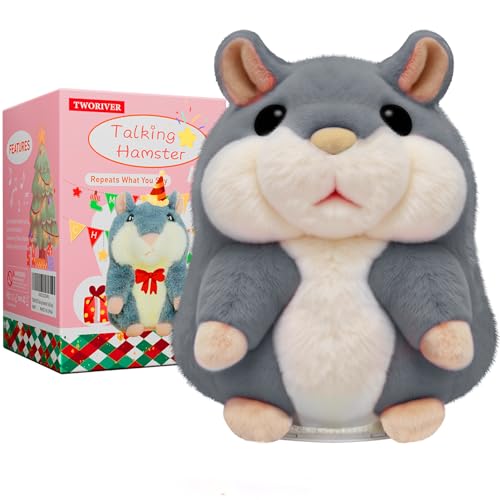
This TWORIVER talking hamster serves as a versatile companion for toddlers and five-year-olds alike. The toy repeats what you say, sings or speaks in multiple languages, and imitates different voices. It works well as a conversation starter, encouraging kids to practice speaking, memory, and turn-taking. The soft plush design is cuddly and giftable, making it suitable for celebrations or simple playtime. The repeating function helps reinforce pronunciation and language patterns in a natural, non-pressured way.
Important considerations include the clarity of the playback and the ease with which the child can press, speak, or respond to prompts. For some children, the hamster’s responsive behavior can increase confidence in verbal expression and social interaction, especially during group play sessions or family reading time.
Ayeboovi Talking Hamster
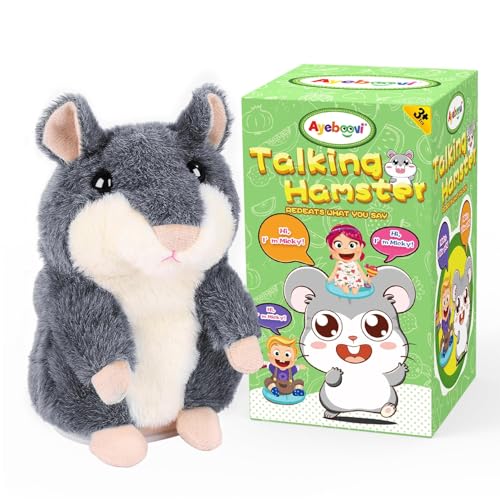
The Ayeboovi talking hamster emphasizes social communication skills by repeating what a child says in a lively, engaging voice. It’s pitched toward early language development, especially for kids who benefit from social-interaction cues. The toy is designed as a plush, giftable item that can accompany learning activities, storytelling, or pretend play scenarios. It is noted for its entertaining tone and the ability to encourage kids to verbalize thoughts, making it a good fit for language enrichment during playtime.
When selecting this hamster, consider whether the child enjoys expressive, animate companions and whether the repeating function aligns with the child’s current speech goals. This toy can pair well with reading sessions, role-play games, and basic conversational practice in a relaxed setting.
Kuovei Talking Flash Cards

The Kuovei talking flash cards bring a screen-free approach to building vocabulary and early literacy. Focused on animals, transports, food, shapes, numbers, and more, these cards help kids hear and pronounce new words, supporting auditory processing and memory. The device reads aloud by card insertion and features a cycle option for repeated practice, which is ideal for reinforcing learning through repetition. The design emphasizes eye safety and screen-free play, reducing screen time while promoting language development.
Buyers should evaluate how the card reader’s audio clarity and the variety of prompts align with the child’s interests and reading level. This option is well-suited for independent practice or guided activities with a caregiver, offering a structured yet playful way to expand vocabulary and comprehension skills.
BEST LEARNING Learning Clock

The BEST LEARNING Learning Clock couples time-telling with interactive play. This talking clock guides children through reading hours, minutes, and basic time concepts, reinforced by a quiz mode that keeps kids engaged. Sleep mode offers a gentle night-time routine with classical music and a timer, which can be helpful for bedtime routines and self-regulation. The clock’s design rewards exploration and retention, aligning well with early math and literacy goals in a playful format.
Key purchase considerations include the child’s interest in time-telling, the number of interactive prompts, and whether the sleep-mode features contribute to a calming pre-bed routine. This option appeals to kids who enjoy structured activities and benefit from regular practice with routine-based learning moments.
Buying Guide: Key Purchase Considerations And Comparisons
- Learning goals: Align the toy with language development, vocabulary growth, or foundational STEM concepts. Some devices emphasize storytelling and social language, while others focus on reading, math, or science.
- Age and safety: Confirm age recommendations and ensure materials are soft, durable, and free of small parts that pose choking risks. Plush or soft toys tend to be appropriate for younger kids, while more structured devices suit older preschoolers.
- Interactivity: Consider how the toy responds to a child’s actions—repetition, voice options, and the complexity of prompts. Higher interactivity can boost engagement, but too many features may overwhelm some children.
- Screen-free options: For families prioritizing reduced screen time, choose toys that rely on audio prompts, physical cards, or mechanical interactions rather than screens.
- Durability and value: Look for robust construction and ease of cleaning, especially for plush toys. Reusability and the breadth of learning prompts contribute to long-term value.
- Parental involvement: Some toys are designed for solo play, while others encourage guided activities with caregivers. Assess which setup suits your family routine and learning style.
- Language support: If multilingual exposure is important, consider toys offering multiple languages or bilingual prompts, which can support pronunciation and comprehension.
- Expansion potential: Some products pair well with additional activities like storybooks, flashcards, or science kits, enabling a scalable learning path as the child grows.
In summary, the best talking toys for five-year-olds strike a balance between fun and learning. Whether your child loves science exploration with a real-looking microscope, enjoys social play with talking animals, or practices reading and time-telling with interactive cards and clocks, there are options that fit different interests and learning goals. The highlighted products provide varied approaches to language development, cognitive growth, and imaginative play without relying on screens, making them suitable for diverse family needs.