Best Skeleton Models for Kids: Glow-in-the-Dark Anatomy Kits for Learning
Exploring the human skeleton can be both fun and educational for kids. The right skeleton model supports hands-on learning, safety, and curiosity about anatomy. The following five models combine sturdy construction, interactive features, and engaging visuals like glow-in-the-dark bones to help young learners discover how bones, organs, and muscles fit together. Each option below is suitable for home study or classroom activities, and is designed to be age-appropriate and durable for repeated use.
| Product | Brand | Key Benefit | Highlights |
|---|---|---|---|
| GobiDex Human Body Skeleton Model Kits | GobiDex | Interactive, glow-in-the-dark bones | 12.6″ self-standing, durable, educational |
| National Geographic Human Body Model | Blue Marble | 9 removable organs, 18 glow-in-the-dark bones | 32-piece kit with guide and stand |
| CHMYWJ Glow-in-the-Dark Anatomy Model | CHMYWJ | 40-piece, removable bones and organs | Glow-in-the-dark bones, comprehensive study guide |
| NEW HORIZON Scientific Skeleton Model | NEW HORIZON | Movable joints, detailed craftsmanship | 17.7″ tall with sturdy base |
| YOFUN Interactive Skeleton Model | Y YOFUN | Glow-in-the-dark bones, hands-on learning | 12.6″ tall, durable and safe |
GobiDex Interactive Skeleton Model Kit

The GobiDex Interactive Human Body Model stands 12.6 inches tall and is self-standing, providing a practical hands-on way for kids to study human anatomy. Its glow-in-the-dark bones add a visually striking element that can enhance engagement during both day and nighttime learning sessions. The model is designed for repeated use in homes or classrooms, with parts that are easy to assemble and disassemble. Constructed from durable materials, it supports safe exploration of bone structure, joints, and how the skeletal system relates to organs and muscles.
Key features include glow-in-the-dark bones for enhanced visibility at a glance, plus an intuitive assembly process that supports independent or guided activities. The kit emphasizes safety and durability, making it suitable for educational use by children ages 8 and up, as well as for Halloween-themed learning or science fairs. The interactive approach helps learners connect anatomical concepts with real-life body function.
National Geographic Human Body Model With Glow-In-The-Dark Bones
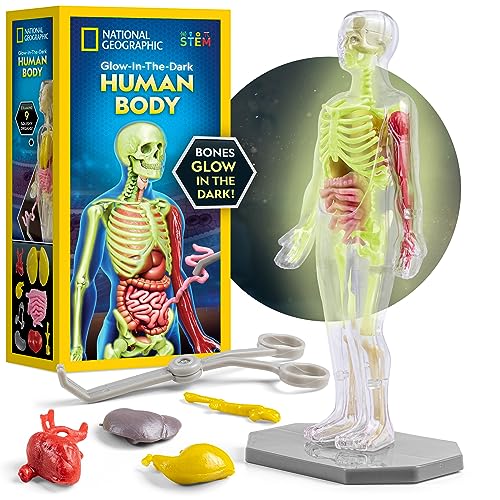
The National Geographic human body model offers a 32-piece anatomy kit with a 9″ tall shell that houses eight removable organs, 18 glow-in-the-dark bones, and included display tools like forceps and a sturdy stand. This setup enables kids to identify bones such as the spine, pelvis, clavicle, and scapula, as well as major muscle groups. The kit’s comprehensive Learning Guide provides facts about the body, making it a well-rounded resource for science exploration, anatomy lessons, and hands-on dissections in a controlled,educational context.
Designed for curious minds 8 years and older, this model fosters inquiry and systematic study of the human body. Its assembly and organization components help reinforce sequencing, spatial understanding, and correlation between bones, muscles, and organs. The glow feature adds a memorable element that can motivate deeper investigation into skeletal anatomy and physiology.
CHMYWJ Glow-in-the-Dark Anatomy Model

CHMYWJ’s 40-piece human body kit includes a body shell, display stand, forceps, organization tools, and a complete study guide with anatomical information. The bones and organs are removable, facilitating step-by-step exploration of anatomy and physiology in an engaging, kid-friendly format. The glow-in-the-dark bones offer a dramatic contrast that helps younger learners visualize the internal structure of the skeleton and practice identifying key landmarks such as the spine, pelvis, and scapula. The kit’s student-friendly design supports classroom demonstrations and independent study alike.
With straightforward assembly and durable components, this model is suitable for homes, classrooms, or science clubs. It balances factual content with interactive play, making it a solid option for learners who benefit from tactile learning and visual reinforcement while studying human anatomy.
NEW HORIZON Scientific Skeleton Model

The NEW HORIZON skeleton model stands 17.7 inches tall and features movable arms and legs, a fully integrated spine and ribs, and a sturdy base for desktop display. The head is designed with a spring-assisted movable chin and a head cover that opens to reveal internal structures, enabling hands-on exploration of both external and internal anatomy. The model’s craftsmanship emphasizes both accuracy and decorative value, making it a practical teaching tool as well as an appealing desk piece. Joints are designed for movement, allowing demonstrations of articulation and range of motion in a classroom or home setting.
Constructed for durability, the model can be disassembled for in-depth study of individual bones and joints. It offers a balance of educational functionality with an approachable size for smaller learning spaces, and a base that keeps the model stable during demonstrations or student-led activities.
YOFUN Interactive Skeleton Model For Kids

The YOFUN skeleton kit stands 12.6 inches tall and features a self-standing design with glow-in-the-dark bones. It is built for safe handling by kids and is simple to assemble, making it suitable for home or classroom use. The included design supports hands-on exploration of human anatomy, including bones, muscles, and organs, in a way that is both engaging and informative. The model’s sturdy construction and glow feature help maintain interest during learning sessions and encourage independent exploration while reinforcing anatomical concepts.
With its focus on reliability and safety, this model is appropriate for ages 6 and up. Its compact size fits into smaller study areas and displays well on desks or shelves, maintaining accessibility for younger students who are developing foundational knowledge of the human skeleton and related systems.
Buying Guide: Key Considerations For Choosing A Kids’ Skeleton Model
- Age appropriateness and educational goals: Look for kits labeled for the target age range and aligned to basic anatomy concepts such as bones, organs, and joints.
- Durability and materials: Durable plastics or composite materials are ideal for repeated handling in home or classroom settings. Check that joints are secure and parts are designed for easy assembly and disassembly.
- Interactivity and engagement: Glow-in-the-dark bones, removable organs, and movable limbs can enhance engagement and retention, especially for tactile learners.
- Detail and accuracy: Consider models that provide clear representations of major bones, ribs, spine, pelvis, and joints to support accurate learning and classroom demonstrations.
- Completeness and accessories: Some kits include forceps, stands, or learning guides. A complete kit with storage or organization aids helps with ongoing study and easy cleanup.
- Safety and maintenance: Ensure parts are non-toxic and easy to clean. Look for smooth edges and tested safety standards appropriate for kids.
- Size and display value: Larger models offer better visualization for group activities, while smaller models fit compact spaces and personal desks.
- Educational value versus price: Compare included features like glow effects, number of detachable parts, and instructional guides to determine overall value for learning objectives.
Overall, the best skeleton model for a child depends on learning style, space, and whether you value glow-in-the-dark features, detailed anatomy, or portability. Each of the highlighted options provides a balance of safety, educational content, and interactive elements that can support a vibrant, hands-on introduction to human anatomy.