Best Piano Keyboard for Autistic Children: Safe, Engaging Picks
Finding a piano keyboard that supports early learning and sensory-friendly play can help autistic children explore music with confidence. The following five options focus on safety, age-appropriate key layouts, and engaging features like light-up keys, demo songs, and recording playback. Each product below is chosen for durability, non-toxic materials, and development-friendly functions that suit young players while remaining practical for caregivers.
| Product | Key Features | Age Range |
|---|---|---|
| Raimy Pink 37 Keys | Non-toxic materials, 11 demos, 8 rhythms, 4 percussion sounds, record & playback | 3-9 |
| Raimy Black 37 Keys | Same 37-key layout, safety edges, multiple sounds and learning modes | 3-9 |
| Raimy Two-Speakers 37 Keys | 200 tones, 200 rhythms, 35 demo songs, record & playback, LED guidance | 3-12 |
| Upgraded 37 Keys MusicForset | 8 rhythms, 8 tones, USB-C option, microphone, dual speakers | 3-6 |
| BIGFUN 37 Keys Purple | Multifunction with 8 tones, 8 rhythms, 6 demos, USB power | 3-7 |
Raimy Pink 37 Keys Keyboard

The Raimy 37-key keyboard for kids is designed with child-friendly construction using non-toxic ABS material and smooth edges to prioritize safety. The compact 43 x 16 x 5.4 cm size fits small hands, and it operates on three AA batteries. It offers a robust set of features for early learners, including 11 demonstration songs, 8 rhythms, 8 tones, 4 percussion and samba sounds, tempo and volume controls, as well as record & playback, sustain, vibrato, one-key-one-note, and learn functions. The updated key size targets American children’s finger reach for easier play.
Raimy Black 37 Keys Keyboard

This black variant shares the same safety-first design and 37-key layout as the pink model. It emphasizes non-toxic materials, rounded edges, and kid-friendly features. With 11 demo songs, 8 rhythms, 8 tones, and record-playback along with learning modes, it provides accessible musical exploration for younger players while keeping a simple interface that can reduce sensory overload for autistic children.
Raimy 37 Keys With Two Speakers

This Raimy model adds dual speakers to enhance sound quality, which can be beneficial for auditory learners who respond to richer audio. Key features include 200 tones, 200 rhythms, 35 demo songs, and a record-and-playback function. An interactive LED screen guides learning, while the sturdy, child-safe construction supports active play. The variety in tones and rhythms provides options for gradual skill development and sustained engagement.
Drmukie 61 Key Upgrade Piano
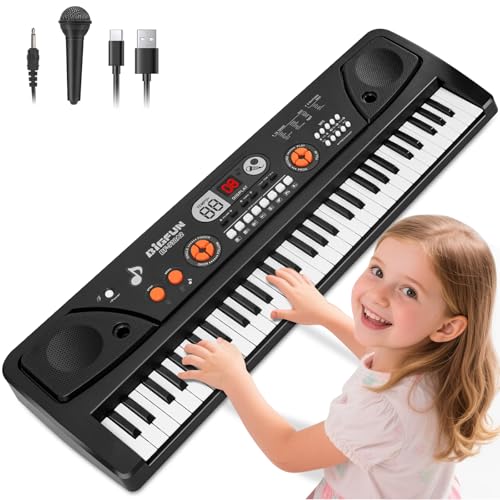
For caregivers seeking a larger keyboard experience, the Drmukie 61-key option extends the learning horizon with an LCD screen, microphone, MP3 playback, and extensive instrument tones and rhythms. It offers features such as one-key-for-one-note, recording, and play options suited for older children approaching more complex melodies. The USB/USB-C compatibility and multiple power modes support flexible use at home or on the go.
Pitowl 61 Key Kids Keyboard

The Pitowl 61-key keyboard offers an LED-guided learning approach with 100 tones, 100 rhythms, 70 demo songs, and 8 percussion effects. A real-time LCD display and recording capability support progress tracking, while the 61-note range provides room to expand playing style. Its dual-speaker setup and portable design make it a versatile option for practice and entertainment in various settings.
BIGFUN 37 Keys Purple

The BIGFUN 37-key piano emphasizes safety compliance and RoHS certification, with a multifunction keyboard that includes double speakers, ensemble mode, recording playback, and a USB-powered option for additional convenience. Seven demos, eight tones, and eight rhythms offer a manageable, approachable setup for early learners. The compact design and USB power option support quiet, classroom, or travel use.
Buying Guide: Key Considerations For Autistic Children And Parents
Choosing a piano keyboard for an autistic child involves evaluating safety, sensory comfort, and learning affordances. The following considerations help compare options and align a purchase with developmental goals:
- Safety and materials: Prioritize non-toxic plastics, rounded edges, and durable construction. Look for products with child-safe certifications or explicit safety notes from manufacturers.
- Age-appropriate key count: For beginners, 37 keys offer a simple layout that matches small hands and reduces overwhelm. Larger keyboards with 61 keys can be introduced later as skills grow.
- Sensory features: LED-guided learning, demo songs, and audible feedback can aid attention and motivation. Consider models with adjustable volume and tempo for gradual exposure.
- Sound quality and volume control: Dual speakers or enhanced tones help with auditory processing, but must allow quiet play in shared spaces. A headphone jack is a beneficial addition for sensitive listeners.
- Learning modes and recording: Features like one-key-one-note, learn mode, and recording playback support independent exploration and self-assessment, which can reduce frustration and support confidence.
- Power source and portability: Battery-powered options enable play in various environments, while USB-C or USB power adds convenience for extended practice sessions at home.
- Durability and maintenance: Look for sturdy construction, easy grip keys, and simple cleaning routines. Replacing batteries should be straightforward and safe.
- Expandability: If ongoing musical development is anticipated, selecting a model with a broader key range or more tones/rhythms can be advantageous.
- Accessories: A microphone, music stand, stickers, and lesson books can provide structured practice and engagement, particularly for visual or interactive learners.
- Budget considerations: Balanced options offer essential features without overwhelming complexity. Start with simpler models to assess comfort and interest before upgrading.
Across the selected keyboards, the core objective is to provide a safe, engaging learning interface that respects sensory needs while encouraging exploration. For many families, a 37-key system with demo songs and record-playback strikes a practical balance between simplicity and growth potential. Advanced models with more tones, rhythms, or larger key ranges should be considered as the child’s comfort and musical curiosity expand.