Best Learning Toys for Autism: Engaging Tools for Development
Choosing the right learning toys can support communication, social skills, and sensory regulation for children with autism. This guide highlights five carefully selected products that emphasize hands-on exploration, big-picture learning, and calm, focused play. Each item has features designed to aid cognitive development, fine motor skills, and social interaction in engaging ways. Use this overview to compare options and find toys that fit a child’s interests and sensory needs.
Summary table of chosen products:
| Product | Brand | Key Benefit |
|---|---|---|
| Chuckle & Roar Matching+ Wooden Shapes | Chuckle & Roar | Fine motor, logic, portable play |
| Airbition Talking Flash Cards | Airbition | Vocabulary, speech practice, autism-friendly |
| Zeoddler Alphabet Puzzles | Zeoddler | Alphabet recognition, hand-eye coordination |
| Just Smarty Alphabet Wall Chart | Just Smarty | Language basics, speech therapy support |
| hand2mind See My Feelings Mirror | hand2mind | Emotional labeling, social skills |
Chuckle & Roar Matching+ Wooden Shapes

The Chuckle & Roar Matching+ set is a premium wooden puzzle designed for ages 6 and up. The flat-board pieces support early logic and spatial reasoning while providing tactile feedback that can be soothing for sensory seekers. Activity cards stored on the back encourage independent play and easy clean-up, making it suitable for home and classroom use. The sturdy construction lends itself to repeated handling and hands-on learning without excessive setup time.
Airbition Talking Flash Cards

Airbition’s talking flash cards feature 224 vividly illustrated cards with sounds to support vocabulary growth and cognitive skills. This device doubles as a speech therapy aid and an autism-friendly sensory tool, leveraging a Montessori-inspired approach. A standard American accent and a repeat function help reinforce learning, with volume control to minimize overstimulation. Children interact by inserting cards and listening to paired audio cues, making it a practical, tech-assisted learning option.
Zeoddler Alphabet Puzzles

Zeoddler’s wooden alphabet puzzles feature 26 uppercase letters crafted from natural wood. The durable design supports hands-on learning and fine motor development as kids fit pieces into corresponding slots. The natural wood aesthetic appeals to sensory-minimal environments, while the size and grip are toddler-friendly. It’s a strong choice for early literacy, letter recognition, and hand-eye coordination, with portability for classroom or travel use.
Just Smarty Alphabet Wall Chart

The Just Smarty Alphabet Wall Chart combines visual cues with early literacy practice, helping children learn alphabets, sounds, numbers, and basic words. It is positioned as a supportive tool for speech therapy and language development. The chart’s design encourages interactive learning through song and rhythm, making it suitable for group activities or individual play. It’s a practical aid for reinforcing vocabulary in a calm, focused setting.
hand2mind See My Feelings Mirror

See My Feelings Mirror helps children label and identify emotions with clear emojis and snap-in emotion slides. This tool supports social-emotional learning and is particularly relevant for children who benefit from explicit emotional cues. The reflective surface functions as a calming focal point, reinforcing self-awareness and empathy. It’s well-suited for classrooms and therapy sessions seeking structured, gentle guidance in emotional literacy.
Learning Resources Spike The Fine Motor Hedgehog
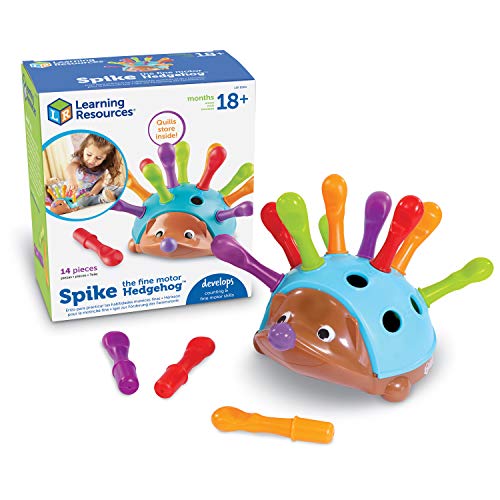
Spike The Fine Motor Hedgehog offers a tactile, color-based activity set that strengthens hand muscles and improves dexterity. It evolves with a child’s development, moving from simple shape matching to color counting and pattern recognition. The toy’s sensory appeal comes from the textured quills, which encourage focused play and fine motor practice. Suitable for toddlers and preschoolers, it supports steady progress in early STEM and literacy readiness.
Christmas Stocking Stuffers Dinosaur Color Sorting

This dinosaur-themed color sorting toy combines fine motor practice with early math concepts. Children push beads into color-mmatched slots, fostering color recognition and basic sequencing. The water-bead interior adds a soothing sensory element, making it useful for quiet, focused play. The durable materials and compact design support easy travel between home and school, aligning with autism-friendly sensory needs and hands-on learning preferences.
Speak & Spell Electronic Game

The Speak & Spell electronic game offers retro-style spelling challenges with multiple modes and levels. It supports literacy development through spelling, word-building, and phonics exercises. While not autism-specific, its structured game formats and progression can cater to learners who benefit from predictable routines and targeted practice. The handheld format encourages independent play and can be used for quick, focused learning sessions.
Buying Guide: Key Purchase Considerations
- Target skills: Identify which areas to support—language development, social-emotional learning, fine motor skills, or sensory regulation—and choose toys that emphasize those domains without overwhelming the child.
- Sensory needs: Consider textures, sounds, and visual stimuli. Some children prefer quiet, tactile activities, while others respond well to multisensory experiences. Adjustable volume and simple, clear cues help reduce overstimulation.
- Durability and age range: For autism-friendly toys, durability is important due to repeated handling. Check age recommendations and adjust for a child’s current abilities and future growth.
- Portability and setup: Toys with compact designs or storage-friendly features support on-the-go learning and easy classroom setup.
- Structured learning vs. open-ended play: Balance devices that offer guided prompts (like flash cards and wall charts) with open-ended tasks (like puzzles) to cultivate independence and curiosity.
- Ease of use: Select devices with intuitive controls, clear visuals, and minimal setup to maximize engagement and reduce frustration.
- Therapy alignment: When possible, choose tools that complement speech therapy, occupational therapy, or social skills curricula already in use.
- Safety and materials: Opt for non-toxic finishes, rounded edges, and kid-safe components. Wooden toys can offer a different sensory experience than plastic options and may be preferred for certain sensory profiles.
Across these products, the emphasis is on encouraging active participation, consistent routines, and constructive feedback. Parents and educators can tailor play sequences to individual needs, gradually introducing new challenges that align with a child’s interests and communication goals. By combining language-focused tools with emotional regulation aids and tactile puzzles, a well-rounded set of learning toys can support meaningful development for children on the autism spectrum.