Best Beginner Bikes for Short Riders
Finding the right size BMX or kids bike for shorter riders can be challenging. This guide highlights beginner-friendly options that fit smaller riders, focusing on smaller wheel sizes, adjustable components, and stable handling. Each product below is suitable for beginners and helps boost confidence for new riders starting from a young age or with a shorter inseam.
| Product | Brand | Wheel Size | Notes |
|---|---|---|---|
| WEIZE Freestyle BMX Bike, 20 Inch | WEIZE | 20″ | Entry-level freestyle with stability and pegs |
| WEIZE Kids Bike, 16 Inch | WEIZE | 16″ | Great for beginners and shorter riders |
| Mongoose Legion Mag Kids Freestyle BMX | Mongoose | 20″ | Aluminum mag wheels and beginner-friendly gearing |
| cubsala Freestyle BMX Bike, 18 Inch | cubsala | 18″ | Beginner-friendly with Hi-Ten steel frame |
| JOYSTAR 20 Inch Kids Bike Freestyle BMX | JOYSTAR | 20″ | Durable Hi-Ten steel frame and simple drivetrain |
WEIZE Freestyle BMX Bike, 20 Inch

Designed for entry-level riders, this 20-inch FREESTYLE BMX bike features a durable high-carbon steel frame built to withstand park, street, or dirt riding. The 360-degree rotor and four pegs support grinds and tricks, making it suitable for beginners who want to explore freestyle riding. Wide 20×2.40” tires offer a smoother ride by absorbing some bumps, while a 170mm one-piece forged crank with a 32T chainring and 16T freewheel provide a straightforward, single-speed setup. The bike prioritizes control and durability for riders developing balance and confidence.
WEIZE Kids Bike, 16 Inch

Ideal for younger riders and those seeking a shorter wheel size, this 16-inch WEIZE bike emphasizes a kid-friendly geometry with adjustable seat and handlebars. It uses durable high-carbon steel to withstand learning bumps and includes anti-slip tires for improved traction. The coaster brake design offers simple stopping for new riders, and detachable training wheels help with early balance practice. The bike is built with lightweight yet sturdy construction to support gradual progression from learning to independent riding.
Mongoose Legion Mag Kids Freestyle BMX Bike
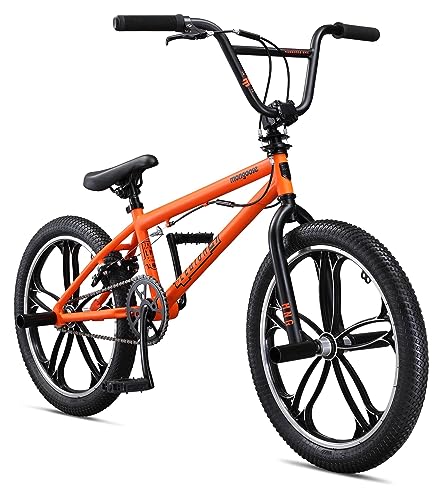
This 20-inch kid-friendly BMX model by Mongoose combines rugged hi-ten steel framing with upgraded aluminum mag wheels and sealed bearings for smooth rides. The 25x9T, 36x16T, or 40x16T gearing options accommodate varying skill levels, while the flat-profile geometry emphasizes stability for beginners. It’s designed to handle neighborhood cruising and light park sessions, giving short riders a comfortable balance between control and performance. The bike’s sturdy construction supports growing riders as their skills improve.
JOYSTAR 20 Inch Kids Bike Freestyle BMX

The JOYSTAR 20-inch BMX bike targets beginner riders with a durable hi-tensile steel frame and a 19.9″ top tube length. It features a single-speed drivetrain with a 165 mm one-piece crank and a 36T chainring for straightforward power transfer. Front and rear caliper brakes provide reliable stopping, while the overall geometry supports easy mounting and stable handling for shorter riders stepping into freestyle riding or cruising around neighborhoods.
Buying Guide
Key purchase considerations for beginner bikes for short riders include wheel size, standover clearance, and adjustability. Smaller wheels (16″ to 20″) reduce the reach to pedals and handlebars, improving balance for shorter inseams. Look for adjustable saddle height and handlebar positions to extend the bike’s usable life as the rider grows. A simple drivetrain (single-speed) minimizes maintenance and reduces confusion for new riders. Sturdy frames (Hi-Ten steel or high-carbon steel) are essential for durability during learning and early tricks. Braking type—coaster brakes or front/rear caliper brakes—should match the rider’s skill level and comfort with stopping control.
Durability versus weight is another balance. Lighter bikes are easier to maneuver, but robust steel frames withstand more falls and rough terrain. Extra features like training wheels, paddings on handlebars, and easy assembly tools are beneficial for younger beginners. When comparing models, prioritize secure grips, consistent braking response, and predictable steering. If possible, test ride or simulate a line of motion to verify that the bike fits the rider’s stance with feet touching the ground and hands comfortably reaching the bars.
But also consider future needs. A bike with adjustable components reduces the need to purchase a new bike quickly as the rider grows. Accessories such as training wheels or removable pegs provide incremental learning aids, particularly for tricks and balance practice. Finally, verify seller policies on assembly, return windows, and warranties to avoid long-term hassles after purchase.