Best Stacking Boxes for Toddlers: Top Learning Toys for Early Builders
Stacking boxes and nesting toys are more than just playful diversions for toddlers. They support hand-eye coordination, fine motor skills, early math concepts, and color and size recognition. The following selections combine sturdy construction with engaging themes—from farm animals to dinosaurs—that captivate young learners while encouraging stacking, sorting, and imaginative play. This guide highlights five of the most relevant options to the topic, along with practical buying considerations to help caregivers choose the right set for a growing little learner.
| Product | Brand | Key Benefits |
|---|---|---|
| ShyLizard Toddler Farm Animal Sorting and Stacking Toys | ShyLizard | Nesting boxes with 6 animal finger puppets; numbers and shapes; promotes early counting and animal recognition |
| beeqoo Animal Sorting and Stacking Blocks | beeqoo | Eco-friendly cardboard nesting boxes; CPSA/ASTM F963 compliance; supports fine motor and visual discrimination |
| TOWO Wooden Stacking Boxes Rainbow Colours | Toys of Wood Oxford | Wooden, rainbow-colored cubes; tall stacking tower; Montessori-inspired materials and size differentiation |
| Atoylink Toddler Dinosaur Sorting and Stacking Toys | Atoylink | 6 nesting boxes with dinosaur scenes; magnetic dinos and cars; number and color matching |
| HABA On The Farm Stacking & Nesting Cubes | HABA | Farm-themed 10-piece set; storytelling potential; color sorting and sequencing |
Below, five carefully chosen options are explored in-depth to help you compare features, materials, and educational value. Each section stays within a concise, easy-to-scan format to support quick decision-making for busy caregivers and teachers alike.
ShyLizard Toddler Farm Animal Sorting And Stacking Toys

The ShyLizard set blends nesting boxes with six animal finger puppets, giving toddlers a tactile way to connect animals with numbers and shapes. Each box is labeled with a number and features vivid farm-themed artwork, supporting early numeracy and pattern recognition. The included finger puppets invite dramatic play, reinforcing sequencing as children place animals back into their corresponding boxes. Builders can sort from large to small, which also supports spatial awareness and balance as kids adjust stacking order during play. The design emphasizes safe, approachable cardboard construction suitable for small hands.
beeqoo Animal Sorting and Stacking Blocks

The beeqoo set focuses on durability and safety with eco-friendly, non-toxic cardboard nesting boxes that align with CPSA and ASTM F963 standards. Its jungle and farm animal motifs support color recognition, size comparison, and early vocabulary development. The nesting design helps with storage efficiency, and the stacking activity promotes fine motor control and hand-eye coordination. The boxes are clearly labeled and designed to encourage independent play while offering a reliable foundation for more complex sorting tasks as toddlers grow.
TOWO Wooden Stacking Boxes Rainbow Colours

These wooden nesting cups embody Montessori-inspired learning with a bright rainbow palette. The 10-cup system supports a tall tower exercise—up to 115 cm—while nesting down for compact storage. The beginner-friendly design helps children explore size, weight, and sequencing, with the opportunity to draw or color on the boxes for a personalized learning experience. The durable wooden construction offers lasting use and a tactile, heavier feel that many toddlers prefer for building confidence in motor skills and spatial reasoning.
TOWO Wooden Stacking Boxes – Nesting and Sorting Cups Blocks for Toddlers
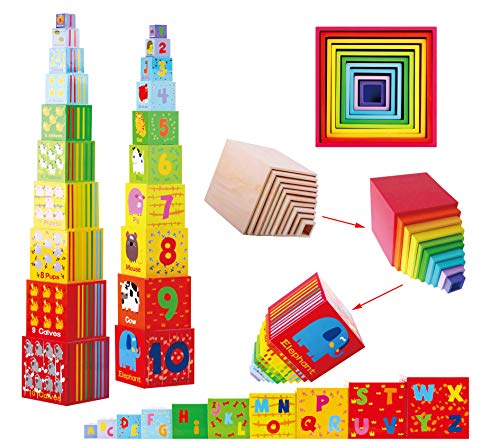
This TOWO set emphasizes educational depth, featuring 10 boxes numbered 1-10 with mother-child animal pairs and alphabet letters printed on the bottom. It blends counting, color recognition, and early literacy in a compact wooden package. The tower-creation aspect enhances gross motor planning as children build tall structures and then nest them for storage. Parents can introduce simple math activities by asking children to group by color, size, or number, all within a single versatile toy system.
Atoylink Toddler Dinosaur Sorting and Stacking Toys

The Atoylink dinosaur-themed set includes six nesting boxes with scenes, six dinosaurs, and six wooden cars with magnets for creative configurations. Numbers on the blocks aid early counting, while color matching and magnet connectivity support modular, imaginative play. The nesting feature keeps storage simple, and the magnetic elements offer a novel way to explore cause-and-effect as children connect different pieces. This option is well-suited for playful science-themed activities and language-building conversations around prehistoric creatures.
HABA On The Farm Stacking & Nesting Cubes

HABA’s 10-piece farm-themed set delivers a gentle storytelling framework alongside color sorting and sequencing challenges. The lightweight cardboard cubes are easy for little hands to manipulate, and the farm characters—such as tractors and animals—help spark narrative play. The fearlessness of experimenting with stacking order supports early engineering concepts while the bright imagery fosters language development and symbolic thinking as children describe scenes and roles within their play.
Buying Guide
Key considerations when selecting stacking boxes for toddlers include materials, safety certifications, age appropriateness, and the educational goals you prioritize. Wood toys tend to be sturdier and offer a heavier, satisfying feel that many toddlers enjoy for building confidence in motor control, but high-quality cardboard options can be lighter and safer for very young children. Look for non-toxic finishes and smooth edges to minimize chipping or splinters.
For cognitive development, choose sets with numbers, letters, or animal themes that encourage counting, sorting, and early literacy. If storage is a concern, nesting designs help keep play spaces organized without sacrificing play value. Magnetic connectors or interlocking features can add a layer of imaginative play while strengthening fine motor skills. Aesthetics matter too; bright colors and familiar animals or vehicles often capture a child’s interest, motivating longer, more focused sessions of play.
Another consideration is adaptability. Some sets are better suited for solitary play, while others invite group activities or caregiver-guided lessons. If you plan to introduce math concepts, start with boxes labeled 1–10 and gradually add tasks like color sorting, size ordering, or simple pattern games. Finally, assess durability: while cardboard boxes are often adequate for gentle daily use, wooden sets may endure longer through years of play and multiple children.
In terms age ranges, most of these options target toddlers from about 1 to 3 years old, with many designs offering scalable challenges as children grow. When evaluating options, consider your child’s current skill level and whether you want a toy that emphasizes motor skills, early numeracy, or imaginative storytelling. The five highlighted products balance these angles, providing a spectrum of tactile experiences that can adapt to evolving learning goals.