Best Award-Winning Toys for 4 Year Olds: Engaging Picks for Early Learners
Choosing toys that entertain and educate helps 4-year-olds develop critical early-year skills. The following selections are recognized for their creativity, educational value, and broad family appeal. Each item supports learning milestones in language, math, problem-solving, and cooperative play, while remaining age-appropriate and safe for home and classroom use.
| Product | Brand | Key Benefit |
|---|---|---|
| ThinkFun Zingo Bingo | ThinkFun | Builds language, matching, and quick-thinking skills for pre-readers |
| Peaceable Kingdom Count Your Chickens | Peaceable Kingdom | A cooperative game teaching counting and social skills |
| My First Piano Book | BEST LEARNING | Intro to music, memory, and fine motor skills with interactive play |
| LIWIN LET’S GO! Matching Letter Game | LIWIN LET’S GO! | Letter recognition, memory, and early literacy in a family-friendly format |
| Doctor Jupiter Little Genius Kit | Doctor Jupiter | Hands-on STEM activities and language learning for multiple disciplines |
ThinkFun Zingo Bingo Award Winning Preschool Game

ThinkFun Zingo Bingo is designed for pre-readers and early readers, offering fast-paced play that builds language and matching skills. The game is popular in classrooms and homes, supporting up to seven players with an extra Zingo card and a unique zinger device for enthusiastic participation. The beginner skill level makes it accessible for 4-year-olds while still challenging enough to keep engaged siblings and parents involved. This edition emphasizes quick thinking, picture-based word recognition, and social interaction, aligning well with early literacy goals in a structured and enjoyable format.
Peaceable Kingdom Count Your Chickens

Count Your Chickens is a cooperative counting game for 2 to 4 players that emphasizes teamwork. No reading is required, making it accessible for 4-year-olds who are learning number sense and basic addition. Players work together to help Mother Hen collect her chicks and bring them back to the coop, with everyone winning if the group succeeds. The cooperative format reduces competition while reinforcing counting, turn-taking, communication, and social development skills—key areas for early learners and classroom-appropriate play.
BEST LEARNING My First Piano Book
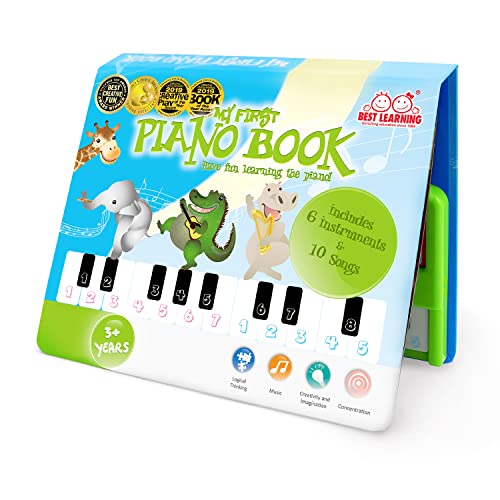
The My First Piano Book from BEST LEARNING introduces music and rhythm through an interactive, portable piano with a visual songbook and color-coded key chart. The kit includes 10 songs and six musical instruments, providing a structured yet approachable pathway into musical play. It’s award-winning for encouraging creative expression, memory, and basic sequencing. The playback feature supports self-assessment, helping children hear their progress and identify areas for practice, making it a strong educational tool within a home or preschool setting.
LIWIN LET’S GO! Learning Games
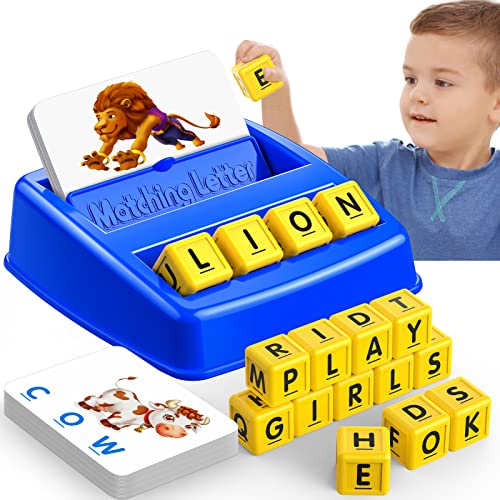
LIWIN LET’S GO! features a matching letter game designed for kids ages 3-8. It focuses on memory skills, letter recognition, spelling, word-building, and early vocabulary. The game format promotes parent-child interaction, encouraging children to learn through guided play and collaborative problem solving. This kit supports early literacy development and social skills in a family setting, making it a versatile choice for homes or classrooms working toward foundational reading milestones.
Doctor Jupiter Little Genius Kit

The Little Genius Kit from Doctor Jupiter combines science, math, language, and hands-on learning into a compact activity set. It includes a maths game, science experiments, a language game, and an animal encyclopedia with 60+ real-world images plus stickers. Safe, kid-friendly materials support 4- to 6-year-olds in exploring STEM concepts while developing communication and critical thinking. The kit’s structured activities are designed to keep young minds engaged without overwhelming them, making it a practical option for curious learners who enjoy step-by-step experiments and discovery-based play.
Buying Guide: Key Purchase Considerations
- Educational goals: Align the toy’s activities with early literacy, numeracy, and science milestones appropriate for 4-year-olds. Choose games that balance instruction with play to sustain interest.
- Cooperative vs. competitive play: Cooperative games like Count Your Chickens foster teamwork and social skills, while games like Zingo reinforce quick-thinking and language through friendly competition.
- Age appropriateness and safety: Ensure materials are non-toxic, age-appropriate, and free of small parts that could present choking hazards for younger siblings in the household.
- Durability and ease of use: Look for sturdy construction, simple rules, and clear instructions that can be understood by both children and supervising adults without constant mediation.
- Portability and storage: Portable, compact kits facilitate travel, classroom use, and family play across venues, while organized storage supports long-term use.
- Skill variety: A mix of memory, language, math, and STEM activities helps balance cognitive development and keeps children engaged by offering diverse challenges.
- Parental involvement: Games that invite parent-child interaction strengthen learning outcomes and support shared reading or problem-solving experiences.
Product Selection Rationale
The five chosen items collectively cover a spectrum of developmental domains—language and literacy, early numeracy, music exposure, and STEM exploration. Each title has earned recognition or awards, underscoring its effectiveness and appeal for families and educators. By balancing cooperative and competitive formats, these selections provide options for solitary play under supervision as well as collaborative sessions that promote discussion, strategy, and socialization. The inclusion of a musical starter kit, a picture-word matching game, and a pair of science-oriented kits ensures a well-rounded set of options suitable for 4-year-olds with varied interests.