Best Interactive Toys for 10 Year Olds: Engaging Games That Boost Skills and Fun
Finding the right interactive toys for 10-year-olds can blend education with excitement. Below is a curated guide to five top picks that encourage memory, problem-solving, creativity, and active play. Each option offers hands-on engagement, portability, and clear learning benefits, helping kids stay curious whether at home, on the road, or with friends.
| Product | Brand | Age Range | Why It Stands Out |
|---|---|---|---|
| PlayRoute Electronic Brain & Memory Game Cube | PlayRoute | 6-12+ | Five light-up mini-games that target memory and concentration |
| EduCuties Robot Toys | EduCuties | 4-10+ | Gesture controls with programmable actions and obstacle avoidance |
| Luaxkpi Infinity Cube | Luaxkpi | 8-12 | 2-in-1 fidget puzzle improving focus and spatial reasoning |
| Memory Game for Kids by Imagineers | Imagineers | 4-12 | Lights, sounds, and sequence memory challenges |
| Flooyes Dance Mat | Flooyes | 3-12+ | Light-up dance pad with multiple game modes and Bluetooth music |
PlayRoute Electronic Brain & Memory Game Cube
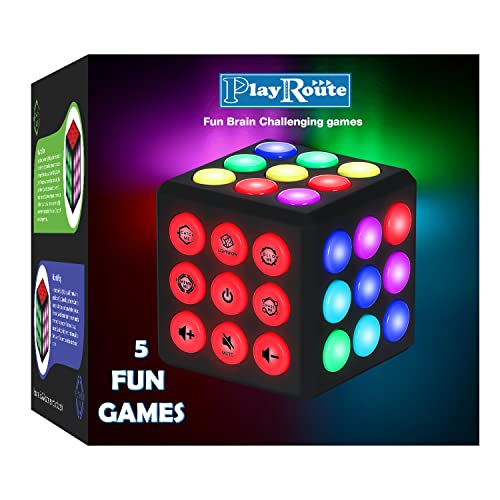
The PlayRoute Light Up Cube delivers five engaging light, memory, and brain games in a compact handheld format. It’s a travel-friendly option that appeals to both boys and girls ages 6-12 and can serve as a stimulating break during road trips or quiet afternoons at home. The device emphasizes memory and concentration through games like Follow Me and Remember Me, which challenge players to track and reproduce sequences. The cube’s bright lights and quick reflex demands make it a fast-paced test of attention, while its portability encourages short, repeat sessions to boost cognitive exercise over time.
EduCuties Robot Toys

EduCuties combines remote control with gesture sensing to offer a versatile programmable robot experience. The gesture-based commands allow kids to steer the robot left, right, forward, and backward, while the infrared controller provides traditional control. An impressive feature set includes automatic displays and obstacle avoidance, plus an action library of up to 50 moves that kids can program and replay. Built from non-toxic ABS plastic and designed with flexible joints, this robot supports imaginative play and basic programming concepts, helping young builders develop sequencing, planning, and problem-solving skills.
Luaxkpi Infinity Cube

Luaxkpi’s Infinity Cube is a 2-in-1 fidget toy that morphs between cubes and other shapes, providing endless tactile play. It’s designed to reduce screen time while sharpening attention, spatial reasoning, and creative thinking. The compact, pocket-sized design makes it easy to take on trips or to school, turning downtime into quick brain workouts. This toy is suitable for kids aged 8-12 who enjoy hands-on puzzles and can benefit from practicing focus in short, repeatable sessions.
Memory Game for Kids by Imagineers

This memory-based game emphasizes visual and auditory cues as players watch lights, hear sounds, and repeat sequences. It supports both solo and multiplayer modes, making it a flexible option for family game nights or classroom-style challenges. The compact device is travel-friendly, encouraging kids to practice memory skills anywhere, whether during car rides or while waiting in line. As players advance, the increasing difficulty naturally extends the play experience and keeps their minds engaged.
Flooyes Dance Mat

The Flooyes Dance Mat brings active play into a kid-friendly dance experience. The light-up six-button layout offers multiple play modes, including a Simon Says-inspired memory challenge and rhythm-based games. Bluetooth connectivity lets kids pair with their favorite tunes, while the built-in multilingual melodies add variety. The dance pad supports physical activity and rhythm recognition, helping develop coordination, timing, and gross motor skills in a fun, interactive format.
Buying Guide: Key Purchase Considerations
- Skill development: Look for toys that promote memory, sequencing, spatial reasoning, and problem-solving, while balancing complexity with age-appropriate challenges.
- Portability and storage: If travel is common, choose compact devices or foldable options that are easy to carry and store.
- Engagement and replay value: Toys with multiple modes or programmable features tend to keep kids engaged longer and encourage continued exploration.
- Safety and materials: Prioritize non-toxic materials, sturdy construction, and age-appropriate components. Check for small parts if younger siblings are in the home.
- Social vs. solo play: Some toys work well solo, others excel in group settings. Consider a mix to support both independent practice and family interaction.
- Educational scope: Balance entertainment with learning outcomes—memory, reaction time, geography, language, or digital literacy.
- Durability and battery use: Assess battery requirements and overall durability for frequent use and travel wear.
These five interactive options provide diverse paths to engaging cognitive and physical activity for 10-year-olds. Each product offers unique features—from memory challenges and programmable robotics to tactile puzzles and dance-based play—ensuring there’s something to match different interests and learning styles.