Best Balance Bike for Girls: Top Picks for Safe, Smoothed Rides
Finding the right balance bike for a young rider helps build confidence, coordination, and a love of biking from an early age. The following five models are curated to appeal to parents seeking engaging, safe, and age-appropriate options for little girls (and curious beginners alike). Each bike emphasizes stability, easy learning, and durability, with features like adjustable seats and handlebars, no-pedal designs, and kid-friendly aesthetics. This guide highlights what makes each option a solid choice for developing balance and steering skills while keeping playtime fun.
| Product | Brand | Key Benefit | Age Range |
|---|---|---|---|
| KS12 Balance Bike | Gotrax | LED lighting adds excitement and visibility | 2+ years |
| Toddler Balance Bike (Pink) | KRIDDO | Animal buddy and quick balance training | 24 months–5 years |
| Colorful Lighting Balance Bike | Gamfeiny | Colorful wheel lights without batteries | 10–36 months |
| SEREED 12-24 Month Bike | SEREED | Sturdy design with tool-free adjustments | 12–24 months |
| Bobike Toddler Balance Bike | Bobike | Adjustable seat with enclosed wheels for safety | Up to 4 years |
Ultimately, the best balance bike for your child depends on fit, adjustability, and the kind of learning experience you want to facilitate. The models here are selected for early learners who benefit from intuitive controls, safety features, and engaging design. Read on to compare each option’s standout features, then use the Buying Guide to weigh safety, growth potential, and long-term value.
KS12 Balance Bike From Gotrax

The KS12 balance bike is designed for toddlers ready to practice walking, gliding, and steering. Suitable for ages 2 and up, it provides a smooth transition from standing to gliding, helping children develop balance and coordination indoors or outdoors. A notable feature is the integrated LED lights, which add a visually engaging element that helps maintain interest during playtime and supports nighttime visibility. The bike is lightweight and easy to maneuver, with a design that supports simple assembly and use right away.
Adjustability is key here: seat height ranges from 16.5″ to 18.3″ and handlebars from 22.8″ to 26″, ensuring the bike can grow with the child. A thicker seat cushion and silicone handlebars contribute to comfort and stability, while a built-in bell adds a playful, interactive touch. The absence of pedals helps little riders focus on balance mechanics, reducing the risk of frustration during early attempts.
KRIDDO Toddler Balance Bike (Pink)

The KRIDDO balance bike targets children from 24 months to 5 years with a focus on early balance development. It includes an engaging stuffed animal riding buddy and a wide, supportive footprint that aids stability as little riders push, stand, and glide. The bike emphasizes a quick balance-training footrest under the seat, helping children lift their feet and improve balance as they move forward. This combination supports growing confidence as the child learns to coordinate movements without pedals.
Material strength and kid-friendly design are emphasized for safety and longevity. The toy-like animal partner adds a comforting, familiar element during new experiences, while the sturdy frame supports active exploration. The design encourages independent exploration, with careful attention to weight limits and ergonomic handling for small hands.
Colorful Lighting Balance Bike (Gamfeiny)

This balance bike is designed for very young riders, featuring a no-pedal design with a fully widened, enclosed wheel setup to minimize the risk of toes or feet getting caught. The standout feature is the rear wheel’s colorful lighting effect that activates by wheel motion, providing a dynamic visual cue to play. The recommended age range is 10–36 months, making it a strong first ride for toddlers who are just starting to explore balance and movement.
Safety considerations include a 135° steering limit to protect against tipping and wide wheel coverage to prevent foot clamping. The design aims to deliver a safe indoor or outdoor riding experience while fostering early confidence and motor development through gentle, guided motion.
SEREED Baby Balance Bike (12-24 Months)

The SEREED model for 12–24 months emphasizes a sturdy, growth-friendly design with a wide, durable aluminum frame and a non-slip seat. It promotes balance and steering without pedals and includes kid-friendly features like soft seating and comfortable grips. The bike supports indoor and outdoor use and is suitable for early walkers who are transitioning toward a riding motion, focusing on safe, gradual skill development.
Adjustability is built into the design to ensure a comfortable fit as the child grows. While no pedals simplify the learning curve, the no-pedal approach helps reinforce balance discipline and body awareness, setting a foundation for future pedal-bike transitions with minimal frustration.
Bobike Toddler Balance Bike (Pink)
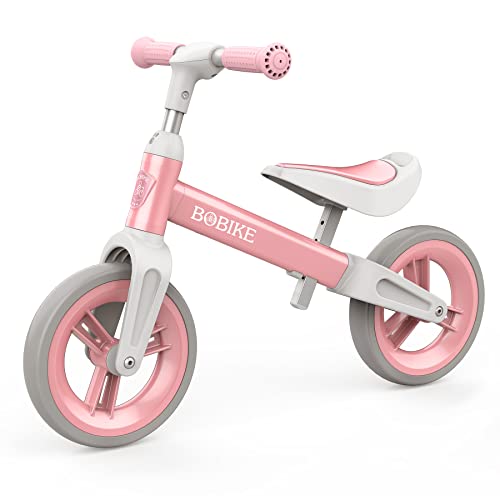
Bobike’s balance bike focuses on stability and safety for children up to about four years old. The bike uses a carbon steel frame and features adjustable seating to fit growing riders. Enclosed, non-slip wheels reduce the risk of foot injuries during guidance and practice. The setup is designed for quick assembly, enabling parents to prepare the bike rapidly for use in different settings, from living rooms to backyards.
Key safety attributes include a sturdy construction with an emphasis on controlling dynamics as toddlers learn to balance. The design supports a natural learning curve, allowing children to practice balancing, walking, and initial riding without the pressure of pedals, all while maintaining a visually appealing, child-friendly aesthetic.
Buying Guide: Key Purchase Considerations
When selecting a balance bike for a young rider, several factors influence how effectively it supports early riding skills. Consider fit, safety, ease of learning, and long-term growth potential. Here are essential perspectives to weigh:
- Age and height range: Check the recommended age and adjustable height ranges. A bike that grows with the child reduces the need for frequent replacements and ensures better control as balance improves.
- No-pedal vs. pedal-ready: No-pedal designs help beginners focus on balance and steering, while some models offer quick transitions to pedals to shorten the learning curve later.
- Stability and frame quality: A sturdy frame, wide wheelbase, and non-slip grips improve safety and confidence, especially for toddlers who are still learning to balance.
- Safety features: Look for enclosed wheels, steering limits, and low centers of gravity to minimize tipping and feet injuries during early rides.
- Adjustability: Seats and handlebars that adjust in height enable the bike to accommodate growth, ensuring good posture and comfortable riding as kids get taller.
- Materials and weight: Lightweight frames reduce effort for young riders and parents during handling and transport.
- Visual appeal and motivation: Bright colors, lights, or character motifs can keep kids engaged and excited about riding.
In sum, the best balance bike for a girl will align with her current size, comfort level, and long-term growth plan. The five models highlighted balance safety, adjustability, and engaging design—factors that collectively encourage repeated practice and progression toward independent riding.