Best Biology Kits for Kids: Engaging Home Science Projects for Young Explorers
Explore the world of biology with beginner-friendly kits that spark curiosity and practical understanding. The following picks cover microscopy, anatomy, fossil digs, and hands-on dissection simulations—designed for kids to learn safely at home or in the classroom. Each kit emphasizes safe materials, age-appropriate activities, and clear educational value to help young scientists build a solid foundation in biology.
| Product | Brand | Key Feature |
|---|---|---|
| Wow in The World Kids’ Microscope & Biology Kit | Thames & Kosmos | Up to 720x magnification with LED illumination and prepared slides |
| NATIONAL GEOGRAPHIC Frog Dissection Kit Anatomy Lab | Blue Marble | Safe synthetic frog with glow-in-the-dark bones and organs |
| 58-Piece Kids Microscope Kit | Uarzt | 100x-1200x magnification, metal body, family-friendly exploration |
| PIBEX Ocean Fossil Dig Kit | PIBEX | Dig up 20+ real shells and sea snails; educational guide included |
| Dissect-It Super Shark Lab Dissection Kit | Dissect It | 40-piece synthetic shark skeleton with reusable tools |
Wow In The World Microscope Kit

The Wow in The World microscope is designed as a beginner-friendly instrument for kids aged 6 and up. It offers multiple magnification levels (80x, 360x, 720x) to reveal cells and tiny structures, with an LED light for bright illumination. The kit includes eight prepared slides—four plant, four animal—plus blank slides for experiments. Aims to introduce foundational microscopy concepts alongside accessible explanations of how the device works.
Frog Dissection Kit Anatomy Lab

This National Geographic option uses a safe, synthetic frog with glow-in-the-dark bones and realistic organs encased in odor-free gel. The kit is designed to mimic a real dissection experience while avoiding live animals. It teaches anatomy and dissection steps through a hands-on approach, with pieces that fit back together for repeated exploration and a tactile understanding of organ placement and function.
58-Piece Microscope Kit

This 58-piece kit from Uarzt delivers a broad entry into microscopy with 100x, 400x, and 1200x magnifications. The set includes 44 pieces and 13 specimens plus 31 blank slides, plus a sturdy metal body and LED illumination. It supports family-friendly, at-home science activities and encourages learners to create and study their own slides, extending geometry and biology concepts into practical experiments.
PIBEX Ocean Fossil Dig Kit

Designed to combine paleontology with marine biology, this dig kit hides more than 20 real sea snail shells and other ocean fossils within a jumbo coral-shaped dig brick. An accompanying learning guide covers sea animals, ecosystems, and ocean habitats. Tools like a spray bottle and safety goggles are included for safe excavation, making it suitable for independent play or group activities for kids aged 6 and above.
Human Body Model With Glow In The Dark Bones
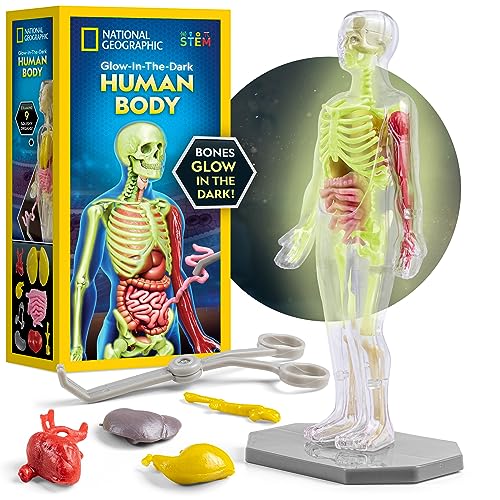
This 32-piece human anatomy model enables kids to study the inside of the body by removing 9 organs, exploring 18 glow-in-the-dark bones, and examining arm muscles. The kit includes a body shell, forceps, an identification chart, a display stand, and a detailed learning guide. It offers a clear, visual way to learn anatomical structure, positioning, and relationships between bones and organs.
Rattlesnake Super Lab Dissect It Kit

Dissect It’s rattlesnake kit provides a safe, synthetic dissection experience with a carvable model, dissecting tray, and plastic tools. The kit includes 14 pages of full-color instructions and 2 refill gel packs, allowing repeated exploration of bones and organs within a clear, educational framework. It supports hands-on learning about anatomy, organ function, and safe, repeatable experimentation without live specimens.
Dissect-It Shark Lab Kit

The Shark Lab kit offers a 40-piece, highly realistic synthetic skeleton with internal organs. Included tools, a dissection table, and a full-color guide enable kids to perform a thorough, repeatable exploration of marine anatomy. It emphasizes safe learning practices while providing a detailed, hands-on dissection experience with a marine biology focus.
Buying Guide
Key purchase considerations for kids’ biology kits include safety, age suitability, and educational value. Safe, non-toxic materials and realistic-but-simplified models help maintain engagement while reducing risk. Look for kits with clear instructions, labeled anatomy or parts, and a balance between guided activities and open-ended exploration to foster curiosity. Magnification capabilities, such as multiple objective levels, support a range of observation depths from tissues to microstructures. For younger children or newcomers, kits with prepared slides and glow-in-the-dark features can ease the learning curve. For classroom or family use, consider kits that include multiple activities, durable tools, and a structured learning guide to cover core biology topics like cells, organs, and ecosystems. When comparing, assess the breadth of content (biology breadth), the realism of models, and the ability to reuse materials for ongoing projects.
Overall, the collection above provides a spectrum of entry points into biology—from microscopy and anatomy to paleontology and marine science. Each option emphasizes safe, interactive learning designed to cultivate observation skills, scientific thinking, and a foundational understanding of living systems in children.