Best Coding Toys for 9-Year-Olds: Engage, Learn, and Create
Finding the right coding toys for curious nine-year-olds can spark a lifelong interest in STEM. The selections below highlight engaging, beginner-friendly kits that blend building, remote or app control, and hands-on programming. Each option supports critical thinking, problem solving, and creativity while keeping play energetic and educational. The following five products are among the most relevant choices for 9-year-olds who want to code, build, and learn by doing.
| Product | Brand | Key Focus |
|---|---|---|
| DIEBA Building 5 in 1 Robot Toys | DIEBA | Remote/App control, STEM learning |
| okk Robot Building Toys | okk | Remote/App control, expressive motion |
| Sillbird Robot Building Kit | Sillbird | 5-in-1 models, remote control |
| Henoda Robot Toys | Henoda | APP/remote control, 468+ pieces |
| PIVONAX STEM Robotics Kit | PIVONAX | 5-in-1 designs, app/remote control |
DIEBA Building 5 in 1 Robot Toys

DIEBA’s 603-piece robot kit blends hands-on building with coding concepts. Aimed at ages 6-12, it supports both remote control and APP Bluetooth control, enabling basic programming through a guided, age-appropriate interface. The set emphasizes STEM skills such as hand-eye coordination, color recognition, counting, sorting, spatial thinking, and problem solving as kids assemble and reassemble models. The kit’s multiple LED expressions add an engaging layer of feedback and personality to each robot, helping children connect actions to outcomes while they experiment with gears, servos, and motion systems.
okk Robot Building Toys for Boys

okk’s robotics kit targets kids aged 8-12 with an emphasis on social learning and expressive play. In addition to remote and app control, it incorporates multiple control modes, including path and programming styles, to introduce basic coding concepts. The model supports a broad range of motion—head, arms, tracks, and more—allowing kids to create lively robots that respond to commands with fun, engaging behaviors. As a structured STEM activity, it helps develop hand-eye coordination, spatial reasoning, and logical thinking while keeping the process approachable and entertaining.
Sillbird 5-in-1 Robot Building Kit

With 435 pieces, Sillbird’s 5-in-1 kit emphasizes hands-on STEM exploration through buildable robots and remote control. The kit is designed to foster problem solving, coding basics, and engineering thinking in an accessible, screen-free environment. The push toward expressive feedback—like LED eyes and sound effects—helps transform technical tasks into relatable, playful activities. This makes it a compelling option for kids who enjoy constructing, experimenting, and then testing how their code translates into action.
Henoda Robot Toys for 8-16 Year Olds
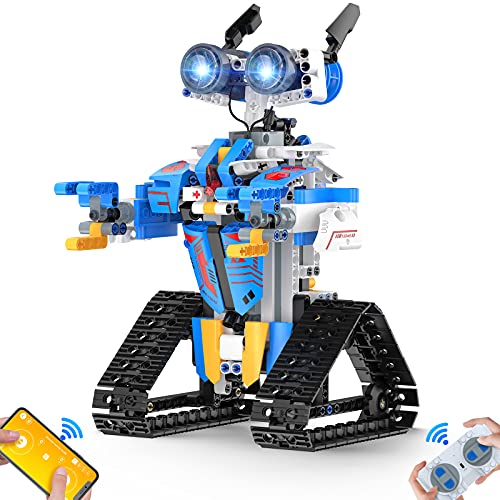
Henoda combines a large parts count (468+ pieces) with versatile control options, including APP Bluetooth connectivity and a 2.4GHz remote. The kit features forward, backward, and turning motions with rotating joints, enabling varied robot forms and demonstrations of programming logic. The design supports multiple control modes such as path and gravity-sensor-based actions, making it useful for teaching iterative design and experimentation while reinforcing spatial reasoning and motor skills. It’s positioned as a long-term STEM activity suitable for ongoing projects and challenges.
PIVONAX STEM Robotics Kit
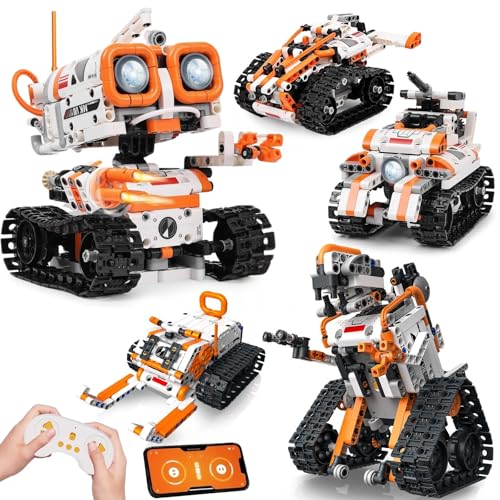
PIVONAX’s kit presents five transformable designs across 560+ pieces, combining robot-building with app-based and remote control. It introduces programming logic through an intuitive interface, letting kids transition from construction to coding by shaping vehicles, a dinosaur, and other mechanical forms. The kit emphasizes problem-solving, critical thinking, and engineering exploration, appealing to learners who enjoy hands-on challenges and systematic experimentation. Its modular designs encourage repeated iterations and creative, real-world applications of STEM concepts.
Buying Guide: Key Purchase Considerations
When choosing coding toys for a nine-year-old, several factors help ensure a good educational fit and long-term engagement:
- Age appropriateness and learning curve: Look for kits labeled for ages 8-12 with gradual progression in complexity to avoid frustration and support growth in coding concepts.
- Control method: Decide between remote control, app control, or a combination. App-based systems often introduce programming concepts earlier, while remote control emphasizes immediate cause-and-effect understanding.
- Hardware and software integration: Ensure parts are durable and parts are compatible across models if the product offers multi-builds. Check for safety certifications and non-toxic materials.
- STEM emphasis: Prefer kits that explicitly target engineering thinking, problem solving, spatial reasoning, and logic. Projects that require planning and debugging usually yield deeper learning outcomes.
- Number of builds and future challenges: A kit offering multiple configurations (like 5-in-1 designs) provides extended play and continuous skill development beyond a single model.
- Inclusion of programming concepts: Some kits teach coding through visuals or block-based interfaces, while others introduce text-based elements later. Consider the child’s interest and reading level.
- Screen time balance: If preserving screen-free play is important, prioritize kits with physical assembly and non-digital challenges alongside optional app features.
- Maintenance and availability of parts: Check whether replacement parts are readily available and whether the manufacturer offers good customer support for parts and updates.
Comparative Perspectives
For parents weighing options, a structured approach helps:
- Best for gradual coding exposure: Kits offering step-by-step app-based programming with captivating feedback (LEDs, sounds) can ease kids into the logic of coding while keeping the tactile appeal of building.
- Best for hands-on engineering exploration: Kits with robust piece counts and multiple build options encourage iterative design and problem solving, with programming as a natural extension.
- Best for social and collaborative learning: Some kits support co-play with shared tasks, enabling siblings or peers to collaborate on construction, testing, and debugging challenges.
- Best for long-term engagement: Sets that offer many configurations and continued challenges reduce the need to purchase new kits frequently, providing ongoing motivation and skill development.
Across the five selections, most options emphasize practical hands-on learning paired with accessible programming pathways. Each product is designed to build confidence in STEM disciplines, while maintaining the fun and imagination that keep a nine-year-old engaged.