Best Left-Handed Banjo for Beginners: Top Starter Banjos
Finding a beginner-friendly left-handed banjo can be challenging, but the right instrument makes learning smoother and more enjoyable. The following selections are geared toward beginners and left-handed players, offering reliable tone, solid construction, and comfortable playability. Each pick emphasizes good setup, durable components, and value for new players exploring bluegrass, folk, and country styles.
Summary of Selected Products
| Product | Brand | Key Benefit |
|---|---|---|
| Vangoa LEFT-HANDED Banjo 5 String | Vangoa | Professional tone with resonator and Remo head |
| Ashthorpe 5-String Banjo, Left Handed | Ashthorpe | Traditional design with Remo head and robust construction |
| Kmise Lefty Banjo, 5 String | Kmise | Remo head and geared 5th tuner for easy tuning |
| Absolute Beginners – Banjo (Book Package) | Hal Leonard | Structured learning with audio access for beginners |
| Deering Goodtime Left-Handed Banjo | Deering (Instrument Alley) | Maple construction and comfortable neck |
Notes: The table highlights a mix of beginner-focused banjos and learning resources to support new players from tune ideas to hands-on playing. Availability and configurations can vary by seller.
Vangoa LEFT-HANDED Banjo 5 String
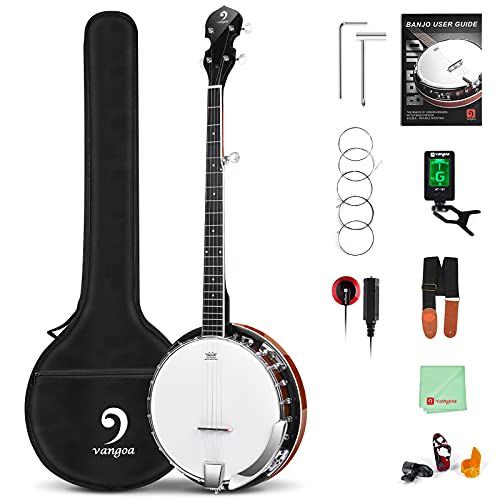
This full-size mahogany banjo is designed for left-handed players seeking a resonator-influenced projection with an open-back option. The instrument ships with a Remo drum head for bright, clear tone and a stability-focused 24-bracket head system. A geared 5th string tuner supports precise intonation and ease of setup for beginners, while the adjustable truss rod helps maintain neck straightness as playing style develops.
Ashthorpe 5-String Banjo, Left Handed

This left-handed model combines a classic guitar-style headstock with a mahogany body and a purpleheart fretboard for a traditional look. It features a Remo head for bright, defined tone and a 24-bracket system to secure the head. The open-back/closed-back versatility allows players to experiment with resonance, while a 5-ply shell and geared tuners contribute to reliable tuning stability for beginners.
Kmise Lefty Banjo, 5 String
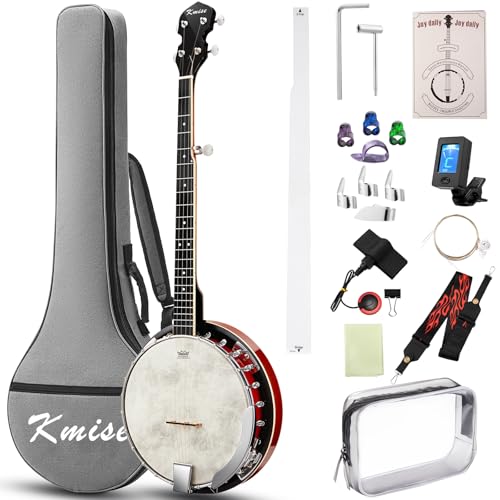
The Kmise left-handed banjo emphasizes a Remo drum head and a sturdy mahogany body with a 38-inch instrument length suitable for beginners. A geared 5th tuner supports accurate tuning, and the included accessories (strings pack, finger picks, strap, case) provide a ready-to-learn setup. The design supports clear articulation across common beginner tunes in country, folk, and bluegrass styles.
Absolute Beginners — Banjo

This instructional package provides a complete picture guide to playing the 5-string banjo, including a book, audio resources, and online access. It is designed for absolute beginners and covers basic chord shapes, strumming patterns, and practical songs to help build confidence before moving to a full instrument. While not a standalone instrument, it complements hands-on practice and supports structured learning.
Deering Goodtime Left Handed Banjo
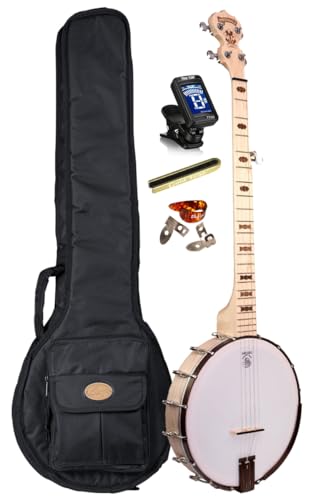
The Deering Goodtime is built with premium rock maple and a 11″ 3-Ply maple rim, delivering a balanced tone and dependable durability for beginners. The neck offers a comfortable D-shape profile and a standard 1 1/4″ nut width, aiding beginner finger placement. The kit typically includes a gig bag, tuner, mute, and basic accessories, supporting a straightforward start for new players. The instrument’s left-handed configuration aligns with early practice needs.
Deering Goodtime Two Left-Handed Banjo

The Goodtime Two offers a maple neck and a three-ply violin-grade maple rim, designed for responsive playability in a left-handed configuration. It features a 1 1/4″ nut width and a resonator design with a 13 7/8″ diameter, including a polished finish and reliable hardware. This model is well-suited for beginners who plan to advance quickly into finger-pstyle and bluegrass techniques, with a focus on steady intonation and comfortable setup.
Buying Guide: Key Considerations for Buying a Left-Handed Banjo
- Left-handed design: Ensure the instrument is truly left-handed (nut, tuners, and bridge orientation). Some listings show right-handed models; verify before purchasing.
- Open back vs resonator: Open-back banjos are lighter and mellower, while resonator models project more volume for solos or live settings. Beginners should pick based on preferred sound and practice space.
- Head material and tension: Remo heads, standard 24-bracket systems, and quality tension control contribute to tone stability and ease of setup for beginners.
- Neck profile and action: A comfortable D-shaped neck and moderate string action reduce finger fatigue and facilitate early progress.
- Geared vs friction tuners: Geared tuners are easier to tune accurately, especially for beginners who are still developing ear training and string-pinding skills.
- Construction quality: Solid mahogany or maple necks/rims support durability and tone consistency as the player develops technique.
- Included accessories: Cases, tuners, picks, straps, and instructional materials add value and help with initial practice routines.
- Learning resources: Books, CDs, and online access can complement hands-on practice and accelerate progress for new players.
- Budget and upgrade path: Choose a model that offers a reasonable initial setup with room for improvements as skills grow, rather than a tool that quickly becomes inadequate.