Best Learning Boxes for Toddlers: Engage Early Skills With Diverse Toys
Parents seeking engaging, development-focused learning boxes for toddlers can choose from a range of hands-on sets that promote early literacy, math foundations, and sensory exploration. Below are five highly-relevant options that align with Montessori-inspired principles, interactive play, and durable design. Each selection emphasizes fine motor skills, problem solving, language development, and independent exploration suitable for 1- to 4-year-olds.
| Product | Brand | Key Benefit |
|---|---|---|
| Dailyfunn Montessori Toys Color & Shape Sorting Learning Box | Dailyfunn | Color/shape matching; motor skills |
| Pidoko Kids Developmental Box with First Words & Feelings | Pidoko Kids | Language and emotional development |
| Melissa & Doug Self-Correcting Alphabet Puzzle | Melissa & Doug | Alphabet recognition; independent play |
| Ms. Rachel Official Surprise Learning Box | Ms. Rachel | Sensory exploration; vocabulary prompts |
| TOP BRIGHT Preschool Learning Toys and Math Manipulatives | TOP BRIGHT | Early math; Montessori-inspired problem solving |
Dailyfunn Montessori Color & Shape Box
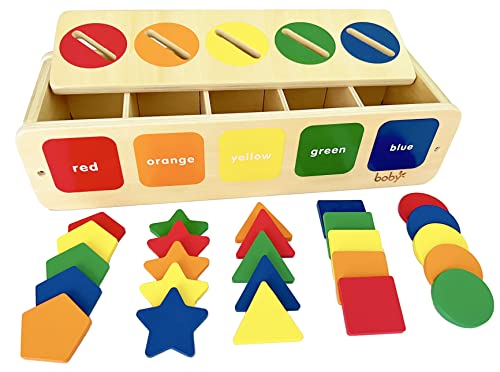
The Dailyfunn Color & Shape Sorting Box provides 25 solid wood pieces in five colors and five shapes, plus 13 answer cards for advanced reasoning. Rooted in Montessori principles, this set is designed to nurture independence, concentration, and self-esteem through hands-on activities. Toddlers practice motor skills, hand-eye coordination, and simple shape-color matching by guiding pieces into correct slots. The combination of tangible blocks and structured cards supports iterative learning and provides a clear path from guided to self-directed play.
Pidoko Kids Developmental Box with First Words

Pidoko Kids offers an all-encompassing developmental box for ages 1–2, focusing on early words, sounds, and feelings through Montessori-inspired tools. The bundle includes three board books and three flashcard sets—First Words, Feelings, and Sounds—designed to expand vocabulary and recognition with real-life imagery. Interactive elements such as flaps and guided guessing games support speech, sensory processing, and emotional development. This set encourages curiosity, social communication, and problem-solving as children learn to name objects, sounds, and emotions in familiar contexts.
Ms. Rachel Surprise Learning Box

The Ms. Rachel Surprise Learning Box blends sensory play with discovery. It includes four learning environments and six plush accessories (a teddy, bunny, bus, scarf, carrot, and bubble gum) to stimulate tactile exploration and imaginative scenarios. A peek-a-boo element and pull-out surprises promote grasp and fine motor skills as babies place items into varied play setups. The included learning card adds ideas for ongoing skill-building, reinforcing language development and cognitive engagement through interactive prompts and interactive object naming.
Melissa & Doug Alphabet Puzzle

The Melissa & Doug Alphabet Puzzle is a self-correcting wooden puzzle set with 52 pieces. Each piece displays a capital and lowercase letter plus a labeled image, ensuring that the correct match is obvious. The sturdy storage box enhances portability and organization. This open-ended, screen-free toy supports letter recognition, vocabulary building, and fine motor control through repeated matching and sorting, promoting independent exploration and confidence in early literacy skills.
TOP BRIGHT Montessori-Style Math Blocks

TOP BRIGHT offers preschool learning toys that blend Montessori-inspired methods with early math manipulatives. Aimed at ages 2–4, this kit supports number recognition, counting, and foundational operations like addition and subtraction. The colorful blocks and manipulatives help make abstract math concepts concrete, fostering independent problem-solving and concentration. This set is designed to scale with your child as their skills develop, providing a durable, engaging option for ongoing early math practice.
Buying Guide: Key Purchase Considerations
- Age appropriateness: Look for boxes labeled for 1–2 or 2–4-year-olds to ensure fine motor and cognitive tasks match ability levels.
- Montessori alignment: Prioritize sets that encourage self-directed exploration, practical life skills, and hands-on manipulation rather than passive play.
- Skill balance: Choose a mix that targets language (first words, sounds, feelings), early literacy (alphabet puzzle), and early math (counting blocks) for well-rounded development.
- Durability and safety: Opt for sturdy materials (wood or high-quality cardboard, non-toxic finishes) and age-appropriate pieces to minimize choking hazards and wear.
- Open-ended vs. structured play: A blend helps children learn independently and follow guided activities when needed.
- Storage and portability: A storage box or carrying case helps keep pieces organized for travel and home use.
- Yes to sensory elements: Items that incorporate texture, color, and flaps or sounds can boost engagement and multisensory learning.
- Long-term value: Consider how easily the set can be expanded or repurposed as a child progresses beyond the toddler stage.
- Safety certifications: Check for safety certifications or reviews confirming durability and child-safe materials.
All five selections provide developmentally appropriate, hands-on experiences that align with early childhood education goals. When choosing, consider your child’s current interests, attention span, and the types of skills you want to cultivate—language, motor coordination, numeracy, or emotional recognition—and balance between guided activities and independent exploration.