Best Educational Dolls for Toddlers That Teach Skills
Discover educational dolls designed to spark imagination while building essential skills. From language prompts and musical interactions to Montessori-inspired dress-up play, these toddler-friendly dolls offer safe, baby-friendly materials and engaging activities. The following selections emphasize fine motor skills, dressing routines, sensory exploration, and early communication—perfect for curious toddlers and their caregivers.
The table below highlights five selected products and their core strengths to help you compare quickly.
| Product | Brand | Key Skill Focus |
|---|---|---|
| Ms. Rachel Official Speak & Sing Doll | Ms. Rachel | Speech, singing, interactive phrases |
| Dressy Friends Belle | June Garden | Dressing skills, Montessori-style learning |
| Dressy Friends Lucas | June Garden | Taking clothes on/off, fine motor practice |
| Dressy Friends Daisy | June Garden | Removable jacket, dressing practice |
| Sugar Snap Plush Learn to Dress Doll | Snuggle Stuffs | Montessori dressing skills, hands-on play |
Ms. Rachel Official Speak & Sing Doll

The Ms. Rachel Speak & Sing Doll is a 16” interactive companion that plays over 16 signature phrases and 4 songs from the Ms. Rachel show. Designed for infants and toddlers, this baby-safe doll invites cue-based repetition with phrases like “I’m so proud of you” and prompts such as “Can you say…?” It includes a sensory-friendly quiet/LOUD switch and a learning card with play ideas to guide skill-building. Batteries are included, and construction adheres to kid-safe standards by GUND Baby.
Key features include touch-activated interactions, language-simulation play, and a gentle transition between quiet and active play modes. This doll aligns well with early language development goals, encouraging verbal imitation, echoing phrases, and turn-taking dialogue. The product’s size and safety construction make it approachable for the youngest toddlers while still offering meaningful interactive learning for older toddlers.
Dressy Friends Belle

Dressy Friends Belle is a 15.5-inch plush doll designed to teach dressing skills through engaging, Montessori-inspired play. Belle guides children through seven dressing activities, including snapping, hooking, fastening, buckling, zipping, looping, and tying. This soft toy blends hands-on practice with independent exploration, encouraging motor-skill development and self-confidence as children practice everyday dressing routines in a playful context.
Montessori-informed design emphasizes learning by doing rather than direct instruction. Belle’s activities are organized to foster steady, step-by-step skill acquisition, while the plush form ensures a comforting, approachable learning companion. The combination of tactile buttons, zippers, and buckles provides multiple entry points for learning, making it suitable for a wide age range of toddlers.
Dressy Friends Lucas

Lucas presents seven dressing activities tailored to support early dressing routines. This Montessori-inspired doll emphasizes hands-on learning with practical tasks such as snapping, hooking, fastening, buckling, zipper use, looping, and tying. The play encourages natural skill development by letting toddlers manipulate real-world clothing actions, reinforcing independence and problem-solving while they play.
The Lucas doll is designed to engage fine motor skills through repeated, playful activity. Toddlers can practice pulling zippers, buttoning, and tying while following a fun narrative of dressing readiness. Its approachable size and soft materials make it suitable for daily play and quick dressing practice periods, supporting consistent, observable progress over time.
Dressy Friends Daisy
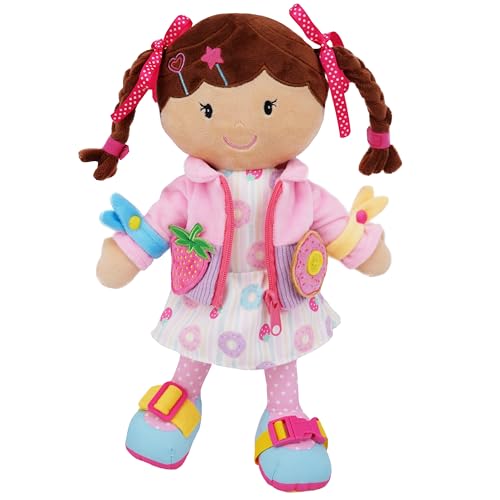
Daisy adds an enhanced dressing experience with a removable pink jacket featuring a zipper. This Montessori-inspired plush doll supports seven dressing activities—snapping, hooking, fastening, buckling, zipping, looping, and tying—while promoting self-directed exploration. The removable jacket offers an extra layer of practice, helping toddlers develop independence in dressing through interactive play and tactile feedback.
Like the other Dressy Friends, Daisy emphasizes sensory and motor skill development through hands-on tasks. The design encourages kids to test different clothing actions, fostering problem-solving, concentration, and fine motor precision as they work through the dressing sequence with a friendly stuffed companion.
Sugar Snap Plush Learn to Dress Doll

Sugar Snap is a 15-inch plush doll focused on Montessori-style dressing skills. The design centers on practical dressing activities—promoting hands-on learning with a toy that children already love. The Montessori approach emphasizes natural learning through manipulation of clothing components, making Sugar Snap a practical companion for daily dressing practice and skill reinforcement in a relaxed, child-friendly format.
The Sugar Snap line emphasizes that learning happens most effectively when kids can repeatedly engage with the materials they are dressing with. This consistent, play-focused approach supports enhanced fine motor development, hand-eye coordination, and emerging independence as toddlers gain confidence putting on and taking off clothing items.
Buying Guide
When selecting educational dolls for toddlers, consider how the toy supports development, safety, and daily routine integration. Here are key factors to weigh:
- Age appropriateness: Look for dolls designed for toddlers (12–36 months) or labeled “2 years and up” to ensure safe materials and manageable complexity.
- Learning goals: Choose dolls that emphasize desired skills—language and social interaction (Ms. Rachel), dressing and fine motor skills (Dressy Friends and Sugar Snap), or Montessori-inspired exploration.
- Materials and safety: Prioritize soft, hypoallergenic fabrics and baby-safe construction. Check for small parts that could present choking hazards for younger toddlers.
- Interactivity: Consider whether you want vocal interactions, music, or simple manipulative activities. Some children benefit from voice prompts, while others prefer tactile play.
- Durability and care: Plush dolls should tolerate frequent handling and be easy to clean. Removable clothing is a plus for dressing practice but should be securely attached to avoid loss.
- Montessori alignment: If you value self-guided learning, select dolls with real-life dressing tasks (snapping, buckling, zipping) that encourage independence and problem-solving.
- Size and storage: 15–16 inch dolls are easy for little hands to manage, and their size makes them portable for travel or daycare use.
In summary, the five options highlighted here cover interactive language development, Montessori-style dressing practice, and relatable dressing activities. Each product balances safety with engaging play, helping toddlers build confidence through practical, hands-on learning. Consider your child’s interests and routine to choose the doll that best complements your educational goals and daily activities.