Best Brain Posters for Kids: Engaging Tools for Learning and Well-Being
The following selection focuses on kid-friendly brain-themed posters that support mental health education, classroom engagement, and cognitive development. From growth mindset art to anatomy-inspired visuals, these picks help teachers and caregivers spark curiosity, reduce anxiety, and foster conversations about the mind–body connection. Each item is chosen for clear visuals, classroom durability, and age-appropriate messaging.
| Product | Brand | Purpose | Ideal For |
|---|---|---|---|
| Mental Health Poster Hanger Frame, Brain Anatomy Posters | DOI-LANEE | Brain anatomy visuals with mental health context | Therapy, School Counseling |
| uoyien Classroom Growth Mindset Posters (12×16) | uoyien | Growth mindset and positive affirmations | Classrooms, Homes |
| Sensory Path Posters for Young Learners | Your Therapy Source | Sensory breaks and regulation | Kindergarten to early elementary |
| Mind Body Connection Poster (8×10 Print) | Generic | Mind–body health concept | Therapy offices, classrooms |
| 5 Brain Games for Kids Posters | Your Therapy Source | Executive function practice | School counselors, classrooms |
Mental Health Poster Hanger Frame for Brain Education
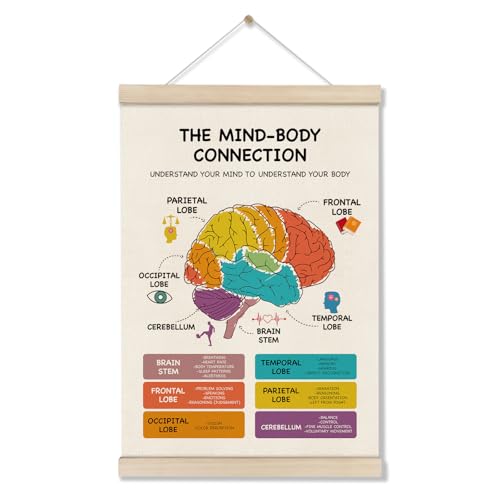
This 12 x 16-inch poster set arrives in a non-removable frame, providing a clean, classroom-ready display that reduces glare and handling concerns. The frames support a professional office or classroom aesthetic, making the mind–body connection feel approachable for students. The set’s design emphasizes mental health awareness and can help counselors and teachers create a safe space for self-discovery and growth. The artwork’s color balance is chosen to maintain legibility from a distance in busy classrooms.
Key advantages include versatile use across therapy offices, school counselor spaces, and classroom walls. The design aims to normalize discussions about feelings and stress management, turning a hallway display into a conversation starter. As with many educational posters, the language is encouraging and non-stigmatizing, allowing students to engage without fear of judgment. Parents and teachers can pair the poster with guided activities to reinforce coping strategies and emotional literacy.
Durability and display quality are notable, with the 12×16 inch size offering a balanced footprint for small to medium walls. This item is particularly suitable for middle and elementary grades where visuals support engagement and dialogue. The minimal frame deters tampering and supports a long-lasting classroom presence, making it a practical purchase for schools and home study corners alike.
uoyien Growth Mindset Posters for Classrooms

These 12×16 inch unframed canvas posters feature growth mindset quotes designed to inspire perseverance, resilience, and positive self-talk in students. A 1 cm white border allows easy framing in a wide range of decors, and the unframed format lets teachers customize with frames that align to their space. The color and material promise durability, helping the posters stay vibrant as classrooms evolve through the year. The design supports a calm, encouraging learning environment that emphasizes long-term skill development over quick outcomes.
Ideal for classrooms, preschools, and home learning corners, these posters pair well with daily routines, such as morning meetings and reflective journaling. They make thoughtful gifts for students, teachers, or family members who appreciate educational decor that also nurtures mental well-being. Despite the unframed approach, the posters remain easy to integrate into existing branding or classroom color schemes with simple framing choices.
Sensory Path Posters for Young Learners

Designed to guide sensory breaks, this set covers heavy work, energy, coordination, body awareness, movement, motor planning, posture, and calming stops. The posters are straightforward to install and provide a ready-made routine that supports students with ADHD, autism, or sensory processing challenges. They serve as practical tools for classrooms aiming to regulate energy levels before instructional time and to reinforce self-regulation during transitions.
The visual design emphasizes clarity and accessibility, making it easy for young learners to follow. Teachers can rotate activities to align with daily schedules, and school-based therapists can reference the posters during therapy sessions or calm-down corners. The set’s emphasis on regulation aligns with multi-tiered systems of support, providing a reusable resource that complements instruction and behavioral supports.
In classrooms that value predictable routines, these pathways offer a concrete, visual language for self-regulation. The posters also support family engagement, as caregivers can replicate the steps at home during high-energy periods or after challenging days, fostering consistency across environments.
Mind Body Connection Poster (8×10, Unframed)

This compact 8×10 inch print highlights the link between mental and physical health, making it a concise educational tool for therapy offices and classrooms. The poster provides a clear overview of how thoughts, emotions, and body signals interact, supporting discussions around stress, coping strategies, and healthy habits. The print quality is suitable for framing in standard frames, enabling easy integration into existing decor without overpowering surrounding visuals.
Educators and clinicians can use this poster to anchor short discussions or warm-up activities focused on mindfulness, grounding techniques, and self-awareness. Its size makes it ideal for smaller walls or personal workstations, while still offering enough detail to support meaningful conversations about well-being. The unframed option invites flexible framing choices to match any space.
5 Brain Games for Kids Posters (Executive Function)

This collection of five posters focuses on executive function skills like attention, focus, self-regulation, and cognitive flexibility through engaging brain games. The visuals are designed to capture student interest while providing a structured way to practice important skills in classroom settings. The materials are well-suited for counselors, special education teachers, and general classroom teachers looking to integrate cognitive training into daily routines without requiring extensive time commitments.
Each poster is crafted to be visually distinct yet cohesive as a set, enabling consistent use across stations or bulletin boards. The games support ADHD-friendly classrooms by offering clear, bite-sized tasks that can be completed individually or with peers. Teachers can scaffold activities to align with grade-level norms and literacy levels, ensuring accessibility for diverse learners.
uoyien Growth Mindset Mental Health Posters (Unframed)

These 12×16 inch unframed posters offer growth mindset messages and mental health themes designed for classroom decorating. The 0.4 inch white border supports easy framing, and the option to customize framing lets classrooms tailor the aesthetic to their existing décor. The posters’ durable print quality is intended for long-term display in busy spaces, resisting fading and wear. They are suitable for schools, counseling rooms, or home study areas aiming to bolster positive thinking and resilience.
From daily affirmations to resilience-building prompts, these visuals can support a broader mental health curriculum. The design focuses on accessibility and readability, ensuring that students of varying ages and reading levels can engage with the content. When used alongside interactive activities, these posters help establish a classroom culture that values emotional literacy and growth.
Buying Guide: Key Considerations For Choosing Brain Posters For Kids
When selecting brain-themed posters for children, consider how the visuals will be used: as decorative accents, teaching aids, or therapy supports. Durability matters in high-traffic areas, and choosing framed versus unframed options affects placement flexibility. Size should balance visibility with wall space; larger prints work well for group areas, while smaller prints can populate individual study corners.
Content matters. For younger children, posters should use simple language, friendly imagery, and clear, actionable messages. For older kids, a more nuanced approach to mind–body health, growth mindset, and self-regulation can be appropriate. Ensure the visuals align with your curriculum or therapy goals and avoid stigmatizing language around mental health or learning differences.
Additional considerations include framing options, color schemes that complement classrooms, and the potential for pairing posters with activities. For example, growth mindset posters pair well with goal-setting charts, while sensory path visuals pair with quiet corners and movement breaks. Accessibility features such as high-contrast text and large fonts improve readability for all students.
Durability and maintenance are practical factors. Laminated posters, especially at 18×24 inches, offer longevity in busy areas but may require more wall space. Unframed canvases or prints provide framing flexibility but may be more susceptible to wear. Assess the cleaning needs of each display area and choose materials that are easy to wipe down or dust.
Finally, think about scalability. A cohesive set that covers mood, body awareness, cognitive skills, and executive function allows for phased implementation across grade levels. It also supports a multi-tiered approach to social-emotional learning and academic supports, giving teachers and counselors a versatile toolkit for fostering a supportive learning environment.