Best Phones for 6 Year Olds: Safe, Entertaining Picks for Learning and Play
Choosing a kid-friendly phone involves balancing learning capabilities, safety features, and age-appropriate entertainment. The options below focus on toy-like smartphones designed for children around six years old, offering cameras, music, learning apps, and parental controls. Each product is evaluated for durability, ease of use, and content for developing skills like literacy, time management, and creativity. Use this guide to compare features and find a device that complements your child’s routine while keeping safety and productivity in mind.
Summary of selected products:
| Product | Brand | Key Features | Best For |
|---|---|---|---|
| Kids Smart Phone with Learning Tools | Yosfeng | Dual cameras, ABC learning, alarm clocks, lanyard | Learning routines and creative play |
| All-In-One Learning Phone | Vimorg | 23 functions, front/rear HD cameras, school mode | Educational variety with parental controls |
| Upgraded Dual Camera Kids Phone | MOFGDNI | 8MP dual cams, 2.8″ IPS screen, MP3 | Photo/video learning and music |
| Educational A-Z Learning Toy Phone | Luoba | ABC learning, habit tracker, 24 country buildings | Language learning and routine building |
| Detective Educational Phone | windpaint | 2.8″ screen, dual cameras, learning apps | Creativity and structured learning |
All-In-One Learning Phone By Vimorg

Vimorg’s Kids Smart Phone offers a broad suite of 23 entertainment, educational, and practical features, including games, drawing, music, letter cards, habit tracking, audio books, and calendars. The device supports school mode for guardians to limit playtime and includes 8GB of memory for photos and videos along with 8.5MP dual cameras. The 2.8″ IPS display provides clear visuals and responsive touch, with a 3.5mm jack for private listening. This option emphasizes a balanced blend of learning tools and play, making it suitable for developing early literacy, time management, and focus skills.
MOFGDNI Dual Camera Kids Phone
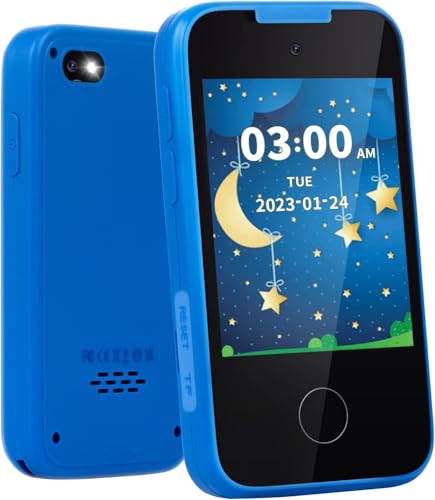
MOFGDNI’s kids phone features a 2.8″ touchscreen, dual cameras (8.0 megapixels) and 1080P video, plus 23 games and 13 learning tools. It includes an MP3 player and a 8GB memory card for extra storage. The device supports a 2.8″ display with a private listening option via the 3.5mm jack. Parental controls are present in the form of a habit tracker and time-based features that help children manage screen time while engaging in educational activities and creative photo-taking with stickers.
Windpaint Detective Educational Phone

This all-in-one kids phone by Windpaint emphasizes detective and spy-themed play with ABCs, stories, painting, and piano features to nurture creativity and literacy. The device includes dual cameras for photo and video capture, a built-in MP3 player, and learning apps accessible via a safe, non-internet-connected interface. The parent app helps monitor gaming content and ensure a safe experience, while the inclusion of 8GB storage accommodates photos and recordings from on-the-go adventures. A strong option for imaginative storytelling and early STEM-friendly activities.
Luoba 2.8-Inch Learning Phone

Luoba’s upgraded kids phone emphasizes ABC learning and introduces A-Z letters, animals, and country landmarks to broaden vocabulary and general knowledge. It includes 24 country icons and a habit tracker to promote consistent routines. The 13 puzzle games support cognitive development, while the 10-story library and MP3 player offer a balanced mix of reading, listening, and interactive play. A suitable pick for families prioritizing language development and structured daily habits.
Yosfeng Learning Phone For Ages 3-6

Yosfeng’s Kids Smart Phone for 3-6 year olds combines dual cameras for memories with a built-in MP3 player and a range of educational apps. It emphasizes ABC letter learning, time management through alarms, and the development of independence with multiple learning scenes. The device includes a durable lanyard for on-the-go use and a 32GB card to store photos, videos, and stories. This option supports literacy, routine building, and creative expression in young children.
Yosfeng 32GB Toddler Phone With Learning Tools

This version from Yosfeng adds a 32GB memory card for expanded storage and maintains a focus on learning and play. Students can take photos and videos with the dual cameras, use ABC learning features, and enjoy 12 alarm clocks to help structure a daily routine. The combination of educational tools and practical features, such as a durable lanyard and accessible controls, makes it a versatile choice for six-year-olds beginning to manage their own screen time and activities.
Buying Guide: Key Purchase Considerations And Comparisons
- Age-appropriate content: Look for devices with learning modes, alphabet and number games, and storytelling features designed for early elementary ages.
- Parental controls: Prioritize models offering school or app time limitations, content filters, and activity reports to monitor use without hindering curiosity.
- Durability and safety: Choose devices with sturdy builds, child-friendly materials, and safety features such as non-internet-connected modes to reduce exposure to online content.
- Camera quality and storage: Dual cameras are common; ensure sufficient storage (8GB or more) or expandable memory (32GB card) for photos and videos.
- Learning value vs. entertainment: Assess balance between educational apps (ABC learning, habit tracking, language games) and entertainment (music, games, stories) to support holistic development.
- Display and usability: A small, bright touchscreen (2.8″ to 3.5″) with responsive controls helps maintain engagement and reduces eye strain.
- Audio features: A reliable speaker and optional 3.5mm jack for headphones support focus during learning tasks and safer listening levels.
- Portability: Lanyards and compact design enable kids to carry devices easily, encouraging independent use in various settings (home, car, school).
- Content variety: Devices with multiple activities—photos, music, storytelling, puzzles—tend to sustain interest longer and support diverse learning styles.
- Value for money: Compare the number of features, memory, and included accessories (extra cards, stickers, or protective cases) to determine long-term value.