Best Toys That Shine for Ages 9 to 10: STEM, Creativity and Fun
Discover engaging toys that support problem-solving, science curiosity, and creative play for kids ages 9 to 10. This guide highlights five top picks that balance learning with entertainment, helping young minds grow through hands-on activities, critical thinking, and imaginative exploration. Each selection is chosen to appeal to varied interests—from engineering challenges to magic science and interactive gadgets—while keeping safety and age-appropriateness in mind.
| Product | Brand | Key Focus |
|---|---|---|
| ThinkFun Gravity Maze | ThinkFun | Logic, planning, STEM problem solving |
| Blue Marble National Geographic Magic Chemistry Set | Blue Marble | Amazing science tricks and experiments |
| Smartivity DIY Robotic Mechanical Hand | Smartivity | Mechanical construction and engineering |
| Rechargeable Game Activity Cube | Ninja Blast | Memory, multi-game learning, rechargeable |
| National Geographic Gross Science Kit | Blue Marble | Gross-out physics and chemistry experiments |
Each product below includes a quick overview, a direct link to the Amazon listing, and how its features align with the interests and learning goals typical for 9- to 10-year-olds. The sections are designed to help you compare options quickly and choose gifts that foster curiosity and practical understanding of how things work.
ThinkFun GravityMaze: Marble Logic Puzzle

The Gravity Maze offers a hybrid of fun and learning by challenging kids to solve engineering-style puzzles with a marble maze. With nine towers, three marbles, a game grid, and a target piece, it fosters strategic planning, spatial reasoning, and persistence. The design supports classroom-style problem solving and can be used as a captivating brain-teaser at home. Its clear setup and scalable difficulty make it suitable for a range of abilities within the 9–10 age band.
Blue Marble National Geographic Magic Chemistry Set
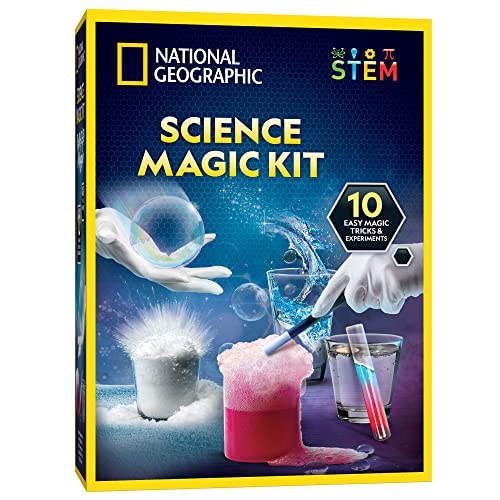
This science kit blends science and magic for memorable demonstrations. The 10 experiments include tricks like making a coin float and color-changing liquids, designed as magic tricks that reveal real scientific principles. A kid-friendly guide provides illustrated explanations, making it easier to connect the tricks to chemistry concepts. The engaging format helps curious minds build foundational thinking about cause and effect in everyday science.
Smartivity DIY Robotic Mechanical Hand

Smartivity combines step-by-step instructions with hands-on construction to build a robotic mechanical hand. The kit emphasizes screen-free engagement, helping develop critical thinking, problem-solving, and mechanical understanding as kids assemble and operate their own device. It includes replacements and ensures ongoing play, supporting extended exploration without frequent replacements. The project-hiece approach aligns well with older elementary learners seeking deeper tinkering experiences.
Rechargeable Game Activity Cube
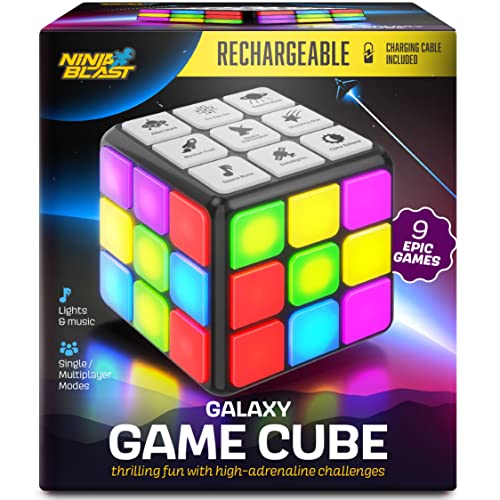
This cube offers a pack of brain and memory games with single- and multiplayer modes. It features buzzing sounds, music, and voice-guided feedback, creating an interactive challenge that keeps kids engaged. A rechargeable cube means uninterrupted play, reducing the need for frequent battery changes. The product supports cognitive exercise, reaction time, and strategic thinking in a compact, versatile package suitable for travel or group play.
National Geographic Gross Science Kit

This kit emphasizes “super gross” experiments that are both entertaining and educational, with 15 core activities plus 30 additional ideas using household items. The included illustrated guide explains the science behind each experiment and provides insights into the phenomena at work. The sensational theme is balanced by clear instructions, making it a memorable way to explore biology, chemistry, and materials science in a hands-on way.
Buying Guide
- Age-appropriateness: Look for challenges that match the child’s current skills while offering room to grow. Kits labeled for 8–12 often suit 9–10-year-olds well, but assess puzzle complexity and required reading level.
- Learning style alignment: Choose based on interest—engineering (Gravity Maze, Smartivity), chemistry and science magic (Blue Marble), or memory and cognitive games (Rechargeable Cube). A mix helps maintain engagement across different skills.
- Durability and components: Consider sets with sturdy parts, clear safety guidelines, and replacement parts availability. This is especially important for hands-on builds and frequent use.
- Digital vs. physical: While digital games can offer convenience, physical kits foster tactile learning, spatial reasoning, and fine motor skills, which are crucial at this stage.
- Longevity and expansion: Some kits offer additional experiments or modular components. A purchase that scales with interest can extend learning over months.
- Safety and supervision: Review age recommendations and any small parts. Ensure adult supervision for younger users where appropriate, especially with chemistry-related kits or build projects.
- Value and storage: Consider sets with organized storage solutions, labeling, and clear project instructions to minimize clutter and maximize reuse.
- Interests breadth: A blend of a logic puzzle, a science kit, and a mechanical build supports well-rounded development, appealing to different curiosity triggers in 9–10-year-olds.
In selecting the right toy mix, balance cognitive challenge with opportunities for imaginative play. The five highlighted products offer diverse approaches—from imaginative problem solving and hands-on engineering to science demonstrations and memory challenges—catering to varied preferences while supporting academic and cognitive growth.