Best Toys for Toddlers With Developmental Delays: Engaging Tools for Early Growth
Choosing the right toys for toddlers with developmental delays can support fine motor skills, sensory integration, language development, and cognitive progress. The following five products are chosen for their educational design, safety, and engaging features that appeal to little hands and growing minds. Each option emphasizes cause-and-effect learning, multi-sensory stimulation, and simple, adjustable challenges suitable for varied developmental levels.
| Product | Brand | Key Benefit |
|---|---|---|
| Kidoozie Ball Drop | Kidoozie | Cause-and-effect, fine motor, sensory play |
| Battat – Pop Up Pals | Battat | Color sorting, button exploration, cause-and-effect |
| Tonberless Montessori Puzzles | Tonberless | Shape and color sorting, early geometry, sensory play |
| SMALL FISH Montessori Sorting Toy | SMALL FISH | Color sorting, fine motor, problem solving |
| Aullsaty Talking Flash Cards | Aullsaty | Language exposure, auditory processing, multisensory learning |
These picks balance active, hands-on play with supportive learning outcomes. They can be used at home or in early intervention settings to encourage repetition, imitation, and gentle challenges that align with developmental delays. When selecting toys, consider safety, age-appropriateness, ease of use for small hands, and the potential for adult scaffolding to maximize learning moments.
Kidoozie Ball Drop – Learning Tower

The Kidoozie Whirl ‘n Go Ball Tower features six levels, each dropping a ball in a unique spot. This design supports fine motor development and color recognition as toddlers manipulate balls through the tower. The accompanying rattling noises add a sensory layer that can engage attention and encourage sustained play. The escalating difficulty across levels helps caregivers adjust challenges to a child’s progress and provides a tangible cause-and-effect experience. For children with developmental delays, repeating the sequence reinforces memory, sequencing, and hand-eye coordination in a playful, low-pressure setting.
Battat – Cause-and-Effect Pop Up Pals
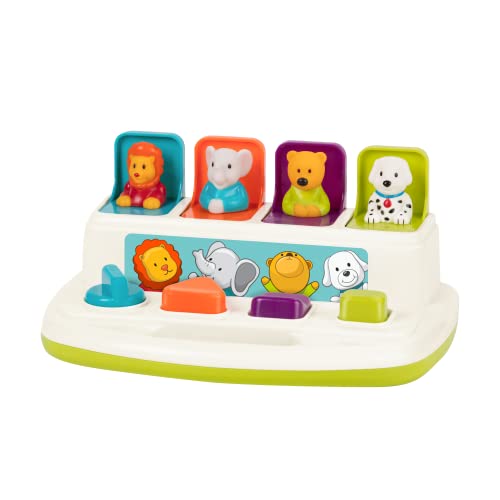
Kids press different buttons to reveal a pop-up animal, and the toy offers a variety of actions—turn, press, flip, and slide—to trigger surprises. This setup emphasizes cause-and-effect understanding, a foundational skill for children with developmental delays. The colorful animals and varied actions encourage tactile exploration and visual tracking, supporting attention and processing. As children experiment with different inputs, they discover cause and effect, improving problem-solving abilities while building vocabulary through labeling animals and actions.
Tonberless Montessori Wooden Puzzles

This wooden set includes 20 pieces with five colors and five shapes, ideal for color sorting, shape recognition, and early geometry concepts. Its smooth edges and water-based paint support safe, tactile exploration for toddlers. The design fosters pincer grasp development, hand-eye coordination, and spatial awareness as children match shapes and colors, build sorting strategies, and experiment with stacking patterns. The modular pieces also offer portability for travel, making it a practical choice for consistent practice across environments.
SMALL FISH Wooden Color Sorting Toy

Designed for 1–3 year olds, this color sorting and shape matching toy emphasizes fine motor skills, color identification, and problem-solving. Its beechwood construction provides sturdy, long-lasting play and smooth edges for safe manipulation. The bright rainbow colors instantly attract attention, and the compact design makes it easy for little hands to grasp sticks, insert pieces, and practice hand-eye coordination. This toy supports early logical thinking and perceptual skills through guided exploration and self-guided discovery.
Aullsaty Talking Flash Cards

The Aullsaty talking flash cards feature 248 sight words across 14 subjects, with a friendly cat card reader that pronounces words in a standard American accent. This tool supports language development, auditory processing, and memory through repetitive exposure and multisensory cues (sound and image). It’s particularly useful for speech therapy goals, autistic learners, and kids who benefit from a structured, predictable routine. The device includes a repeat function and adjustable volume, enabling tailored practice sessions and gradual expansion of vocabulary.
Buying Guide: Key Purchase Considerations
Targeted development goals: Choose toys that align with a child’s current skills while offering achievable next steps, such as progressing from cause-and-effect to predictive thinking and language expansion.
Multi-sensory engagement: Toys that combine visual, auditory, and tactile elements support sensory processing and can help sustain attention for toddlers with delays.
Safety and accessibility: Look for smooth edges, nontoxic finishes, and simple, intuitive designs. Handle size, grip comfort, and stability matter for independent exploration.
Durability and adaptability: Wooden or well-made plastic toys that endure repeated use are ideal. Toys that scale in difficulty or offer multiple play modes increase usefulness over time.
Parental involvement: Consider toys that encourage adult scaffolding—snapping in tasks that promote language, imitation, and shared problem solving, which are crucial for progress.
Portability and ease of cleaning: Select compact, easy-to-clean options for travel or daily routines, enabling consistent practice without excessive setup.
Evidence of learning outcomes: Prefer products with explicit developmental benefits like fine motor growth, color and shape recognition, sequencing, or vocabulary expansion to ensure meaningful play experiences.
These selections provide a spectrum of development-focused features across fine motor, cognitive, language, and sensory domains. When integrating toys into a routine, structure sessions with short, repetitive play loops, gentle prompts, and positive reinforcement to support gradual skill-building and confidence in toddlers with developmental delays.