Best Task Boxes for Autism: Practical Visual Schedules and Learning Activities
Task boxes and visual schedules are increasingly used to support independence, communication, and daily routines for children on the autism spectrum. This guide highlights five highly regarded task-box style sets and learning kits designed to boost focus, reduce anxiety around transitions, and encourage hands-on learning. Each option blends sensory engagement with structured activities, making them suitable for home, therapy, and classroom use. Below you’ll find concise product overviews, a quick comparison table, and practical buying guidance to help caregivers choose what fits best.
| Product | Brand | Core Benefit | Target Age |
|---|---|---|---|
| Autism & Prosperity Time Schedule Tasks | Autism & Prosperity | Visual schedules and time management tools to ease transitions | 3-12 |
| Edu&Kate’s Learning Toys: Montessori Shape Matching | EduNKate’s | Fine motor and early cognitive skills with therapeutic potential | 2-5 |
| Fidget Sensory Toys Pack: 26 Pieces | LESONG | Calming, sensory regulation through tactile fidgets | 3-12 |
| Edu&Kate’s Preschool Learning Toys: 27 Pcs | EduNKate’s | Early learning, story-building, and social skills | 3-5 |
| Edu&Kate’s Alphabet Early Learning Toys | EduNKate’s | Alphabet awareness and language development | 2-4 |
Autism & Prosperity Time Schedule Tasks

The Autism & Prosperity Time Schedule Tasks bundle focuses on visual timing cues and structured activities to support transitions and daily routines. It aims to reduce repetitive questions by clarifying expectations and providing clear steps for tasks. The included visual timer assists with managing screen time and timed activities, which can be particularly useful during afternoon routines or therapy sessions. This set is designed for broad applicability in home or classroom settings, where predictable structure supports independence and communication.
Edu&Kate’s Learning Toys: Montessori Shape Matching
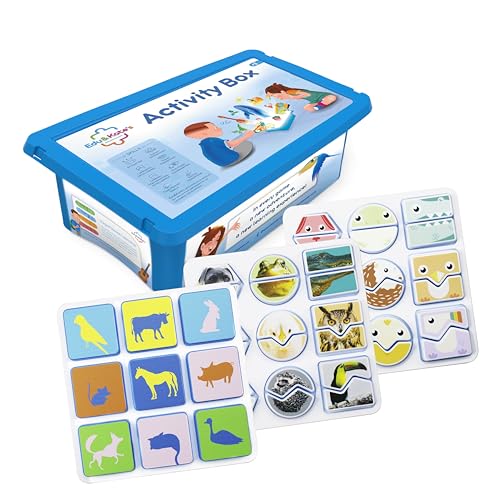
Edu&Kate’s Montessori Shape Matching kit emphasizes hands-on shape recognition and visual perception, paired with fine motor engagement. Therapists have endorsed these toys for developing focus, coordination, and early cognitive skills. The kit includes 45 tiles across three boards plus an activity box, enabling guided play to support sensory exploration and problem-solving. It’s designed to sustain attention during extended play and provide a rewarding sense of accomplishment as children complete matching tasks.
Fidget Sensory Toys Pack: 26 Pieces

This 26-piece sensory fidget set includes textured worry stones, stretchy noodles, and finger rings designed to aid calmness and focus. The textures, colors, and varied tactile experiences support regulation for autistic children and others with sensory processing differences. The pack is well-suited for classrooms, therapy rooms, or quiet corners at home, where students practice self-regulation, transition skills, and sustained attention through hands-on play.
Edu&Kate’s Preschool Learning Toys: 27 Pcs

Edu&Kate’s Preschool Learning Toys bundle provides 27 pieces across three boards and an activity box. This kit targets early learning skills, including visual perception, cognitive development, and social interaction through guided play. Therapists appreciate the kit for its potential to support sensory play, problem-solving, and language growth in preschoolers. It’s especially suitable for structured group activities or individual practice sessions that blend Montessori-inspired concepts with practical learning goals.
Edu&Kate’s Alphabet Early Learning Toys

Edu&Kate’s Alphabet Early Learning Toys focus on alphabet awareness, phonics, and language exposure through engaging activities. The 27-piece set with three boards and an activity box is designed to boost early literacy skills while supporting fine motor development. Therapists and educators may use these tools to build structured lessons, practice letter sounds, and encourage interactive storytelling, aligning with classroom goals for autistic learners and language development milestones.
Buying Guide: Key Considerations For Task Boxes For Autism
When choosing task boxes and related learning kits for autism, consider how each option aligns with the child’s goals, environment, and engagement style. The following perspectives help balance preferences, practicality, and outcomes:
- Structure and routine: Look for clear, step-by-step activities that reduce ambiguity and support predictable transitions. Visual schedules and timers are especially valuable for completing tasks independently.
- Sensory compatibility: A mix of tactile, visual, and auditory cues helps address sensory processing needs. Choose products with varied textures, colors, and levels of stimulation.
- Educational value: Prioritize items that promote developmental targets such as fine motor skills, language, cognitive flexibility, and social interaction through guided play or therapist-approved materials.
- Durability and safety: Durable pieces designed for daily use in home and school settings are essential. Check for non-toxic materials, smooth edges, and kid-friendly sizes.
- Therapy alignment: Therapists often recommend tools that can be integrated into existing therapy plans. Materials that support structured practice and data collection can be advantageous.
- Adaptability: Choose kits that can scale with the child’s progress—starting with simple matching or sequencing and gradually increasing complexity with additional boards or activities.
- Accessibility and ease of use: Consider how easy it is for caregivers to introduce and supervise activities, especially for younger children or those with limited attention spans.
- Engagement and motivation: Tools that are enjoyable and motivating—through bright visuals, sensory feedback, or story-driven tasks—tend to sustain participation and learning.
- Cost and availability: Balance the number of components with budget constraints. Reusable, modular kits may provide greater long-term value for evolving needs.
In sum, the best task boxes for autism blend visual routines, sensory engagement, and educational value into practical formats that support independence and emotional regulation. The five products highlighted here offer a range of approaches—from visual scheduling to Montessori-inspired play and sensory fidgets—catering to different learning styles and classroom setups. Always consider the individual child’s goals, therapist recommendations, and daily routine when selecting the most suitable options.