Best Science Sets for 8-Year-Olds: Top STEM Kits for Curious Kids
The right science kit can spark a lifelong love of learning. This guide highlights engaging, teacher-friendly science sets that are well-suited for 8-year-olds. Each kit offers hands-on experiments, clear instructions, and safe materials to build foundational skills in chemistry, physics, earth science, and robotics. Below you’ll find five options that balance fun with educational value, plus a buying guide to help you choose the best fit for your child’s interests and the family’s learning goals.
| Product | Brand |
|---|---|
| Blue Marble National Geographic Magic Chemistry Set | Blue Marble |
| National Geographic Amazing Chemistry Set | Blue Marble |
| National Geographic Mega Science Lab | Blue Marble |
| Doctor Jupiter | |
| Bottleboom |
Blue Marble National Geographic Magic Chemistry Set
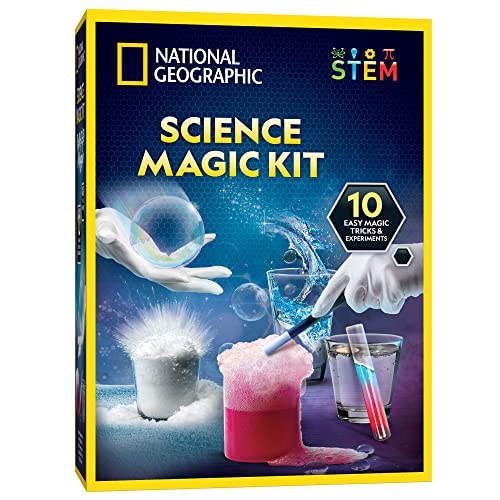
This kit offers 10 “magic” science experiments designed to captivate kids while teaching core chemistry concepts. Projects include floating coins, color-changing liquids, and a snowfall effect—presented as magic tricks to engage young learners. An accompanying wand and gloves extend the imaginative play while the illustrated guide explains the science behind each effect, making it educational and entertaining.
National Geographic Amazing Chemistry Set

Featuring more than 100 experiments, this kit covers color-changing solutions, bubbling reactions, glowing effects, and a variety of chemistry activities. It includes 15 complete experiments and a bonus guide with 85 additional experiments using common household items. The comprehensive set is designed to sustain curiosity and provide various entry points into chemistry exploration.
National Geographic Mega Science Lab

This bundle combines earth science, chemistry, and magic-inspired STEM activities into one kit. It includes 45 experiments plus a bonus 30 additional activities using everyday items. Kids can erupt volcanoes, grow glow-in-the-dark crystals, and collect rock, mineral, and fossil specimens, fostering hands-on discovery and data interpretation skills.
Doctor Jupiter Girls’ Science Kit

Tailored for girls aged 8–12, this kit features over 135 experiments across volcanoes, crystals, water science, and more. It emphasizes STEM learning through engaging activities while offering a detailed manual designed for easy execution. The project set aims to broaden scientific thinking, problem-solving, and practical understanding of laboratory concepts.
STEM 13-in-1 Solar Power Robots

This solar-powered robotics kit enables kids to build 13 distinct robots that can move on land or water. The set teaches principles of gear systems, energy conversion, and mechanics. Easy-to-follow instructions and safe ABS materials support independent exploration while encouraging collaborative problem-solving as children test different configurations.
Buying Guide
- Age-appropriateness: Look for kits labeled for ages around 8–12 to ensure complexity matches a child’s current skills.
- Foundational science domains: Chemistry-focused sets build observation and measurement skills; earth science kits introduce geological thinking; robotics and physics sets nurture engineering and problem-solving.
- Instruction quality: Clear, illustrated manuals with step-by-step directions help kids work independently and safely with minimal parent guidance.
- Materials and safety: Check for non-toxic components, age-appropriate tools, and compliance with safety standards. Ensure small parts won’t pose choking hazards for younger siblings.
- Learning outcomes: Prefer kits that connect hands-on experiments to underlying science concepts and offer explanations or glossaries for concepts introduced in activities.
- Durability and value: Consider kits with robust components and expandable experiments or bonus guides to extend learning beyond the initial set.
- Interest alignment: If your child loves magic tricks, kits that package science demonstrations as tricks may sustain engagement; for hands-on builders, robotics or crystal-growing kits can be more appealing.
- Parental involvement: Some kits are designed for independent use, others benefit from parent-led activities or guided sessions. Decide which approach suits your routine and goals.
- Educational alignment: NGSS-inspired kits and those with structured experiments can complement school learning and homeschool curricula.
- Future potential: A kit with multiple experiments or upgrade options can grow with a child’s curiosity, offering continued challenges as skills improve.