Best Learning Keyboard for Kids: A Practical Guide to Start Music Early
Choosing the right beginner keyboard for a child can spark a lifelong love of music. This guide highlights five kid-friendly learning keyboards and accessories designed to make practice fun, engaging, and educational. Each option emphasizes safety, age-appropriate features, and easy learning aids like light-up keys, color-coded notes, and instructional materials. Use this overview to compare playability, durability, and learning support for aspiring young musicians.
| Product | Brand | Key Features |
|---|---|---|
| QMG Color Piano and Keyboard Stickers and Complete Color Note Piano Music Lesson and Guide Book for Kids and Beginners | QMG | Color-coded notes, lesson book with 56 pages, QR video links |
| Piano Keyboard Stickers for 88/61/54/49/37 Key, Bold Large Letter | COYAHO | Removable, durable color stickers; no-glue left behind |
| Raimy 37 Keys Keyboard Piano for Kids (Pink) | Raimy | 11 demo songs, rhythms, tones, learning features |
| Best Choice Products 61-Key Beginners Complete Electronic Keyboard Set | Best Choice Products | Lighted keys, LCD display, teaching modes, included stand and bench |
| Kids Keyboard Piano, 61 Light-up Key (Pink) | Pitowl | LED guidance, 100 tones, 70 demos, recording |
QMG Color Piano And Lesson Book
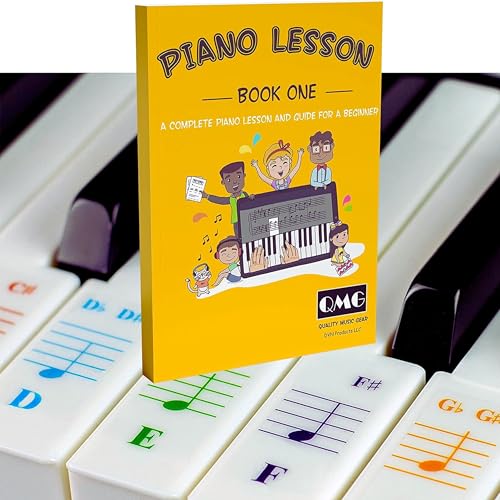
The QMG Color Piano package combines color-coded notes with a comprehensive beginner’s lesson book. The 56-page guide features 28 progressive exercises and 11 popular songs to build early piano technique, ear training, and sheet music basics. It emphasizes proper hand position and finger technique, helping children transfer skills to real instrument play.
Color-coded notes align with the stickers in the kit, reinforcing visual learning for quick recognition and memory. This approach is especially helpful for younger children and visual learners, enabling smoother transitions from color cues to standard note notation as proficiency grows.
An added QR code feature links to video demonstrations, providing step-by-step visuals to accompany the book’s exercises. This multimedia support can improve engagement and comprehension, especially for beginners who benefit from seeing technique and rhythm in action.
COYAHO Piano Keyboard Stickers
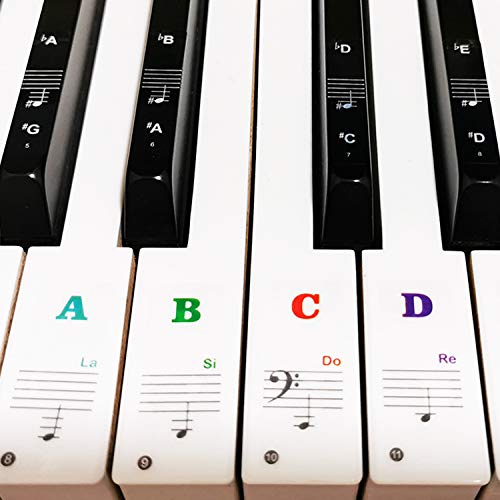
These bold, large-letter stickers are designed for all 88/61/54/49/37-key keyboards. The white key labels measure 4.0 cm by 1.55 cm, with dark keys sized for easy readability. The stickers are durable enough to withstand frequent finger use and are waterproof for easy cleaning between practice sessions.
The stickers are printed on the backside of transparent material, which helps prevent fading and keeps letters legible through repeated play. They are removable and re-sticky, leaving no residue on the keyboard, so you can switch configurations as the child progresses without damaging the instrument.
Raimy 37 Keys Keyboard (Pink)

The Raimy 37-key model for kids focuses on safety and age-appropriate design, with non-toxic ABS plastic and smooth edges. Its compact 43 cm by 16 cm footprint suits small hands, and it’s powered by three AA batteries for portability, making it ideal for travel or classroom use.
It includes 11 demonstration songs, 8 rhythms, 8 tones, 4 percussion and samba sounds, plus a range of learning features like one-key-one-note, learn mode, and a record/playback function. A built-in sleep function helps conserve battery life between sessions while encouraging short, frequent practice.
Best Choice 61-Key Beginners Keyboard Set

This 61-key electronic keyboard is designed as a complete beginner bundle with built-in teaching aids. It features LCD display, light-up keys, and an assortment of 255 timbres and 255 rhythms to explore different sounds and styles. The kit includes an H-style stand, music stand, and padded stool, creating a beginner-friendly setup for home practice or lessons.
Three teaching modes—One-Key, Follow, and Ensemble—offer guided learning paths for new players. The included note stickers and recorded demos help kids learn to read music while playing along with familiar tunes, supporting a gradual transition from guided practice to independent play.
Pitowl 61 Light-Up Key Keyboard (Pink)

The Pitowl 61-key learning keyboard combines LED-guided playing with a broad feature set. It includes 100 instrument tones and 100 rhythms, plus 70 demo songs. The LED keys illuminate to guide finger placement, making it suitable for beginners who learn best through visual cues and immediate feedback.
Additional features include a recording function, microphone compatibility, and a range of connectivity options. The foldable, portable design and safety-conscious ABS construction make it a practical option for both at-home practice and travel, with kid-friendly controls that support early musical development.
Buying Guide: Key Purchase Considerations
- Age-appropriateness: Look for keys number appropriate for beginners (37–61 keys are common) and features like light-up keys or color-coded notes to support early learning.
- Learning features: Teaching modes, demo songs, and recording capabilities help structure practice and measure progress over time.
- Durability and safety: Non-toxic materials, rounded edges, and sturdy stands or benches are important for safe play areas and long-term use.
- Portability: Battery power or lightweight designs enable music learning anywhere, from living rooms to classrooms or travel.
- instructional materials: Books, sticker sets, and QR video links can reinforce reading music notation and technique outside of play sessions.
- Future progression: Consider keyboards that scale with the child’s growing skills, such as models with more keys, more voices, and advanced teaching modes.
- Accessories: A stand, bench, and note stickers can create a classroom-like setup at home, providing a stable practice environment.
- Value vs. upfront cost: Bundled sets with teaching aids may offer better long-term value than standalone keyboards for new learners.
Overall, the best learning keyboard for a child balances engaging features with a strong foundation in fundamentals. The options above provide a mix of color-coded learning aids, interactive play, and practical portability to support consistent practice without overwhelming the learner. Evaluate the child’s age, attention span, and preferred learning style to select the most fitting starting point.