Best Developmental Toys for 2-Year-Olds: Engaging Learning and Fine Motor Fun
Finding toys that support early learning while keeping a toddler engaged can be a challenge. The following selections are developmentally appropriate for 2-year-olds, emphasizing color recognition, shape sorting, language development, and fine motor skills. Each pick is designed to encourage hands-on exploration and pretend play, helping little ones build confidence as they discover new concepts.
| Product | Brand | Key Benefit |
|---|---|---|
| LeapFrog Learning Friends 100 Words Book | LeapFrog | Word introduction and interactive sound effects |
| Montessori Toys for 1-3 Year Old: Wooden Learning Color Sorting Toys | SMALL FISH | Fine motor skills and color sorting in a sturdy beechwood design |
| Toddlers Montessori Wooden Educational Toys: Shape Sorting | KMTJT | Shape and color recognition with safe, large wooden pieces |
| PEBIRA Montessori Toys: Sorting & Stacking | PEBIRA | Color and shape differentiation with multi-piece puzzle play |
| VTech Chomp and Count Dino | VTech | Counting, colors, and cause-and-effect through interactive play |
LeapFrog Learning Friends 100 Words Book
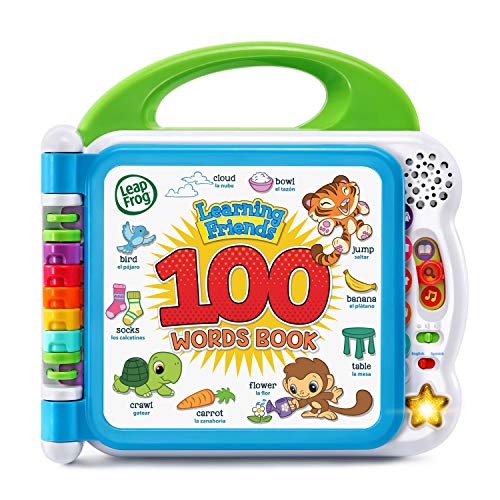
The LeapFrog Learning Friends 100 Words Book introduces more than 100 age-appropriate words, curated by learning experts, spanning categories such as pets, animals, food, colors, activities, opposites, and more. Tap words on the pages to hear the words spoken, enjoy sound effects, and access fun facts. A light-up star button activates the Learning Friends theme song and a favorite word feature. This interactive book supports early vocabulary growth while reinforcing word recognition through tactile page interactions and musical cues. Suitable for two-year-olds developing language and listening skills.
Montessori Toys for 1-3 Year Old: Wooden Learning Color Sorting Toys

Designed with toddlers in mind, this beechwood sorting set emphasizes fine motor development, color differentiation, size perception, and hand-eye coordination. The bright rainbow sticks invite exploration, and the compact, sturdy construction supports extended play sessions. Smooth edges and non-toxic finishes promote safe handling, making it a reliable option for early-learning environments or at-home play. The toy’s open-ended design encourages experimentation and problem-solving while maintaining a simple, engaging activity for 2-year-olds.
Toddlers Montessori Wooden Educational Toys: Shape Sorting

This wooden shape-sort game includes numerous blocks that encourage color and shape recognition while supporting early math concepts like spatial relationships and sorting. The large, rounded shapes are designed for safe handling by little hands, and the accompanying cart and structure offer varied play setups. The toy supports fine motor skills, hand-eye coordination, and problem-solving as children explore different patterns and fits, making it a versatile choice for two-year-olds exploring cause and effect and classification.
PEBIRA Montessori Sorting & Stacking

This wooden sorting and stacking puzzle includes 20 pieces across five colors and five geometric shapes, helping toddlers differentiate shapes, colors, and sizes. The design emphasizes hand-eye coordination, spatial reasoning, and early math concepts through sorting by shape, color, or hole counts. Suitable for travel and home play, the blocks feature smooth edges and kid-safe water-based paint. Its simple, repeatable play encourages extended engagement as children experiment with different combinations.
Learning Toy for Toddlers: Counting, Matching & Sorting Farm Train

This Montessori-inspired farm train encourages counting, color recognition, and sorting through interactive activities. The train includes 10 numbered barns and four colorful wagon carriages, all pulled by a locomotive. Children engage in loading, unloading, stacking, and sorting, building early math and sequencing skills while enjoying imaginative play with farm-themed figures and pieces.
VTech Chomp and Count Dino
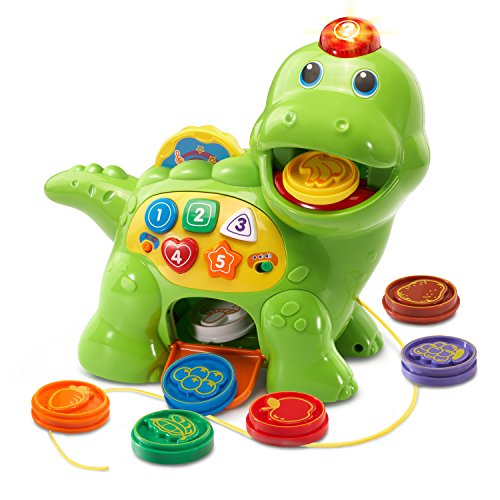
The Chomp and Count Dino introduces colors, food items, shapes, and counting through interactive play. As kids feed the dinosaur, it recognizes the pieces and provides fun responses. The device features an early learning center with 130+ songs, melodies, sounds, and phrases, and cats as questions to answer with correct items. This toy supports vocabulary growth, number sense, and color recognition, while promoting interactive dialogue and pretend-play scenarios. It is suitable for curious toddlers who enjoy cause-and-effect interactions.
Buying Guide: Key Purchase Considerations
- Age appropriateness: Check recommended age ranges and ensure the toy aligns with a 2-year-old’s motor, language, and cognitive development.
- Build quality and safety: Prefer wooden toys or sturdy plastics with smooth edges, non-toxic finishes, and small parts that are appropriate for toddlers to handle.
- Educational focus: Look for toys that promote language development, counting, sorting, color and shape recognition, and fine motor skills without requiring complex setup.
- Play value and versatility: Choose items that offer open-ended play to encourage creativity and extended engagement rather than single-use play.
- Portability and storage: Consider compact designs or multi-piece sets that are easy to store and travel-friendly for families on the go.
- Sensory engagement: Toys with sounds, textures, lights, or tactile elements can strengthen sensory processing and keep toddlers motivated to explore.
- Parental involvement: Some toys allow caregivers to tailor activities, helping with early literacy or math concepts through guided play.
- Durability and safety certifications: Favor brands known for durable construction and child-safe materials, with clear safety certifications where applicable.
- Balance of digital vs. non-digital play: While electronic toys offer interactive features, a mix of hands-on, screen-free options supports healthy development.
When selecting developmental toys for a 2-year-old, aim for a balanced mix that fosters language, motor skills, problem-solving, and early math concepts. The products above provide varied approaches—from language-rich books to hands-on sorting and counting activities—helping children build foundational skills through play.