Best 3D Printers for Miniatures: Detail‑Focused Resin and FDM Options
For tabletop enthusiasts and hobbyists, choosing the right 3D printer for miniatures can impact accuracy, finish, and production speed. This guide highlights five capable choices across resin and FDM platforms, emphasizing fine details, reliable calibration, and practical build volumes suitable for small models and diorama elements. Each option is evaluated for miniature-focused features such as high resolution, smooth surfaces, multi-color potential, and user-friendly workflows.
| Product | Print Type | Key Benefit | Build Volume (approx) |
|---|---|---|---|
| ANYCUBIC Photon Mono 4 | Resin | Ultra-high 10K-like detail with LighTurbo source | 6.04″ x 3.42″ x 6.49″ |
| Bambu Lab A1 Mini | FDM | Multi-color printing with auto calibration | Compact, suitable for small minis |
| ELEGOO Mars 5 | Resin | One-click leveling and smart monitoring | 5.65″ x 3.53″ x 5.91″ |
| ELEGOO Saturn 4 Ultra 16K | Resin | Ultra-high 16K resolution for crisp details | 8.33″ x 4.66″ x 8.66″ |
| FLASHFORGE Adventurer 5M | FDM | Fully automatic leveling and high-speed printing | Print Size 220 x 220 x 220 mm |
Notes: The selection balances resin-based printers known for fine miniature detail with FDM options that offer multi-color capabilities and faster prototyping. Each model supports a workflow that can translate into sharper minis, textured bases, and repeatable results for tabletop gaming.
ANYCUBIC Photon Mono 4 Resin 3D Printer

The Photon Mono 4 is designed for detailed miniature work with a 7” high-resolution mono LCD and a 9024×5120 print area. Pixel precision reaches about 17×17 μm along the X and Y axes, enabling models with refined textures and dynamic features. The LighTurbo matrix light source provides stable, uniform illumination to reduce layer lines, delivering ultra-smooth surfaces and maximum detail. Its build volume is ample for a range of minis, including characters and small terrain elements.
Key features include a high-resolution panel, a robust light engine, and a sizable print area that supports daily miniature tasks. The printer’s refined light path minimizes post-processing needs while maximizing model fidelity. For hobbyists who value crisp facet edges and fine facial details, the Photon Mono 4 stands out among entry to mid-tier resin systems.
Bambu Lab A1 Mini 3D Printer

The A1 Mini blends speed with precision in a compact, auto-calibrating platform. With a 10,000 mm/s² acceleration, it delivers rapid prints while maintaining high fidelity for miniature models. Multicolor printing is supported through AMS lite, expanding creative options for mini dioramas, shields, and armor pieces. Auto calibration eliminates manual bed leveling, and automatic flow rate compensation helps keep Z-offset and bed calibration consistent across sessions.
For hobbyists aiming to produce small, multi-colored minis or multi-part pieces, the A1 Mini guides users through a smoother setup and ongoing maintenance. It’s a strong fit where finish quality and color variation matter, provided you’re prepared to pair it with color-ready filaments and the AMS lite workflow.
ELEGOO Mars 5 Resin 3D Printer

The Mars 5 resin printer features one-click automatic leveling and smart sensor-driven safeguards. It helps minimize resin waste and protects the LCD from damage, reducing the risk of failed prints. A self-check function verifies core components before each print, helping ensure consistent results. The Mars 5 supports detailed minis with its resin-based workflow, which is well-suited for characters, weapons, and small terrain pieces that require shallow layer heights and crisp textures.
In practice, this model emphasizes reliable setup, proactive warning systems, and predictable print outcomes, which are essential for hobbyists focusing on miniature accuracy and repeatable production.
ELEGOO Saturn 4 Ultra 16K Resin Printer

The Saturn 4 Ultra 16K stands out with an ultra-high 16K resolution, delivering remarkably smooth surfaces and precise textures for minis. The printer includes smart tank heating to maintain resin viscosity and layer adhesion at around 30 °C, reducing defects like bubbles and warping. An AI camera with night-time monitoring and a built-in chamber light helps users track prints, while the time-lapse functionality enables sharing progress. With a larger printing footprint, it accommodates bigger characters or multi-part miniatures with consistent quality.
Official Creality Ender 3 3D Printer
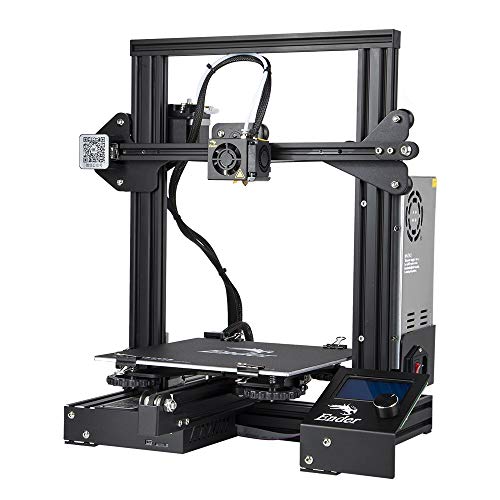
The Ender 3 remains a popular entry-level FDM option with resume printing after power outages. While it is an open-frame kit that requires assembly, it’s a solid choice for beginners seeking a robust, budget-friendly platform. The upgraded extruder design reduces jams and promotes smoother extrusion. While not resin-based, it supports miniature-scale prints suitable for bases, terrain, and non-lifelike minis, expanding the range of potential projects.
FLASHFORGE Adventurer 5M 3D Printer

The Adventurer 5M offers fully automatic bed leveling and rapid high-speed printing up to 600 mm/s in CoreXY architecture. A direct-extruder with fast nozzle changes and a high-flow nozzle maximizes throughput for prototyping scenarios. The dual-side PEI plate supports easy removal and reliable bed adhesion, making it a practical option for quick mini projects and multi-piece assemblies. For users prioritizing speed and convenience, the Adventurer 5M provides a streamlined workflow with dependable results.
Buying Guide
- Print technology: Resin printers excel at fine detail for minis, with smoother surfaces and crisp edges, ideal for figures and small accessories. FDM printers are better for larger terrain pieces or multi-color setups when equipped with color-capable accessories.
- Resolution and surface quality: Look for high XY resolution and uniform light sources in resin printers to minimize layer lines on minis. In FDM, layer height control and nozzle quality influence surface smoothness.
- Build volume: Choose a size that fits your typical miniatures plus any basing or diorama elements you plan to print. Resin printers often provide tighter interiors suitable for single figures, while FDM can handle bases and terrain blocks.
- Calibration and maintenance: Auto-calibration and sensor-based protections reduce setup time. Resin printers benefit from stable resin handling, waste minimization, and reliable vat protection.
- Print speed vs. detail: Resin printers emphasize detail, which may come with longer post-processing times. FDM printers can offer faster-turnaround prints, especially for multiple minis in batches.
- Resin handling and safety: Resin printers require proper curing and ventilation. Use PPE and follow resin handling guidelines to avoid skin and eye exposure.
- Software and workflow: Ensure slicer compatibility with the printer, support structures suitable for minis, and ease of slicing for intricate models.
- Multi-color options: If your minis involve color variety, consider multi-color capable systems or the use of painting workflows combined with color filaments or post-colorization methods.
This selection emphasizes a balance between ultra-fine resin detailing and practical FDM versatility, ensuring hobbyists can choose a setup aligned with their miniature projects, whether they prioritize crisp character models, textured bases, or rapid terrain prototyping.