Best Toys for Blind Children: Sensory, Braille and Tactile Learning Tools
Families and educators seek engaging, safe toys that support tactile learning, Braille literacy, and sensory development for blind or visually impaired children. This guide highlights five carefully chosen products that emphasize hands-on exploration, safe materials, and accessible design. Each item offers distinct ways to strengthen fine motor skills, language, and spatial understanding through touch, sound, and texture.
| Product | Brand | Key Benefit |
|---|---|---|
| TickiT Touch & Match Board | tickit | Tactile matching with textures and colors to boost sensory awareness |
| Yulejo Braille Alphabet Board | Yulejo | Braille and literacy practice through carved dots and letters |
| Tactile Raised-Line Drawing Board | Blind in Mind, The Braille Superstore | Raised lines for maps, drawings and diagrams, easy reverse drawing |
| FOKI Floor Piano Mat | Foki | Interactive music, colors and movement to develop coordination |
| Sensory Textured Fidget Toys Pack | LESONG | Various textures to calm, focus and explore tactile sensation |
Below you’ll find detailed product sections, followed by a practical buying guide to help choose the right tools for individual needs, budgets, and learning goals.
TickiT Touch & Match Board
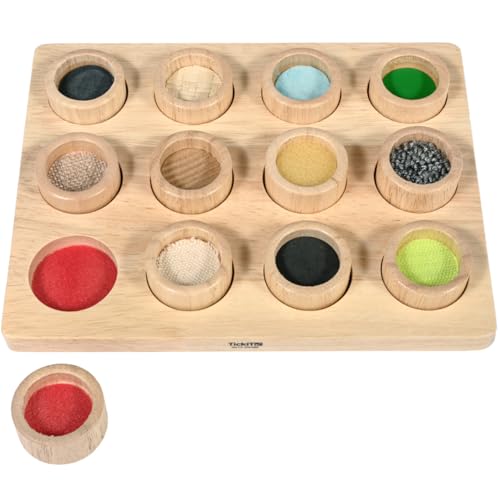
The TickiT Touch & Match Board invites tactile exploration with 12 colors and textures. This interactive fidget puzzle supports sensory, fine motor, and descriptive language development. A simple counter helps children identify surfaces that match the chosen texture, and blindfold challenges can deepen perceptual awareness. The multi-sensory setup blends visual cues with tactile experiences to broaden sensory perception and vocabulary in a structured play format.
Features emphasize self-guided discovery: a mix of textures for matching challenges and an activity that fosters sensory growth. The board is suitable for classroom centers or home learning and can be integrated with other tactile materials to extend play sequences and description practice.
Yulejo Braille Alphabet Board
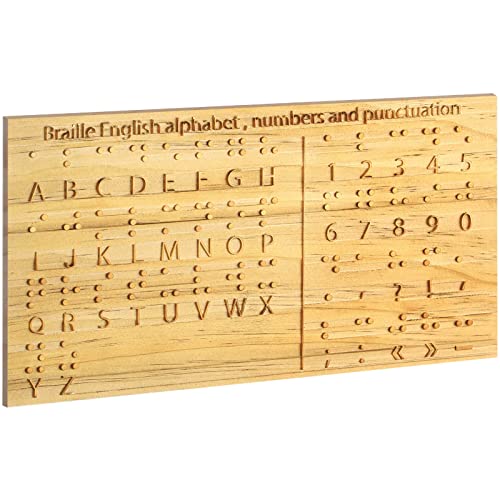
The Yulejo Braille Alphabet Board offers a compact, laser-carved wooden surface with dots, numbers, and letters designed for both sighted and visually impaired learners. Its 8.7 x 6.3 inch footprint makes it easy to carry for study sessions. Laser carving ensures a smooth touch, with persistent markings that resist wear. This tool supports independent braille practice, tracing, and early literacy, bridging tactile discovery with cognitive symbol recognition through repeated, hands-on exploration.
Ideal for small-group teaching or family practice, the board can be used for guided braille lessons or open-ended play, encouraging exploration of alphabet concepts and numerical understanding in a tactile format.
Tactile Raised-Line Drawing Board

This drawing board enables raised lines to be drawn on regular paper, making it easy to create maps, geometry diagrams, and child drawings. The innovative design supports reverse drawing, allowing users to feel raised lines after flipping pages. It accommodates standard letter-sized paper, making it simple to integrate with common worksheets or Braille-friendly paper supplies. The tactile feedback aids in spatial understanding and diagrammatic thinking, applicable to a wide range of learning tasks.
Designed for both kids and adults, the board promotes independent exploration and can be a valuable tool for classroom demonstrations or home practice sessions focusing on tactile mapping and visual-spatial skills.
FOKI Floor Piano Mat

The FOKI Floor Piano Mat is a playful, touch-responsive carpet that encourages movement, listening to tunes, and animal sounds. With 32 built-in sounds and eight piano keys, children can explore melodies while engaging gross-motor skills. The mat’s bright colors and cheerful design support visual tracking and auditory processing as kids crawl, jump, and dance along. This toy is particularly useful for early education activities, rhythm development, and cross-modal learning experiences that pair movement with music.
Educational benefits include color recognition, basic counting, and animal sound associations. It is well-suited for group play in early childhood settings and is compatible with various musical and movement-based learning activities.
Sensory Textured Fidget Toys Pack

This 8-pack from LEsong includes stretchy noodles with varied textures and colors designed to soothe and focus. These tactile toys can help manage anxiety, reduce fidgeting, and support concentration in classroom or home settings. The stretchy strings are long enough to extend through play, and many users find them helpful for hand strengthening and motor planning. The pack’s variety supports sensory exploration, allowing children to compare textures, tensions, and responses to different scribbles or movements.
Durability and cleaning considerations are noted with high-quality materials, making the set suitable for daily use in busy environments. It’s a practical option for sensory corners, therapy routines, or gift boxes for children with sensory needs.
Buying Guide: Key Considerations For Selecting Toys For Blind Children
When choosing toys for blind or visually impaired children, consider how each item supports tactile learning, literacy development, and safe exploration. The following factors help tailor selections to individual needs and learning goals.
- Accessibility of textures and tactile feedback: Prioritize materials with distinct, safe textures that offer clear differences for discrimination tasks and descriptive language practice.
- Braille and literacy integration: Look for tools that support braille exposure, letter and number recognition, and spatial reasoning to reinforce independent reading and writing skills.
- Safety and age-appropriateness: Ensure all items have non-toxic materials, rounded edges, and appropriate weight or size for the child’s age and motor abilities.
- Durability and cleanability: Toys used daily should withstand frequent handling and be easy to clean, especially if used in classroom settings or shared spaces.
- Portability and space requirements: Compact boards or foldable play mats suit small spaces and allow learning to happen in different environments, from home to school.
- Multi-sensory potential: Favor items that combine touch with sound, texture, or motion to support engagement across learning domains—language, cognition, and social interaction.
- Learning goals alignment: Match products to specific aims—Braille introduction, tactile drawing skills, or sensory regulation—so activities remain purposeful and organized.
- Caregiver and teacher guidance: Choose toys that include or allow for structured activities, prompts, or lesson ideas to maximize learning outcomes.