Best Toys for Autistic Children Aged 3: Sensory, Learning and Fun
Finding engaging, safe toys for autistic children around age three can support learning, focus, and sensory regulation. This guide highlights five carefully chosen options that blend interactive play with developmental benefits. Each product emphasizes sensory input, language development, or fine motor skills, with clear features to help caregivers compare at a glance.
| Product | Brand |
|---|---|
| Airbition Talking Flash Cards for Toddlers 1 2 3 4 Year Olds | Airbition |
| Scientoy Fidget Toy Set, 35 Pcs | Scientoy |
| Playbees Light-Up Transparent Car Toy | Playbees |
| LearnToy Busy Board – Dinosaur | LearnToy |
| Christmas Stocking Stuffers Gift Robot Sensory Travel Toys | CHESLICR |
Airbition Talking Flash Cards For Toddlers

Airbition’s talking flash cards deliver 224 colorful illustrations and sounds to expand vocabulary and cognitive skills. The content covers animals, vehicles, foods, fruits, and vegetables, offering a Montessori-style sensory learning experience. This tool is particularly suited to speech therapy and autism-friendly play, combining sound and image for engagement. It’s simple to operate: switch on, insert a card, and hear content in a standard American accent. Real animal sounds and a repeat option support repetition for reinforcing new words, with a five-level volume control for comfortable listening in different environments.
Scientoy Fidget Toy Set
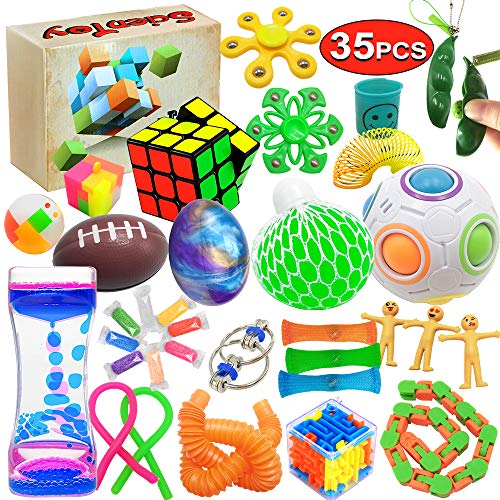
The Scientoy 35-piece sensory toy set offers a broad range of fidget options designed to support focus and anxiety relief. Included items span rainbow magic balls, liquid motion timers, squeeze balls, maze puzzles, mesh and marble fidgets, foam putties, and more, presented in a gift-ready box. The set uses high-quality ABS and adheres to safety standards (ASTM/CPC/EN71). These toys enable varied tactile experiences—squeezing, twisting, stretching—helping children with autism or ADHD to calm and center themselves during transitions or stressful moments.
Playbees Light-Up Transparent Car Toy

Playbees presents a bump-and-go car designed for autistic kids ages 3-5. It requires no steering—just place the car down and watch it navigate around obstacles, which can help with hand-eye coordination and spatial awareness. The transparent body reveals moving gears, inviting curiosity about basic mechanics. LED lights, paired with upbeat music, create a rich sensory experience that supports visual attention and auditory processing, promoting extended play and engagement during routine activities or quiet time.
Christmas Pop Tube Stocking Stuffers For Toddlers

This CHESLICR set includes festive pop tubes with suction cups and autism-friendly features for travel and fine motor practice. The tubes are durable, safe for young children, and suitable for ADHD and autism, offering calming sensory input through popping, stretching, and connecting. The package also includes travel-friendly options like airplane-compatible toys and car trip activities, making them versatile for in-car entertainment or holiday gatherings. The tube designs promote hand strength and imaginative play while supporting self-regulation.
LearnToy Busy Board – Dinosaur
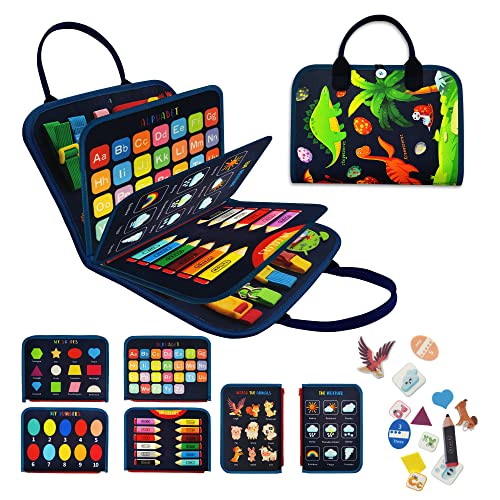
LearnToy’s Busy Board emphasizes Montessori ideals with tangible, safe wooden pieces. Geared toward children aged 3-5, it helps develop fine motor skills, concentration, and problem-solving. The board’s portable design, including a handbag form factor, makes it suitable for travel, quiet activity in cars or planes, and calm, independent play. Each page features a zipper and varied textures, allowing kids to practice coordination and coordination while nurturing verbal labeling of colors, shapes, and actions during collaborative or solitary play.
Christmas Stocking Stuffers Gift Robot Sensory Travel Toys

CHESLICR’s four-piece robot set combines telescoping suction cup design with pop-tube limbs for flexible, tactile play. These toys encourage fine motor development, experimentation with shapes, and stress relief during travel, classrooms, or meals. Their safety-forward construction uses lead-free ABS plastic and adheres to toy safety standards. The varied designs foster creativity and problem-solving, offering a practical option for children on the autism spectrum to engage with physical play and imaginative storytelling.
Buying Guide: Key Purchase Considerations
- Age appropriateness: Choose toys labeled for ages 3-5 to align with motor skills and language development typically seen in three-year-olds.
- Sensory profile: Consider the child’s sensory preferences—visual, auditory, tactile—and select toys that provide safe, adjustable levels of stimulation.
- Safety and materials: Look for non-toxic materials, rounded edges, and durable construction. Verify compliance with safety standards (ASTM, CPC, EN71).
- Motor skills development: Toys that encourage fine motor tasks (puzzles, zippers, squeezables) support hand-eye coordination and dexterity.
- Communication support: Tools with visual or audio prompts, such as flash cards or musical cues, can reinforce language learning and social interaction.
- Portability and durability: For travel or school use, opt for compact, sturdy options that withstand frequent handling and movement.
- Multi-sensory balance: A mix of tactile, auditory, and visual stimuli helps maintain engagement without overwhelming the child.
- Ease of use: Simple setup and intuitive operation reduce frustration and promote independent play time.
- Caregiver fit: Consider whether the toy supports guided activities or allows independent exploration, depending on daily routines.
- Budget and value: Compare sets that offer complementary features (sound, lights, textures) to maximize long-term benefit per cost.
In selecting toys for autistic children around age three, balancing sensory input with predictable structure is key. The five products highlighted provide a spectrum of options—from language-building flash cards and tactile fidget sets to portable busy boards and travel-friendly sensory toys—supporting varied developmental goals. When used as part of a consistent play routine, these tools can aid communication, focus, motor skills, and emotional regulation in supportive environments.