Best Stem Kits for Teens: Hands-on Learning for Young Engineers
Teens who love building, experimenting, and solving real-world problems will find STEM kits both engaging and educational. This article highlights five top kits that align with curiosity in robotics, electronics, and engineering, while keeping playfulness in focus. Each product features hands-on activities that promote critical thinking, problem-solving, and experimentation—perfect for teens exploring science, technology, engineering, and math outside the classroom. Explore practical kits that encourage screen-free creativity and long-term learning, from solar-powered bots to hydraulics and Bluetooth electronics.
| Product | Brand | Key Focus |
|---|---|---|
| Sillbird 12-in-1 Solar Robot Building Kit | Sillbird | Solar power, robotics, hands-on engineering |
| Teach Tech Hydrobot Arm Kit | TEACH TECH | Hydraulics, real robotics, no batteries |
| ELEGOO UNO R3 Smart Robot Car Kit | ELEGOO | Arduino robotics, programming, electronics |
| CYOEST Bluetooth Speaker Project Kit | CYOEST | Electronics, circuits, audio engineering |
| Smartivity Pinball Machine | Smartivity | Mechanics, creativity, STEM play |
Sillbird 12-in-1 Solar Robot Building Kit

The Sillbird 12-in-1 Solar Robot Building Kit combines solar power with a hands-on construction experience that scales with a teen’s growing abilities. Teens assemble multiple configurations, learning about renewable energy and mechanical design as they convert sunlight to motion. The 190-piece set offers a range of projects, from walkers to solar-powered walkers, reinforcing concepts in physics, engineering, and environmental science. The kit’s open-ended play encourages problem-solving, planning, and iterative testing—skills essential to complex STEM tasks and future studies.
With outdoor or indoor play options, the Sillbird kit emphasizes screen-free exploration and careful assembly. It’s suitable for teens who enjoy tinkering, and it serves as a strong introduction to solar technology and sustainable engineering. As a gift or classroom project, it supports inquiry-based learning and long-term curiosity about how energy power translates into real-world motion.
Teach Tech Hydrobot Arm Kit

The Hydrobot Arm Kit by Teach Tech introduces hydraulics through a practical, working robotic arm. Designed for teens aged 12 and up, this kit builds foundational engineering skills by using water-powered hydraulics to control movement across six axes with a 270-degree rotation. There are no batteries required, enabling students to focus on fluid dynamics, leverage, and precision control. The gripper mechanism—opening, closing, or swapping with a suction component—adds a tactile element that reinforces mechanical systems and control theory while keeping the project engaging and accessible.
Hydraulic systems illustrate real-world engineering principles in a clear, observable way. Teens can experiment with different leverage points, measure how pressure translates to force, and compare results against theoretical expectations. This makes it a strong bridge between classroom physics and hands-on robotics, ideal for students preparing for advanced mechatronics or automotive engineering topics.
ELEGOO UNO R3 Smart Robot Car Kit V4

The ELEGOO UNO R3 Smart Robot Car Kit provides a robust platform for teens to learn programming, electronics assembly, and robotics fundamentals. This kit is an ideal entry point into Arduino-powered projects, offering a complete package with 24 modules, including obstacle avoidance and line tracing, and compatibility with Android and iOS devices for control and data logging. Its design emphasizes clear module interfaces and standardized ports to minimize wiring errors, helping learners focus on logic, sequencing, and debugging. The kit supports experimentation in autonomous navigation, sensor integration, and remote control, aligning well with school curricula and independent study goals.
As a long-term learner’s kit, it encourages iterative design cycles—plan, build, test, and refine. Teens can compare direct code instructions to hardware behavior, exploring feedback, control systems, and real-time responses. The ELEGOO kit also supports progression into more advanced microcontroller projects, making it a durable choice for sustained STEM exploration.
STEM Projects For Kids & Adults Build Your Own Bluetooth Speaker Kit
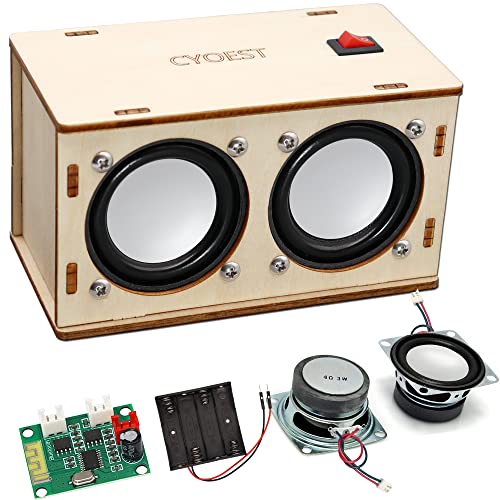
The Bluetooth Speaker Project Kit from CYOEST is a dual-speaker electronics project that reveals how audio devices work while enabling hands-on assembly. Teens learn about circuits, impedance, and speaker design by building a functioning speaker system. The kit emphasizes safety, quality control, and thoughtful component selection, building confidence in electronics fundamentals. It doubles as a practical product—an actual usable speaker—while teaching core STEM concepts such as Ohm’s law, circuit assembly, and troubleshooting.
For curious teens who enjoy audio engineering or want a tangible result from their work, this kit blends theory with a practical outcome. It supports side projects, school presentations, or hobbyist experiments, and it can be a gateway to more complex sensor and microcontroller-based audio systems later on.
Smartivity Pinball Machine

The Smartivity DIY Pinball Machine invites teens to assemble a mechanical arcade-style game, merging creativity with engineering. The kit emphasizes screen-free, hands-on construction while developing problem-solving and fine motor skills. The step-by-step manual guides builders through mechanisms, levers, and timing, culminating in a playable game. It appeals to learners who enjoy tangible projects, physical reasoning, and collaborative building, offering a social and educational experience that extends beyond solo play. The kit’s accessible design makes it suitable for varied skill levels while remaining challenging for teens seeking deeper mastery of mechanics.
Buying Guide: Key Purchase Considerations
- Skill level and progression: Look for kits that scale with a teen’s abilities, offering multiple configurations or levels of complexity to extend learning over time.
- Core concepts: Ensure the kit covers foundational areas such as robotics, hydraulics, electronics, programming, or renewable energy to align with curriculum goals.
- Hands-on payoff: Favor kits that provide tangible results—an operable robot, a working speaker, or a playable arcade game—to reinforce learning through visible outcomes.
- Compatibility and control: Consider sets that offer compatible interfaces (Arduino, microcontrollers, Bluetooth, or app control) to expand future project options.
- Safety and quality: Check for clearly labeled components, quality checks, and appropriate safety guidance, especially for younger teens or beginners.
- Expandability: Choose kits that can be augmented with additional modules, sensors, or future purchases to sustain long-term engagement.
- Educational value: Prefer kits that align with science and engineering concepts and provide explanations, diagrams, or tutorials to support independent learning.
- Community and support: A strong user community, online tutorials, and accessible customer support can help troubleshoot and inspire ongoing projects.
These criteria help ensure a balanced selection that combines entertainment with rigorous STEM education. For parents and educators, the right kit should challenge teens without discouraging them, fostering curiosity, experimentation, and a clear sense of achievement as projects come to life.