Best STEM Kits for Kids: Hands-on Projects for Young Builders
Parents and educators seek engaging, educational toys that spark curiosity and foster problem-solving. This guide highlights five top STEM kits for kids, offering hands-on learning in robotics, electronics, geology, and engineering. Each product delivers clear instructions, age-appropriate challenges, and durable materials designed for classroom or home use. Read on to compare options, explore what makes each kit unique, and discover practical tips for getting the most from STEM play.
| Product | Age Range | What It Teaches | Core Benefit |
|---|---|---|---|
| BeAndge STEM Kits for Kids | 8-12 | Robotics, engineering concepts | Multiple builds encourage experimentation |
| Klutz Lego Gear Bots | 8-12 | LEGO Technic, axles, cams, engineering | Hands-on mechanical understanding |
| Snap Circuits Classic SC-300 | 8+ | Electrical engineering, circuit basics | Extensive variety of real-world circuits |
| Snap Circuits Jr. SC-100 | 8+ | Circuit concepts, projects | Accessible entry point to circuitry |
| National Geographic Break Open Geodes | 6-12 | Geology, crystals, scientific discovery | Tangible mineral exploration |
BeAndge STEM Kits for Kids

BeAndge offers a 5-set STEM kit pack designed to introduce kids to robotics and STEM exploration. The bundle includes a solar-powered car, a wind-powered car, an obstacle avoidance robot, a transmission tank, and a glider. These projects encourage hands-on building and creative problem solving. Batteries are required but not included. The kit is presented in a gift-ready box, making it a compelling gift option for birthdays and holidays. It also suits classroom STEM activities that involve parent-child collaboration.
Key features include multiple, themed builds that emphasize energy transfer, motion, and control systems. While the set provides rich, varied experiences, it requires adult involvement for battery setup and safe operation. The assortment is well-suited for elementary to middle-school students (roughly ages 8 to 12) who enjoy tinkering and presenting their projects in science fairs. The bundled presentation supports family activities and school demonstrations alike.
Klutz Lego Gear Bots Science/STEM Activity Kit

Klutz Gear Bots combines LEGO Technic bricks with papercraft and a 64-page booklet for a pragmatic, hands-on STEM experience. Builders construct eight physics-driven kinetic creatures and learn about axles, cams, and cranks embedded in everyday machines. The kit includes all necessary LEGO elements and provides step-by-step instructions to guide novices through increasingly complex builds. This product emphasizes mechanical engineering concepts in a kid-friendly, creative setting.
Educational value centers on understanding gears, motion transfer, and basic engineering design. The accompanying book-weave offers explanations that connect play to real-world engineering principles. It’s a strong choice for classrooms and families seeking a structured yet playful approach to STEM that can be completed across several sessions. Suitable for ages 8 to 12, it supports collaboration and sequential skill development.
Snap Circuits Classic SC-300
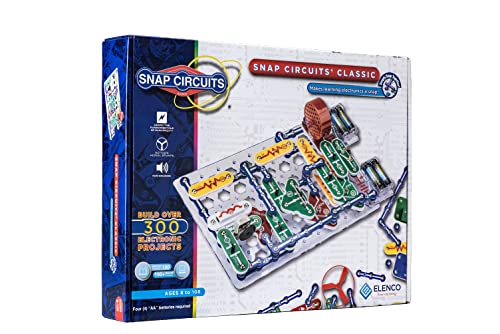
Snap Circuits Classic SC-300 provides a comprehensive electronics exploration with over 300 projects and more than 60 parts. The kit is designed to safely teach children about electrical circuits, electronics theory, and practical gadget construction through colorful, clearly labeled components. The included full-color manual walks learners through each project step by step, from AM radios to burglar alarms and doorbells. It’s a robust, enduring kit that grows with a child’s curiosity.
With its modular parts and broad project range, this kit supports sequential learning—beginners can start with simple circuits and progress to more complex devices. The hands-on nature helps solidify understanding of circuits, resistance, and power. It’s a staple in many classrooms and homes for STEM enrichment, particularly for groups exploring electronics as a sustained interest rather than a one-off activity.
Snap Circuits Jr. SC-100

Snap Circuits Jr. SC-100 offers an accessible entry point into circuitry with more than 100 projects and 29 parts. The full-color project manual guides kids through safe, age-appropriate experiments, helping develop foundational electronics knowledge. The design emphasizes rapid feedback and achievable successes, which can boost confidence and sustain interest in STEM. The compact kit makes it ideal for limited spaces like desks or small classrooms.
Key advantages include a gentle ramp from basic circuits to more complex configurations, fostering iterative thinking and troubleshooting. It’s especially well-suited for younger learners (about ages 8 and up) who benefit from concrete, tactile learning. Parents and teachers can pair it with other Snap Circuits kits to expand the range of possible projects and reinforce core concepts in circuitry and energy transfer.
National Geographic Break Open Geodes

National Geographic Break Open Geodes presents a tactile geology experience. Each geode contains crystals that reveal themselves when cracked open, offering a tangible lesson in mineralogy and crystal formation. The kit includes goggles and display stands, providing a safe, engaging way to explore geology while encouraging scientific observation and documentation. The hand-selected geodes emphasize variety in crystal structures, enhancing curiosity and observational skills.
The activity pairs well with guided science discussions about mineral formation, rock cycles, and crystal properties. It’s a compelling gift for young scientists who enjoy discovery and hands-on exploration. Though not as tech-focused as electronics or robotics kits, geodes boost critical thinking, patience, and the joy of scientific discovery.
Buying Guide
When selecting a STEM kit for kids, consider age appropriateness, learning goals, and maintenance needs.
- Complexity and Scope: Choose kits that match the child’s current interests but offer room to grow into more challenging projects.
- Safety and Supervision: Electronics and mechanical builds may require adult supervision, especially for younger children. Check for small parts and choking hazards.
- Skill Development: Look for kits that build core competencies such as problem solving, critical thinking, and collaboration.
- Materials and Durability: Reusable parts and robust instructions extend the kit’s lifespan and value.
- Educational Alignment: Pick kits that offer clear learning outcomes, worksheets, or guides linking activities to science concepts.
Compared to passive toys, these kits encourage iterative experimentation and evidence-based reasoning. Robotics-focused sets (BeAndge, Klutz) emphasize systems thinking and energy transfer, while electronics sets (Snap Circuits) cultivate circuit literacy. Geology kits (Break Open Geodes) foster observational science skills and data collection. For families exploring diverse topics, mixing a robotics kit with a geology kit can provide a well-rounded STEM experience that keeps kids motivated across subjects.