Best Spin Chair for Kids: Sensory Chairs for Autism and ADHD
The following 5 spin chairs are designed to support vestibular development, balance, and body awareness for children with autism or ADHD. They are suited for indoor and outdoor use and offer various grip and rotation options to suit different play styles. This guide highlights features, safety aspects, and how each chair can fit into sensory rooms or home play areas.
| Product | Brand | Weight Capacity | Use |
|---|---|---|---|
| Pterying 21″ L × 19″ W Large Size Spinning Chair | Pterying | Up to 150 lbs | Indoor/Outdoor |
| FERUERW Spinning Chair | FERUERW | Up to 100 kg | Indoor |
| HAPPYMATY Sensory Spinning Chair (Blue) | HAPPYMATY | Up to 220 lbs | Indoor/Outdoor |
| KidBloom Spinning Chair | KidBloom | Up to 220 lbs | Indoor |
| Zhenx Spinning Chair (Blue) | Zhenx | Up to 220 lbs | Indoor |
Pterying Spin Chair for Kids

This large spin chair is designed to support vestibular development with a multi-functional design that accommodates sitting, kneeling, or lying positions. The chair’s thickened edges enhance grip and safety, making it suitable for both indoor and outdoor play. Constructed with premium PP material and a sturdy metal base, it supports up to 150 pounds and resists heat and corrosion—providing a durable choice for developing balance and motor coordination in children with autism or ADHD.
FERUERW Spinning Chair for Autistic Kids
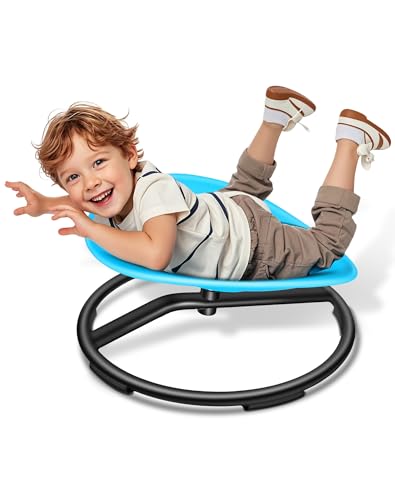
Designed to train balance and coordinate both hemispheres, this sensory swivel chair emphasizes safety with a stable anti-slip metal base. It supports up to 100 kg and uses advanced welding to ensure durability during active play. The colorful, approachable design engages children while promoting motor skills, making it a practical option for home sensory rooms and classroom settings.
HAPPYMATY Sensory Spinning Chair (Blue)

Relieving motion sickness and improving balance, this chair emphasizes a full-body workout for grip strength, core stability, and motor control. Built on a sturdy metal base with a non-slip design, it supports up to 220 pounds. Its durable construction and engaging fish-shaped aesthetic make it a versatile option for sensory rooms or outdoor sessions.
KidBloom Spinning Chair for Autistic Kids

With an upgraded safety handle, this chair offers greater stability during spinning or movement. A reflective, octagonal panel enhances sensory stimulation through light and texture, while a silent 360° swivel mechanism ensures smooth, quiet rotation. The chair is rated to support up to 220 pounds, making it a reliable option for a wide range of ages and abilities.
Zhenx Spinning Chair (Blue)

This 21×19 inch chair offers a robust 220-pound weight capacity and a sturdy metal base with a non-slip foot design. The polyethylene body is 360° rotatable, promoting directional awareness, balance, and concentration. Its straightforward design is easy to clean and suitable for ongoing use in busy homes or classrooms.
Buying Guide
Key considerations when choosing a spin chair for kids with autism or ADHD include safety, durability, and the type of vestibular input the child responds to best. Look for a non-slip base, solid frame, and edge design that prevents pinching or grabbing. Weight capacity should comfortably exceed the child’s current weight to allow growth. Consider whether the chair will be used indoors only or also outdoors, as weather resistance and materials differ.
Rotation mechanics matter: chairs with 360° silent swivels reduce noise distractions, while those with multi-position designs support varied play and postures. Aesthetic features such as color, shape, and texture can influence engagement and enjoyment. For caregivers, a chair with easy cleaning and minimal assembly reduces setup time.
Safety is paramount: always supervise new users, especially with younger children and those learning to balance. If a child has sensory sensitivities, start with gentle rotations and shorter sessions, gradually increasing duration as tolerance improves.
To maximize benefits, pair spinning chair play with guided activities that promote direction sense, core strength, and hand-eye coordination. Use a calm, consistent routine to integrate the chair into daily practice or therapy sessions.