Best Sensory Tent for Kids: Calming Play Spaces for Focus and Relaxation
Creating a dedicated calm corner can help kids unwind, focus, and engage in sensory play. This guide highlights five popular sensory tents designed for kids, featuring blackout fabric, LED lights, portability, and child-safe designs. Each option targets different needs—from autism-friendly spaces to ADHD-friendly quiet zones—so families can pick the best fit for home, classrooms, or therapy spaces.
| Product | Brand | Key Benefit |
|---|---|---|
| Special Supplies Blackout Sensory Tent | Special Supplies | Dark, calming space with fiber optic light play |
| L’Arche Sensory Tent with LED Lights | L’Arche | LED ambiance with remote control and dual windows |
| OUTREE Starry Night Sensory Tent | OUTREE | Spacious 47×47 inches for light-based play |
| Ultrapopp Pop Up Sensory Tent | ultrapopp | Extra big blackout hideout with quick setup |
| Dreamtrue Sensory Tent | Dreamtrue | Portable, blackout design for calming down and focus |
Special Supplies Blackout Sensory Tent

The Special Supplies blackout tent creates a tranquil nook where children can relax, read, or nap in a softly lit environment. It includes a fiber optic lamp and a glow-in-the-dark fuzzy blanket to enhance sensory exploration. The door enables a darkened space during the day, making the tent suitable for homes and classrooms seeking a private retreat. Its roomy interior allows for cushions, blankets, and a variety of calming toys to support self-regulation and quiet play. This option emphasizes a calm atmosphere with light-based play without overstimulation.
Cwsk Sensory Tent: Calming Blackout Space

This CPC-certified calming hideout provides a safe, enclosed space for children with autism, SPD, ADHD, or anxiety. The blackout design blocks most outside light, helping kids engage with LED toys and other sensory tools in a controlled environment. Its two-side windows support airflow and light adjustment, making it practical for classrooms or home use. The setup is straightforward, creating a private area where children can decompress, focus, and engage with sensory play without distraction.
L’Arche Sensory Tent With LED Lights
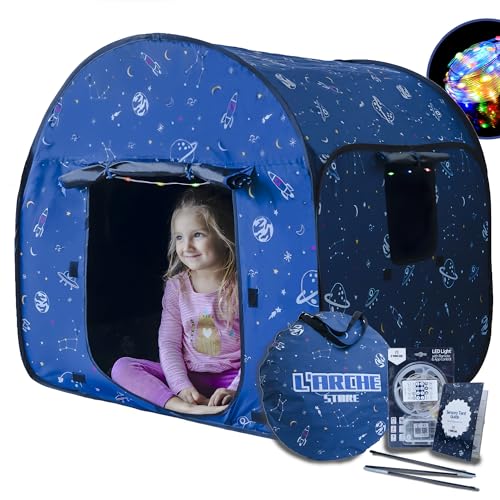
Powered by multicolor LED lights with a remote, this L’Arche model blends blackout privacy with ambient decoration. The tent supports a calm-down space for autism, SPD, or anxiety, and it’s available in regular and larger dimensions. Dual windows provide ventilation and light control, while inner pockets store sensory toys for easy access. The portable design makes it suitable for classrooms, therapy rooms, or home sensory corners, helping children self-regulate and stay engaged in calming activities.
OUTREE Starry Night Sensory Tent

With a large 47×47 inch footprint, OUTREE’s Starry Night tent offers a bright, immersive sensory experience. The two-sided windows allow airflow and light control, while the blackout interior helps children relax and focus. It’s designed for autism-friendly environments, therapy spaces, and classrooms where kids benefit from a contained play area. The space accommodates several children for group activities or solitary play, making it a versatile option for sensory-rich environments.
Ultrapopp Pop Up Sensory Tent

This extra-big, fully blackout tent provides a calm, enclosed space in 47×47 inches. It sets up instantly and folds into a compact bag for portability, featuring a roll-up door and window for easy access. The spacious interior supports multiple calming activities—from light toys to cognitive games—supporting self-regulation and focus. It’s ideal for travel, classrooms, or home use where a durable, portable sensory den is needed.
Dreamtrue Sensory Tent

The Dreamtrue tent emphasizes portability and a full blackout design to create a calm corner wherever needed. Its compact size is suitable for smaller spaces but still provides a private area for reading, quiet play, or light-based exploration with UV lights and projectors. This option supports focus and relaxation in homes, clinics, or school settings, particularly for children who benefit from a den-like hideout to decompress after activities.
Buying Guide: Key Purchase Considerations
- Size and portability: Consider room dimensions and whether the tent needs to travel between home and school. Larger tents offer room for multiple children or more toys, while compact models fit small bedrooms or therapy corners.
- Light and blackout features: Full blackout fabric helps create a calming space, while LED lights or fiber optic features can enhance sensory play. Decide if you want remote-controlled lighting for easy adjustments.
- Ventilation and accessibility: Dual windows and breathable mesh improve air flow. A roll-up door or easy access entry helps children enter and exit comfortably during activities.
- Safety certifications: For younger children or those with sensory sensitivities, look for CPC certification and non-toxic materials. A fully enclosed design reduces external stimuli.
- Durability and portability: Foldable or pop-up designs save space and simplify storage. Check product weights and included carrying bags for easier transport.
- Storage and organization: Inner pockets or external storage options help keep toys, fidgets, and lighting tools organized and accessible.
- Price versus features: Compare blackout quality, lighting options, and size against budget. Some tents offer added features like remote lighting, dual windows, or starry-style lighting to justify higher costs.
- Intended setting: Classrooms, therapy rooms, and home use may require different features—quiet zones in classrooms differ from private home dens in terms of noise and space.
Choosing a sensory tent involves balancing size, light features, portability, and safety. This guide highlights tents with robust calming features and practical design elements to support kids’ focus, calm, and playful exploration in various environments.