Best Science Kits for 8 Year Olds: Engaging Experiments for Kids
Finding the right science kits for 8-year-olds can spark curiosity, keep little hands busy, and build a strong foundation in STEM. This guide highlights five highly engaging options that combine hands-on activities with clear, kid-friendly instructions. Each kit emphasizes safe experimentation, age-appropriate challenges, and opportunities to observe real science in action. Use the buying guide at the end to compare features, usability, and what makes each kit a good fit for different interests and skill levels.
| Product | Focus | Learning Value |
|---|---|---|
| National Geographic Gross Science Kit | Gross science experiments | Observational skills, hypothesis testing |
| National Geographic Magic Chemistry Set | Chemistry with magic tricks | Scientific concepts via visual effects |
| Snap Circuits Jr. SC-100 | Intro to electronics | Circuits, problem solving, hands-on building |
| National Geographic Amazing Chemistry Set | Crystal growth and reactions | Experiment design and chemistry basics |
| UNGLINGA 150 Experiments Kit | Broad STEM experiments | Diverse topics, iterative learning |
National Geographic Gross Science Kit

This kit focuses on “gross” but highly engaging experiments that captivate curious minds. It includes 15 core experiments with a bonus set of 30 additional activities using common household items. The experiment guide uses kid-friendly, illustrated steps that make complex ideas approachable, encouraging kids to think like scientists. The variety—from booger-like reactions to glowing elements—helps sustain interest, especially for children who enjoy playful, memorable demonstrations. The included materials and clear instructions support independent exploration while guiding parent-supervised learning.
National Geographic Magic Chemistry Set
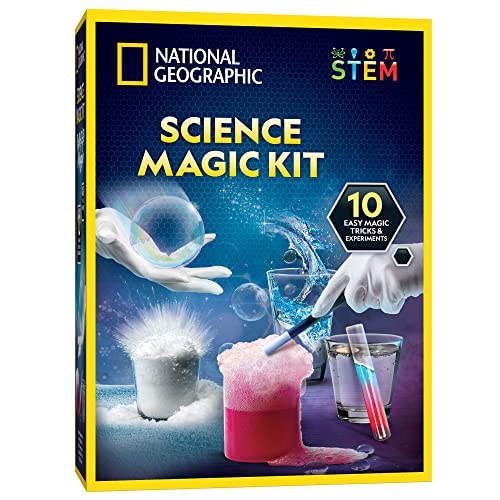
Magic tricks and science blend in this set, making chemistry ideas visually exciting. The kit includes 10 experiments that let kids perform feats like color changes and floating coins, paired with a wand and gloves to heighten the sense of wonder. The illustrated guide explains the science behind the tricks, helping children connect magical-looking outcomes with real chemical principles. This approach suits learners who are motivated by performance and storytelling, turning science into a memorable, repeatable experience rather than a one-off activity.
Snap Circuits Jr. SC-100 Electronics Exploration Kit

Snap Circuits Jr. introduces basic electrical engineering concepts through hands-on projects. With over 100 possible projects and 29 parts, children can build devices such as a flying saucer or alarm system while learning circuit basics, continuity, and troubleshooting. The kit emphasizes safety, color-coded components, and a clear project guide that supports independent exploration. It appeals to kids who enjoy building, problem solving, and immediate, tangible results from their experiments.
National Geographic Amazing Chemistry Set

This chemistry set offers a broad spectrum of experiments, including crystal growth, colorful reactions, and glow effects. A bonus guide adds another 30 activities, expanding play and practice with household items. Illustrated, step-by-step instructions help kids perform experiments with confidence, fostering curiosity about how chemical interactions create visible changes. The kit is well-suited for learners who enjoy experimenting with color, texture, and light, as well as those interested in the foundational rules of chemistry and materials science.
UNGLINGA 150 Experiments Kit

This extensive kit covers a wide range of topics—from earth science to physics—providing a broad STEM education in one package. It includes many easy-to-follow, illustrated manuals and kid-friendly materials for hands-on experiments. The variety supports a broad range of interests—whether a child gravitates toward chemistry, physics, or earth science—helping maintain engagement over time. While some activities may require household items, the included tools and manuals guide safe, structured exploration.
Buying Guide: Key Purchase Considerations
- Age-appropriate complexity: Choose kits with clear instructions and scalable challenges to match an 8-year-old’s developing skills.
- Safety and supervision: Look for non-toxic materials, age-appropriate components, and recommended supervision levels.
- Learning style fit: For hands-on builders, kits with circuits and gears work well; for visual learners, magic or colorful chemistry experiments may be better.
- Project variety: A broader kit reduces repetition and sustains interest through varied topics.
- Instruction quality: Illustrated, step-by-step guides help independent learning and reduce frustration.
- Long-term value: Consider kits with extra experiments or expandable play to maximize use beyond initial activities.
- Mess and cleanup: Some kits include easy-to-clean components; others may require extra prep and storage space.
- Gift suitability: Gift-ready packaging or giftable design can enhance the experience for birthdays or holidays.
Across these options, parents and educators can choose based on interest area—gross science, chemistry with magic, electronics, or broad STEM exploration. Each kit emphasizes safety, learning through play, and observable outcomes. Considering a child’s curiosity, preferred activities, and the level of parental assistance available will help select the most effective science set for an 8-year-old.