Best Science Kits for 7 Year Olds: Fun, Safe Experiments to Spark Curiosity
Finding engaging, age-appropriate science kits for seven-year-olds can boost curiosity, hands-on learning, and early critical thinking. The kits below are designed to be safe, entertaining, and educational, helping young explorers discover chemistry, biology, physics, and engineering through age-appropriate activities. Each option emphasizes colorful experiments, clear instructions, and included materials that support guided discovery. This guide highlights five top picks that balance fun with foundational science concepts for kids around seven years old.
| Product | Brand | Key Focus |
|---|---|---|
| National Geographic Magic Chemistry Set | Blue Marble | Magic tricks meets chemistry experiments |
| National Geographic Gross Science Kit | Blue Marble | Gross-out experiments with safety guides |
| BeAndge STEM Robotics Kit | BeAndge | 6-in-1 robotics and engineering projects |
| National Geographic Science Magic Kit (100+) | Blue Marble | Science magic tricks and STEM projects |
| Science Kit For Kids 80 Experiments | Kuovei | Broad range of hands-on experiments |
National Geographic Magic Chemistry Set – 10 Magic Tricks
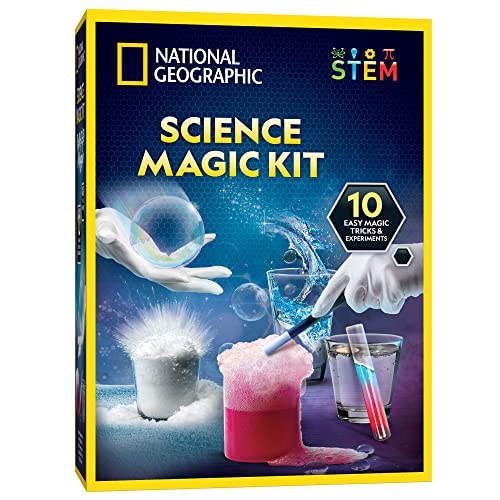
The National Geographic Magic Chemistry Set blends science and spectacle with ten experiments designed to amaze. Kids can try tricks like making a coin float or turning water colors, all while learning the basic science behind the effects. An included magic wand and gloves help children perform the tricks with confidence, turning science into an entertaining show for family and friends.
Features emphasize kid-friendly guides and insights into the science that powers the magic, helping young learners connect practical actions with underlying concepts. The kit supports early chemistry ideas while keeping the activities approachable, making it a strong pick for curious seven-year-olds who enjoy pretend play and hands-on exploration.
National Geographic Gross Science Kit – 45 Gross Experiments

This kit leans into the “wow” factor with 45 gross science experiments designed to be memorable and engaging for kids. It includes activities like creating glowing worms and faux vomit in test tubes, which can captivate young minds while teaching core scientific ideas such as states of matter, reactions, and measurement. An accompanying booklet adds 30 extra experiments that reuse common household items, broadening exploration without requiring many additional tools.
BeAndge STEM Robotics Kit – 6-in-1 Projects

The BeAndge 6-in-1 STEM kit offers a compact introduction to robotics and engineering. Children can explore a reptile robot, a balance car, a bubble machine, a fiber lamp, and a buzzer game kit, providing diverse experiences within one package. While some components require parents to supply batteries or certain consumables, the kit is presented as a gateway to hands-on invention and basic programming concepts through interactive play. It also comes in a gift-ready box, which makes it an appealing option for birthdays or holidays.
National Geographic Science Magic Kit – 100+ Experiments

This kit combines a large set of science experiments with magical effects. More than 100 activities cover principles from chemistry, physics, and earth science, while many experiments are designed as magic tricks, encouraging kids to demonstrate their findings. The included materials and a comprehensive guide help young scientists understand the science behind spectacle, making it well-suited for curious seven-year-olds who enjoy dramatic demonstrations and hands-on discovery.
Science Kit For Kids – 80 Experiments

Kuovei’s 80-experiment kit provides a broad spectrum of science activities designed to strengthen hands-on skills and scientific thinking. The kit emphasizes safety and repeated use through clearly explained steps and scientific principles, including experiments like rainbow rain and erupting volcanoes. With a focus on practical exploration and guided discovery, this option works well for children who crave variety and steady progress across multiple science domains.
National Geographic STEM Science Kit – 15+ Activities

This kit packs more than 15 experiments, including a volcano, crystal growth, and dig kits. It encourages cooperative learning—great for siblings or classmates—by providing enough activities to stretch curiosity over time. The included learning guide helps children connect observations to scientific explanation, reinforcing Earth and physical science concepts in an engaging, kid-friendly format.
National Geographic Amazing Chemistry Set – 45 Experiments

This chemistry-focused kit offers a robust collection of 45 experiments, including color-changing solutions, glowing materials, and a variety of reactions. It includes a main set of activities plus a 30-item bonus guide using common household items, broadening the scope of learning. Clear, illustrated instructions make it accessible for seven-year-olds with supervision, helping to build foundational chemistry understanding through exploration and play.
Dan&Darci Light-Up Terrarium Kit

The Dan&Darci terrarium kit adds a living science dimension with a miniature garden that grows by day and glows at night thanks to a built-in LED light. While it emphasizes biology and ecosystems, the kit also teaches responsibility and observation as kids monitor growth and light interactions. The included jar, seeds, soil, and decorative elements create a tangible, ongoing science project that can extend over weeks, engaging seven-year-olds in incremental learning and wonder.
Buying Guide: What to Consider When Choosing a Science Kit for 7-Year-Olds
- Learning goals: Look for kits that balance exploration with clear science concepts appropriate for ages 7–8, such as basic chemistry, physics, and biology fundamentals.
- Safety and supervision: Choose kits with non-toxic materials and straightforward safety guidance. Some activities may require adult supervision or assistance.
- Hands-on accessibility: Prefer kits with pre-measured materials and illustrated instructions to support independent exploration while still enabling adult support when needed.
- Variety vs. depth: Consider whether you want a broad range of activities (encouraging diverse interests) or a focused set that can deepen understanding of a specific topic.
- Reusability and mess: Some kits include reusable components; others are single-use. If mess is a concern, review included materials and any required cleanup steps.
- Engagement features: Magic tricks or vibrant visuals can enhance motivation, but ensure the science behind the tricks is explained to promote lasting learning.
- Group and individual use: Shared kits support collaboration with siblings or friends; individual kits can foster independent investigation and self-paced learning.
- Expandability: A kit with an accompanying guide or extra experiments offers longer-term value as a child grows more curious and capable.
These considerations help compare options across kits that lean toward magic-inspired experiments, gross science, robotics, or broad lab exploration. Parents may want to start with one introductory kit and gradually add more challenging activities to align with a child’s evolving interests and reading level.